
As electric vehicle adoption continues to accelerate globally, the role of charging infrastructure is evolving rapidly. While DC fast charging often dominates public discussions, AC charging is increasingly becoming the preferred solution across most B2B and commercial environments.
This shift is not driven by technological compromise, but by practical deployment logic, total cost of ownership, grid compatibility, and long-term operational efficiency.
AC Charging Aligns Better with Real B2B Usage Patterns
In commercial and enterprise environments, charging behavior differs significantly from consumer fast-charging use cases.
Typical B2B scenarios include:
- Office buildings and business parks
- Hotels, retail centers, and destination charging
- Fleet depots and logistics hubs
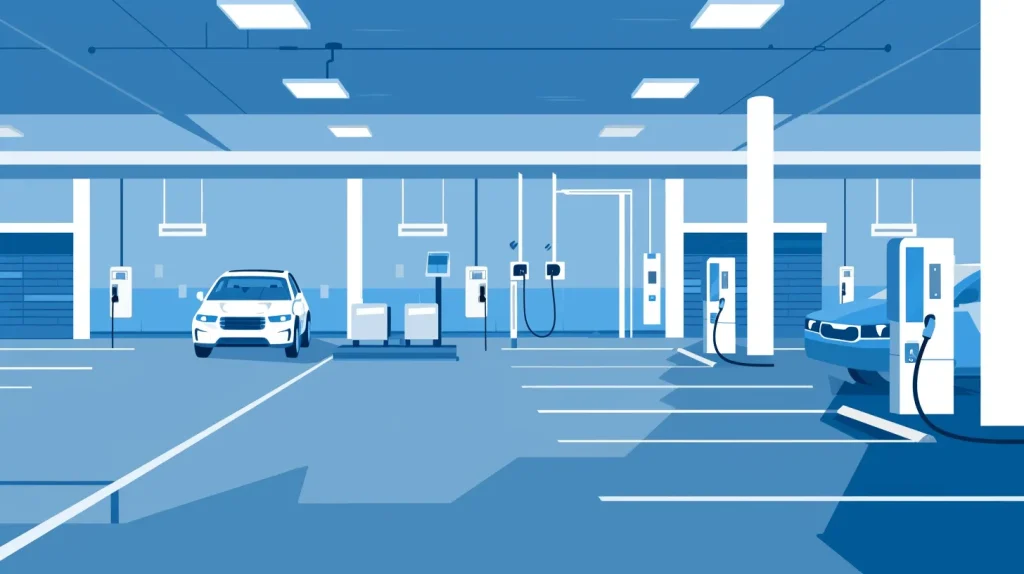
- Public and semi-public parking facilities
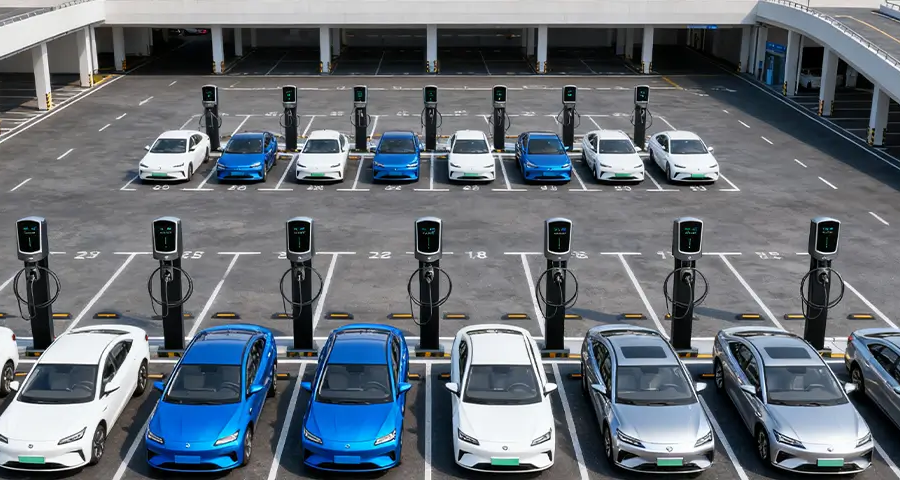
In these environments, vehicles are usually parked for several hours or overnight. Under such conditions, AC charging provides sufficient energy replenishment without the need for high-power infrastructure.
For B2B operators, availability, stability, and scalability matter more than peak charging speed.
Lower Total Cost of Ownership Drives AC Adoption
One of the strongest reasons AC charging is becoming the mainstream B2B solution is its economic advantage.
Compared to DC fast chargers, AC chargers offer:
- Lower equipment and installation costs
- Reduced grid upgrade requirements
- Simpler system architecture
- Lower maintenance and lifecycle costs
With the same investment budget, businesses can deploy multiple AC charging points instead of a limited number of DC chargers, significantly improving coverage and utilization.
Grid Compatibility and Load Management Favor AC Charging
Commercial buildings often face power capacity constraints. High-power DC charging can introduce peak load issues, higher demand charges, and complex grid approvals.
AC charging, by contrast:
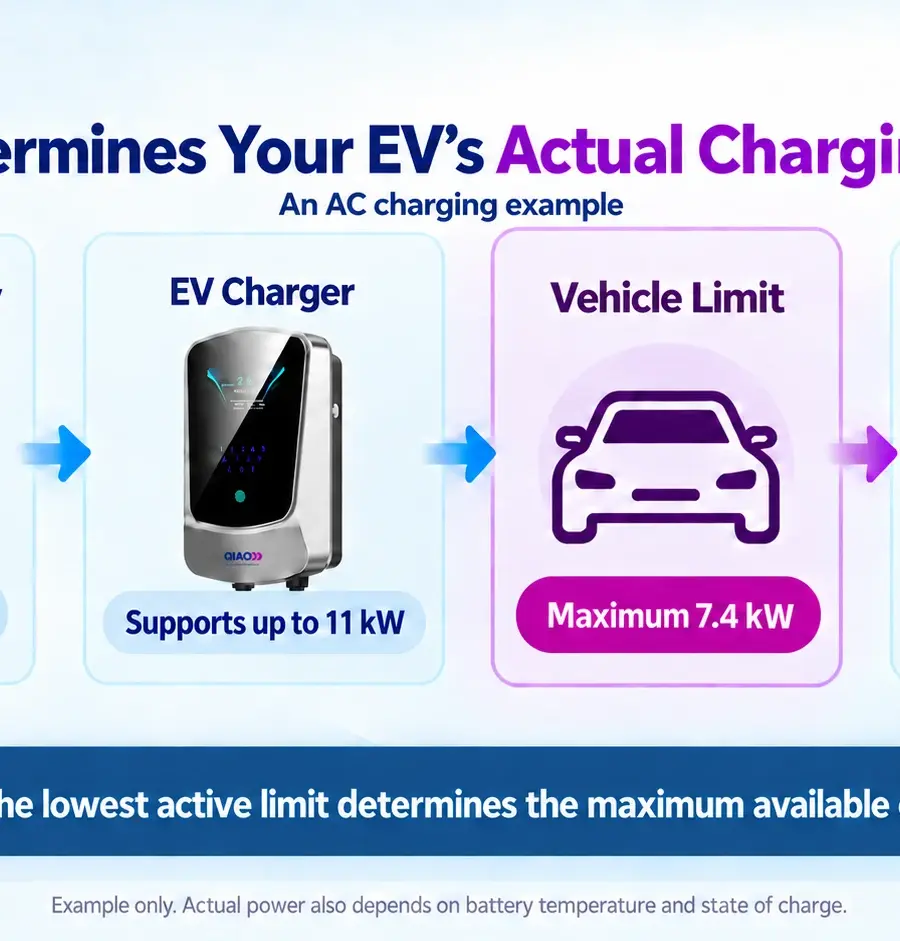
- Operates within manageable power ranges (7 kW–22 kW)
- Integrates easily with dynamic load balancing systems
- Works efficiently with energy management platforms, solar systems, and storage solutions
This makes AC charging far more suitable for scalable, multi-point commercial deployment.
AC Charging Supports Long-Term Operational Models
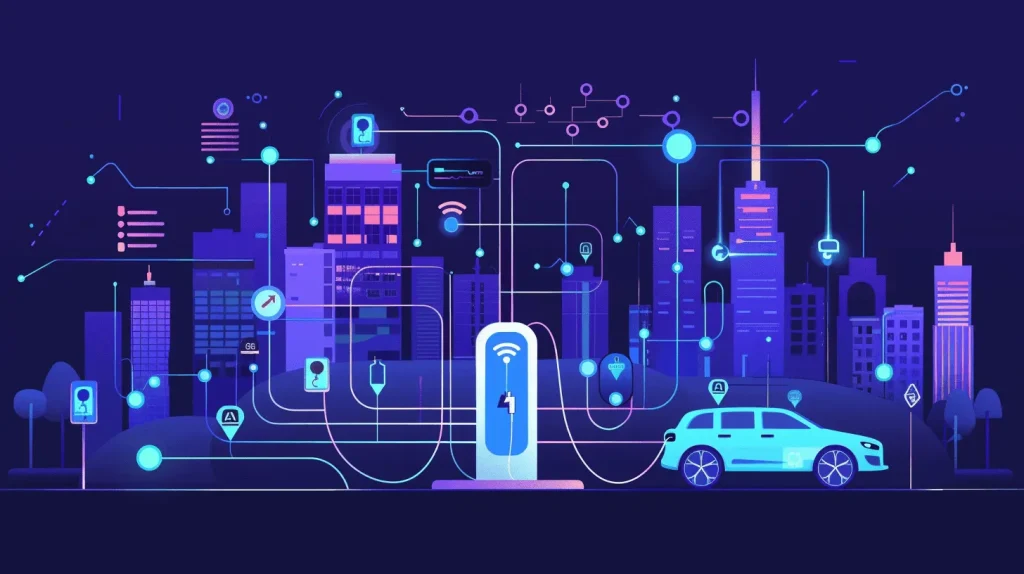
In B2B environments, charging infrastructure is no longer viewed as standalone hardware. It is increasingly integrated into broader systems such as:
- Energy management platforms
- Charging management software (OCPP-based)
- Fleet operations and property management systems
- ESG reporting and energy analytics
AC chargers offer greater flexibility for system integration and centralized management, supporting long-term operational optimization rather than short-term charging speed.
Policy and Market Trends Reinforce AC as the Commercial Standard
Across many regions, regulatory frameworks are indirectly favoring AC charging:
- Building codes increasingly require AC charger readiness
- Commercial real estate prioritizes low-power, high-coverage solutions
- ESG-driven infrastructure investments emphasize accessibility and efficiency
As a result, AC charging is becoming the default infrastructure layer for commercial EV ecosystems.
The Future: DC for Highways, AC for Infrastructure
Industry consensus is becoming clearer:
DC fast charging addresses range anxiety.
AC charging builds the foundation of everyday EV infrastructure.
In B2B scenarios, infrastructure reliability and scalability will always outweigh peak performance metrics.
What This Means for B2B Buyers and EV Charger Suppliers
For commercial operators:
- AC charging offers the best balance between cost, scalability, and reliability
- Infrastructure planning should prioritize coverage and long-term operability
For EV charger suppliers and solution providers like QIAO:
- AC chargers will remain the core volume driver in B2B markets
- Product reliability, compliance, and system compatibility will define competitiveness
- Long-term partnerships and solution-oriented delivery matter more than hardware alone
Conclusion
As EV adoption enters a phase of large-scale commercialization, AC charging is set to become the backbone of B2B charging infrastructure worldwide. Its cost efficiency, grid friendliness, and operational flexibility make it the most practical solution for businesses planning sustainable EV charging networks.For companies looking to deploy or expand commercial charging projects, choosing the right AC charging solution today will shape operational success for years to come.