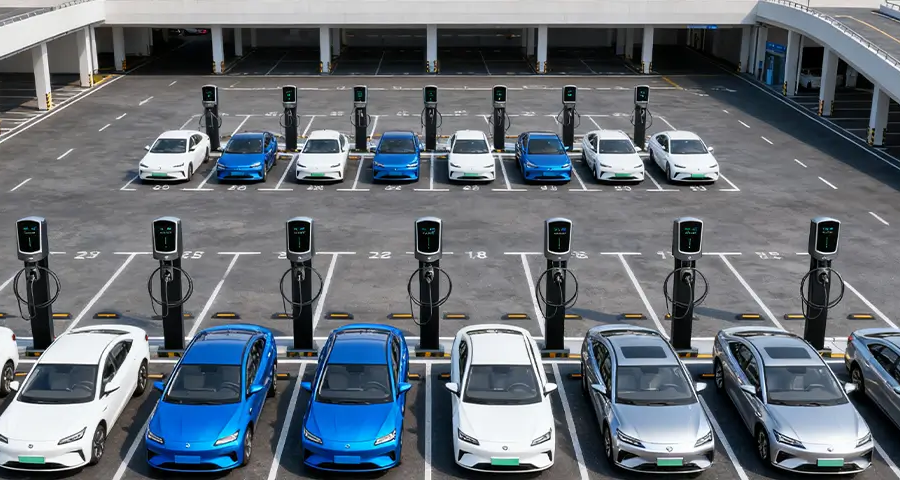

As electric vehicle adoption accelerates worldwide, B2B EV charging scenarios are evolving rapidly. Unlike residential or consumer-focused charging, B2B customers—including commercial properties, fleet operators, workplaces, and real estate developers—prioritize long-term cost control, grid compatibility, scalability, and operational stability.
Within this context, AC charging is no longer a transitional option. It is emerging as the dominant foundation of future B2B EV infrastructure.
This article explores why AC charging aligns so closely with commercial requirements, and how it supports sustainable growth across enterprise-level EV deployments.
The Shift in B2B EV Charging Priorities
B2B charging environments operate under fundamentally different constraints than consumer charging:
- Multiple vehicles charging simultaneously
- Limited grid capacity per site
- Predictable parking durations
- Long asset life cycles and ROI expectations
For these stakeholders, charging speed is rarely the primary concern. Instead, the focus is on:
- Energy stability
- Controlled operating costs
- Flexible expansion
- Minimal disruption to existing power systems
AC charging addresses these priorities at a structural level.
Core Technical Advantages of AC Charging in B2B Scenarios
AC Charging Is Naturally Grid-Friendly
AC EV chargers typically operate at 7kW, 11kW, or 22kW, making them inherently compatible with existing electrical infrastructure. This enables:
- Easier integration with standard building power supplies
- Reduced need for transformer upgrades
- Seamless implementation of load balancing and dynamic load management (DLM)
For B2B sites, this means EV infrastructure can scale without overwhelming the grid.
Lower Total Cost of Ownership (TCO)
From a commercial perspective, AC charging offers a compelling financial advantage.
| Cost Factor | AC Charging | DC Fast Charging |
| Hardware cost | Lower | Significantly higher |
| Installation complexity | Moderate | High |
| Grid upgrades | Often avoidable | Usually required |
| Maintenance cost | Low | High |
| Scalability | High | Limited |
For enterprises deploying dozens or hundreds of charging points, AC charging delivers predictable costs and faster ROI.
Why Most B2B Charging Use Cases Favor AC Charging
Workplace & Office Charging
Employee vehicles are typically parked for 6–10 hours per day. AC charging allows vehicles to recharge fully during working hours while enabling:
- Smart charging schedules
- Peak shaving strategies
- Energy usage optimization
This model aligns perfectly with AC charging capabilities.
Residential & Commercial Properties
Property managers face unique challenges:
- Limited electrical capacity
- Shared infrastructure across users
- Long-term reliability expectations
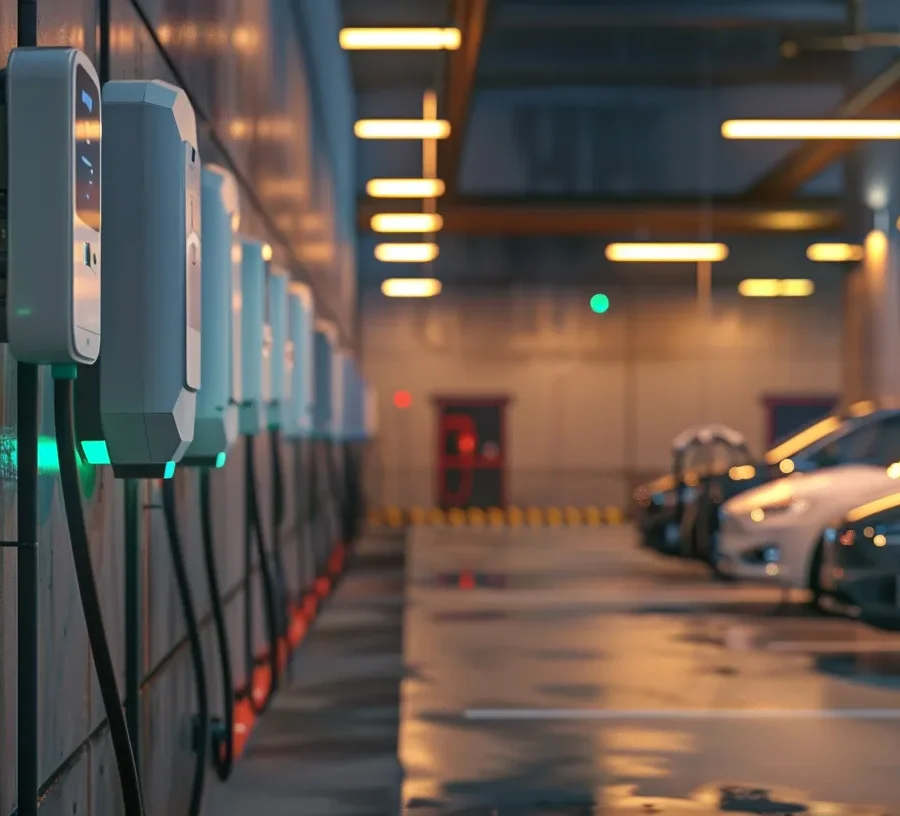
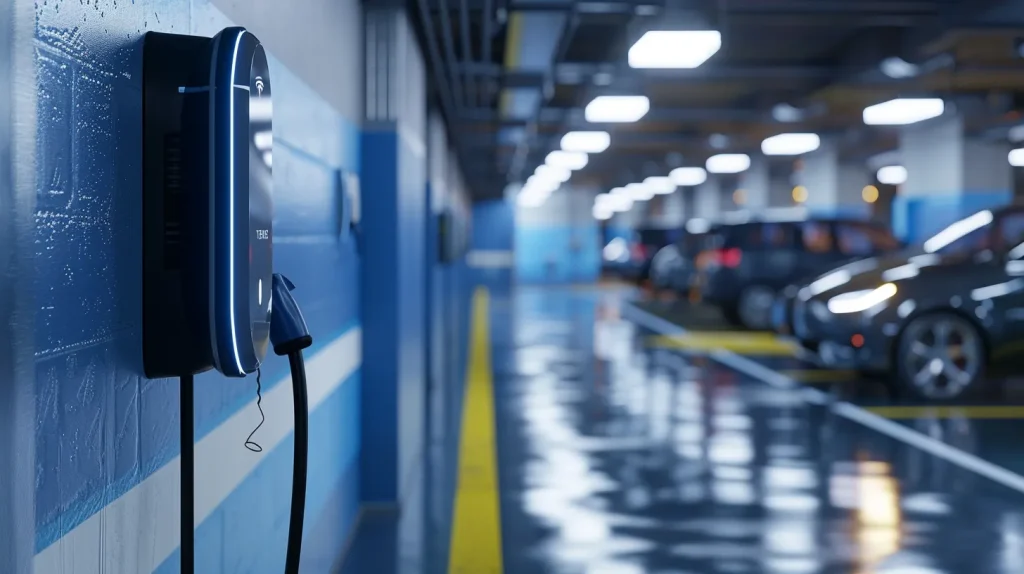
Wall-mounted AC chargers—such as those offered by QIAO—are compact, safe, and adaptable to both indoor and outdoor installations, making them ideal for property-level EV infrastructure.
Fleet & Light Commercial Vehicles
Fleet vehicles operate on predictable routes and schedules. AC charging supports:
- Overnight charging at depots
- Centralized energy management
- Lower per-vehicle operating costs
When combined with smart software, AC charging enables fleets to scale without excessive energy costs.
Smart Charging Is Elevating the Value of AC Infrastructure
Modern AC charging is no longer “slow charging.” With intelligent systems, AC chargers now support:
- Smart charging plans
- Dynamic load balancing
- Energy management system (EMS) integration
- Remote monitoring and diagnostics
In B2B environments, control and predictability matter more than raw power—and AC charging excels in both.
Long-Term Strategy: Why AC Charging Fits the Future of B2B EV Deployment
The future of B2B EV infrastructure is defined by:
- Distributed charging points
- Software-driven energy optimization
- Modular, scalable deployment models
- Lower cost per charging port
AC charging fits seamlessly into this strategy. It does not replace DC fast charging but forms the core infrastructure layer for most commercial environments.
QIAO’s Approach to B2B AC Charging Solutions
QIAO designs AC charging solutions specifically for B2B deployment:
- Wall-mounted AC chargers for flexible installation
- Power options from 7kW to 22kW
- Support for load management and energy optimization
- Designed for workplaces, properties, fleets, and commercial sites
By focusing on reliability, scalability, and intelligent control, QIAO helps businesses build EV charging infrastructure that remains future-ready.
Conclusion: AC Charging Is a Strategic Choice, Not a Compromise
In B2B EV infrastructure, faster is not always better. Sustainable deployment requires stability, cost efficiency, and long-term scalability.
AC charging meets these demands—and is increasingly becoming the default choice for commercial EV charging ecosystems.
For organizations planning EV infrastructure today, selecting the right AC charging foundation will shape operational efficiency for years to come.