
Battery capacity and charging speed are two of the most frequently misunderstood concepts in electric vehicle charging. While many discussions focus on charger power alone, the actual charging experience is determined by the interaction between the battery, the onboard charger, and the available power supply.
For EV users, fleet operators, and commercial property owners, understanding this relationship is essential for making informed charging infrastructure decisions.
Understanding Battery Capacity
What Battery Capacity Really Means
Battery capacity is measured in kilowatt-hours (kWh) and represents the total amount of energy a battery can store.
Typical EV battery sizes today include:
- 40–50 kWh: Compact EVs and city cars
- 60–75 kWh: Mainstream passenger EVs
- 90–100+ kWh: SUVs, premium EVs, and long-range models
A larger battery provides longer driving range—but it also requires more time to charge, especially when using AC charging.
Charging Speed: More Than Just Charger Power
Charging speed is commonly expressed in kilowatts (kW), but the actual speed depends on multiple constraints.
Key Factors That Limit Charging Speed
- Onboard Charger Capacity (OBC)
Most EVs convert AC power to DC internally. If a vehicle’s onboard charger is rated at 7 kW, it will not charge faster—even when connected to a 22 kW AC charger. - Battery State of Charge (SoC)
Charging slows down as the battery approaches full capacity to protect battery health. - Power Supply (Single-Phase vs Three-Phase)
Three-phase power enables higher AC charging speeds, commonly used in commercial and European markets. - Thermal Management and Battery Chemistry
Temperature and battery design directly affect charging curves and peak power acceptance.
Battery Capacity vs Charging Time (AC Charging Example)
| Battery Size | AC Charging Power | Estimated Charging Time (20–100%) |
| 40 kWh | 7 kW | ~5–6 hours |
| 60 kWh | 11 kW | ~5–6 hours |
| 75 kWh | 11 kW | ~7–8 hours |
| 75 kWh | 22 kW* | ~4–5 hours |
*Actual speed depends on vehicle onboard charger capability.
This table illustrates a key point: higher charger power does not always mean faster charging.
Why AC Charging Remains Critical Despite Slower Speeds
Although DC fast charging dominates headlines, AC charging remains the backbone of daily EV use.
AC charging is ideal for:
- Home overnight charging
- Workplace and destination charging
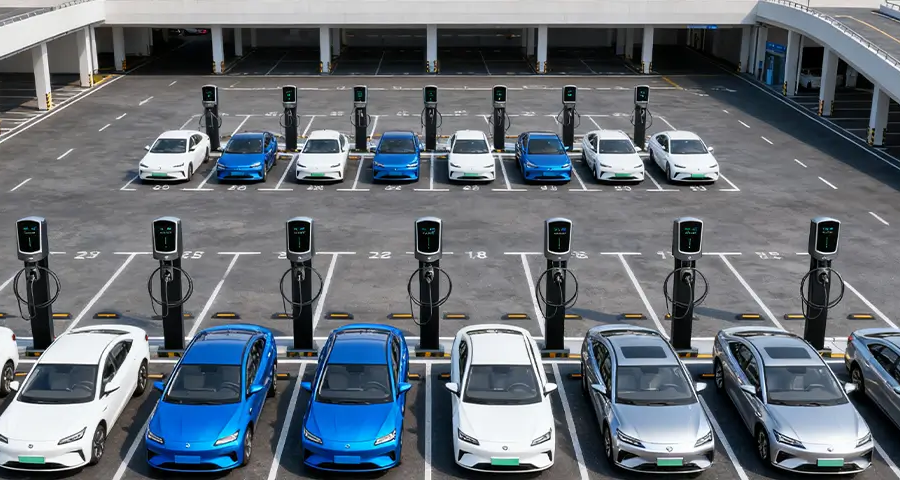
- Hotels, residential buildings, and fleet depots
- Cost-sensitive commercial installations
AC chargers are gentler on batteries, more affordable to deploy, and easier to scale using load balancing technologies.
Optimizing Charging Speed Without Overspending
Rather than maximizing power output, professional EV charging projects focus on matching battery capacity with real-world dwell time.
Best practices include:
- Deploying 7 kW AC chargers for long overnight parking
- Using 11–22 kW AC chargers for commercial and semi-public locations
- Applying dynamic load management (DLM) to avoid grid upgrades
- Combining wall-mounted and portable chargers for flexibility
This approach delivers predictable charging performance without unnecessary infrastructure costs.
How QIAO Supports Efficient AC Charging
QIAO specializes in B2B AC EV charging solutions designed to balance battery compatibility, charging efficiency, and long-term reliability.
QIAO AC chargers offer:
- 7 kW / 11 kW / 22 kW configurations
- Compatibility with single-phase and three-phase power
- Smart load balancing and access control
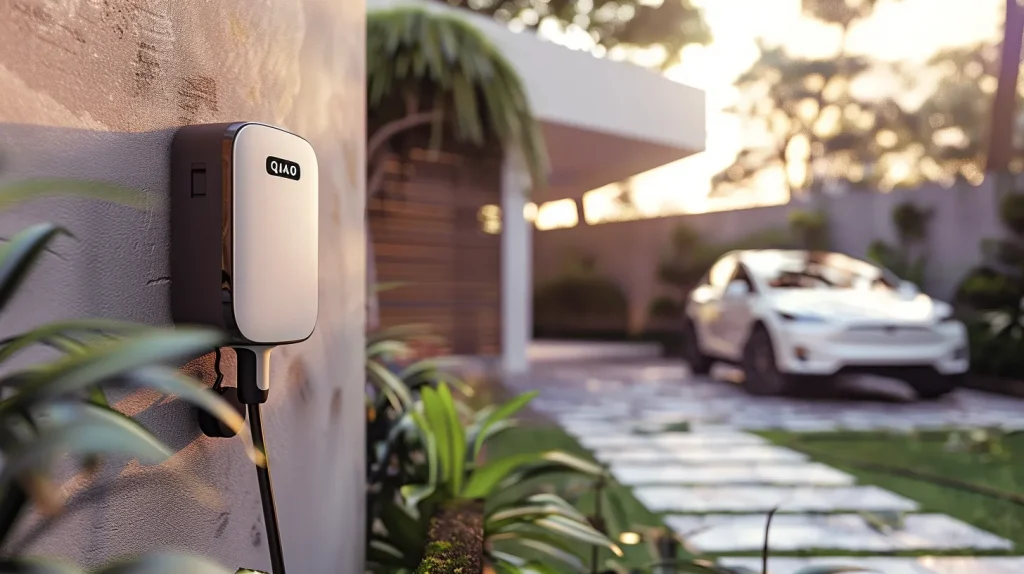
- Wall-mounted and portable charging options
- Robust design for residential and commercial environments
By aligning charging power with battery characteristics, QIAO helps users achieve optimal charging speed without compromising safety or efficiency.
Learn more about QIAO AC EV charging solutions and how they support modern EV charging ecosystems.