
Battery health is one of the most critical factors determining the lifetime value of an electric vehicle. While much attention is placed on fast charging and charging speed, AC charging plays a central role in preserving long-term battery performance—especially in commercial, fleet, and daily-use scenarios.
This article explains how battery health is affected by AC charging, why it is often the preferred method for long-term use, and what businesses should consider when deploying charging infrastructure.
Understanding Battery Health
Battery health generally refers to the remaining usable capacity of a battery compared to its original design capacity. Over time, all lithium-ion batteries experience degradation due to:
- Charge and discharge cycles
- High charging power and heat
- Extended operation at high state of charge (SOC)
- Environmental conditions
Charging strategy directly influences how quickly these factors affect battery lifespan.
Why AC Charging Is Gentler on EV Batteries
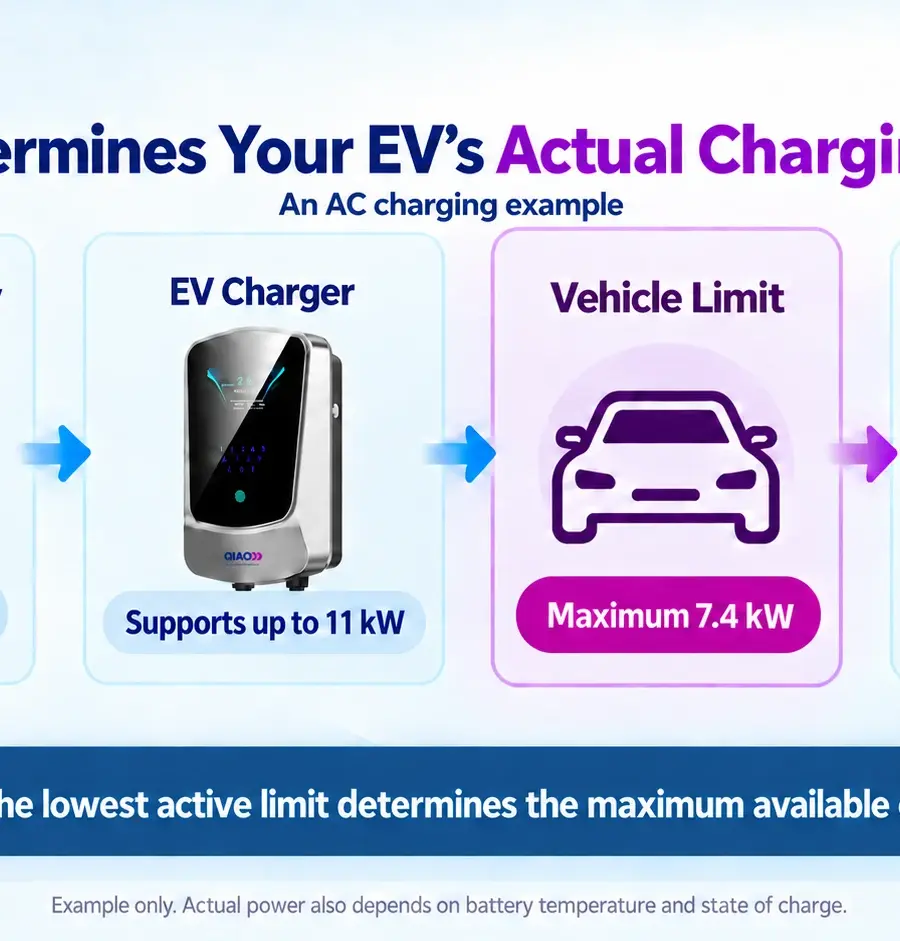
AC charging supplies power at lower and more controlled levels compared to DC fast charging. The vehicle’s onboard charger manages the conversion from AC to DC, allowing precise control of current and voltage.
Key benefits of AC charging for battery health include:
- Lower thermal stress on battery cells
- Reduced risk of accelerated chemical aging
- More stable charging curves over long sessions
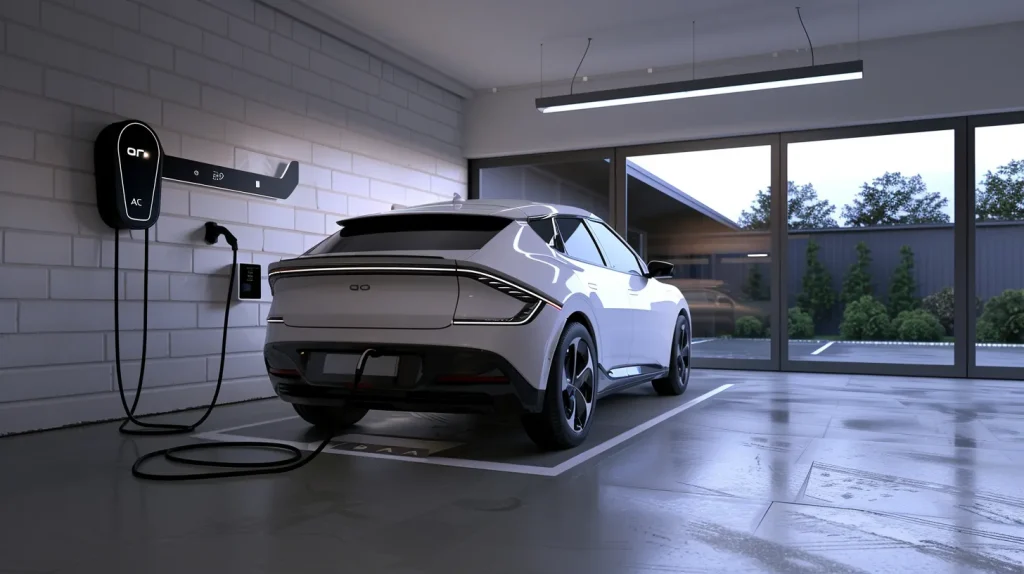
For vehicles that charge overnight or remain parked for extended periods, AC charging aligns naturally with battery preservation.
Heat, Power, and Battery Degradation
Heat is one of the primary drivers of battery degradation. High charging power increases internal resistance and temperature, especially at high SOC levels.
AC charging typically operates at:
- 7 kW for residential or light commercial use
- 11–22 kW for commercial and fleet environments
These power levels allow the battery management system (BMS) to maintain optimal thermal conditions, reducing long-term wear.
Charging Behavior Matters as Much as Technology
Battery health is influenced not only by charger type, but also by charging behavior.
Best practices include:
- Avoiding frequent charging to 100% SOC
- Using scheduled charging during cooler periods
- Limiting reliance on fast charging for daily use
- Allowing the battery to rest at moderate SOC levels
AC charging supports these practices by enabling flexible, low-stress charging patterns.
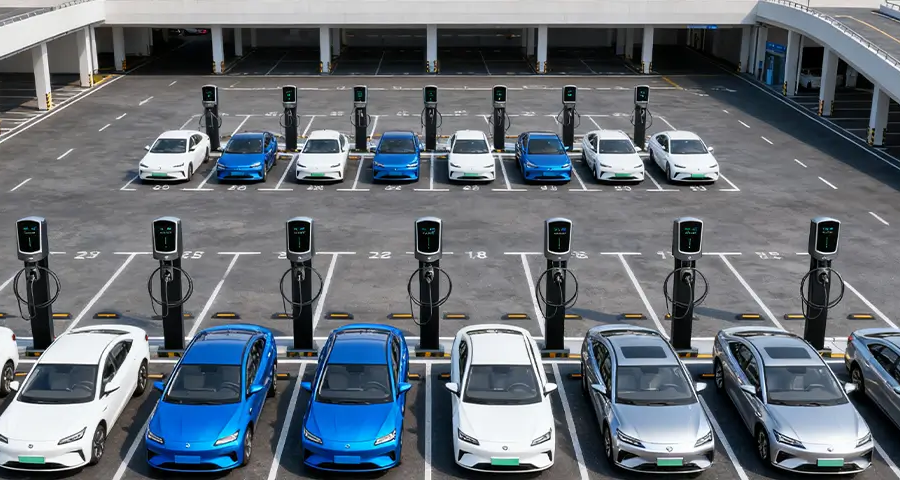
AC Charging in Fleet and Commercial Applications
For fleets and B-end users, battery longevity directly affects operating costs and residual vehicle value.
AC charging supports:
- Predictable overnight charging
- Reduced maintenance risk
- Lower total cost of ownership (TCO)
- Consistent vehicle availability
When combined with smart features such as load balancing and scheduled charging, AC charging becomes a strategic asset rather than just an energy source.
The Role of Smart AC Charging Infrastructure
Modern AC chargers equipped with intelligent control functions further protect battery health by:
- Managing charging current dynamically
- Coordinating multiple vehicles without power spikes
- Preventing unnecessary high-SOC dwell time
- Enabling remote configuration and updates
These capabilities help align charging behavior with battery-friendly strategies.
Conclusion
Battery health is not determined solely by vehicle design—it is strongly influenced by how vehicles are charged over time. AC charging offers a balanced approach that prioritizes stability, thermal control, and long-term battery performance.For commercial and fleet operators, deploying reliable and intelligent AC charging solutions—such as those offered by QIAO EV chargers—supports battery longevity while maintaining operational efficiency and scalability.