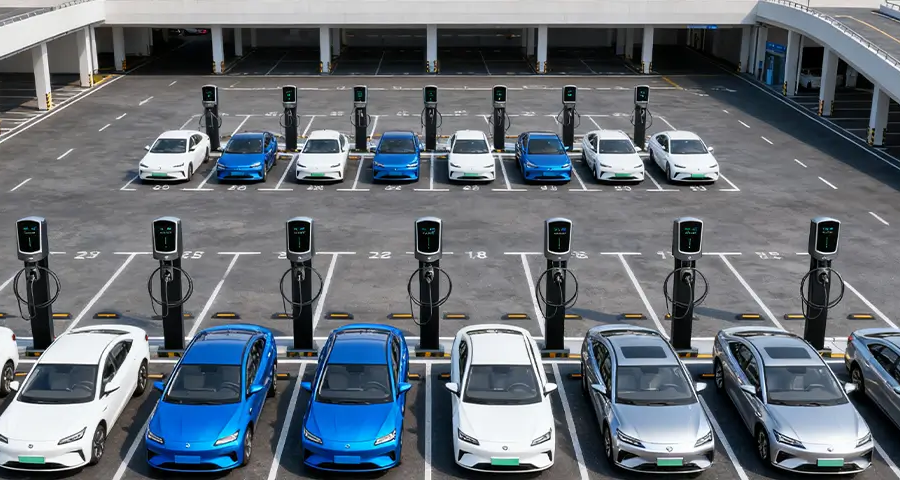

Commercial EV chargers are expected to operate continuously, reliably, and safely in environments such as parking garages, retail locations, offices, and fleet depots.
However, even well-designed AC charging systems may encounter operational issues over time.
This FAQ and troubleshooting guide addresses the most common commercial EV charger questions, helping operators identify problems quickly and minimize downtime.
Part 1: Frequently Asked Questions (FAQ)
Why does the charger show “connected but not charging”?
This usually occurs when:
- The vehicle has not authorized charging
- Charging is delayed by vehicle scheduling settings
- The charger is waiting for backend authorization (RFID, app, OCPP)
Check first:
Vehicle dashboard messages and charging permissions.
Can multiple chargers run at full power simultaneously?
Not always.
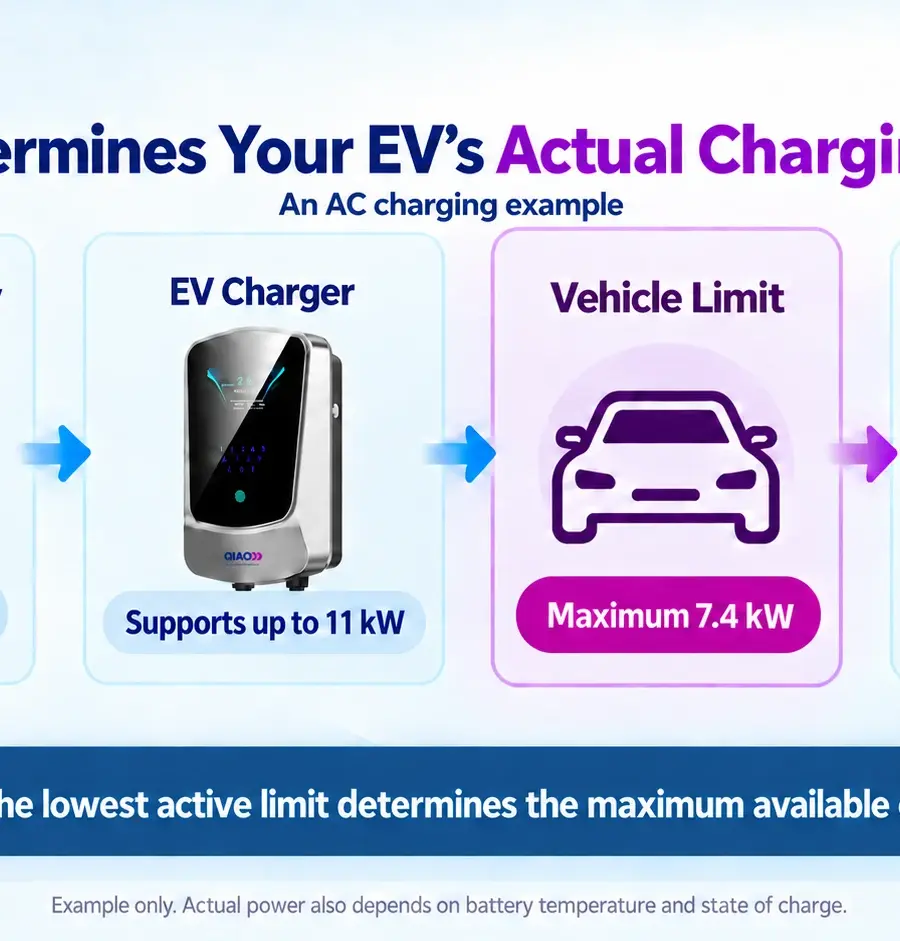
In commercial environments, available grid capacity is often shared. Without load management, chargers may:
- Automatically reduce power
- Pause charging sessions
- Trigger protection mechanisms
Dynamic Load Management (DLM) is recommended for multi-charger installations.
Does AC charging damage the vehicle battery?
No.
AC charging is battery-friendly by design. The vehicle’s onboard charger controls:
- Charging current
- Voltage regulation
- Thermal protection
This makes AC charging ideal for daily and long-duration use.
What happens if the network connection is lost?
Most commercial chargers support:
- Offline charging modes
- Local authorization (RFID whitelist)
- Automatic reconnection once the network is restored
Connectivity loss should not cause permanent downtime.
Are commercial chargers compatible with all EVs?
Compatibility depends on:
- Plug standard (Type 1, Type 2, GB/T)
- Electrical configuration (single-phase or three-phase)
- Local regulatory requirements
Most modern AC chargers are designed for wide vehicle compatibility within their target markets.
Part 2: Common Troubleshooting Scenarios
Charger Does Not Power On
Possible causes:
- Circuit breaker tripped
- Incorrect wiring
- Insufficient input voltage
Recommended actions:
- Verify upstream power supply
- Check protection devices
- Inspect installation compliance
Charging Starts but Stops Unexpectedly
Possible causes:
- Over-temperature protection
- Load balancing activation
- Vehicle-side interruptions
Recommended actions:
- Review charger event logs
- Check ambient temperature and airflow
- Confirm load management settings
RFID or User Authentication Fails
Possible causes:
- Card not registered
- Backend communication delay
- Firmware mismatch
Recommended actions:
- Update user credentials
- Test backend connectivity
- Ensure firmware is up to date
Charger Shows Frequent Error Codes
Possible causes:
- Grounding issues
- Leakage current detection
- Power quality fluctuations
Recommended actions:
- Inspect grounding system
- Review electrical safety logs
- Consult professional technicians if errors persist
Part 3: Preventive Maintenance Best Practices
| Area | Recommendation |
| Electrical connections | Inspect periodically |
| Firmware | Keep updated |
| Ventilation | Ensure airflow is unobstructed |
| Network | Monitor connectivity stability |
| Logs & diagnostics | Review regularly |
Preventive maintenance significantly reduces operational issues and extends charger lifespan.
Part 4: When to Escalate Issues
Escalation is recommended when:
- Safety-related errors persist
- Electrical faults repeat after reset
- Physical damage is observed
- Multiple chargers fail simultaneously
In these cases, professional inspection or manufacturer support is essential.
Reliable Operation Starts with Proper Design
Many charging issues are not caused by the charger itself, but by:
- Inadequate electrical infrastructure
- Poor installation practices
- Lack of monitoring and maintenance
Selecting chargers designed for commercial-grade reliability reduces troubleshooting frequency from the start.
QIAO Commercial Charging Solutions
QIAO EV Charger designs commercial AC charging solutions with:
- Comprehensive electrical safety protection
- Remote monitoring and diagnostics
- Support for load management and smart authorization
- Stable performance in high-usage environments
These features help operators minimize downtime and simplify troubleshooting—making commercial charging more predictable and scalable.