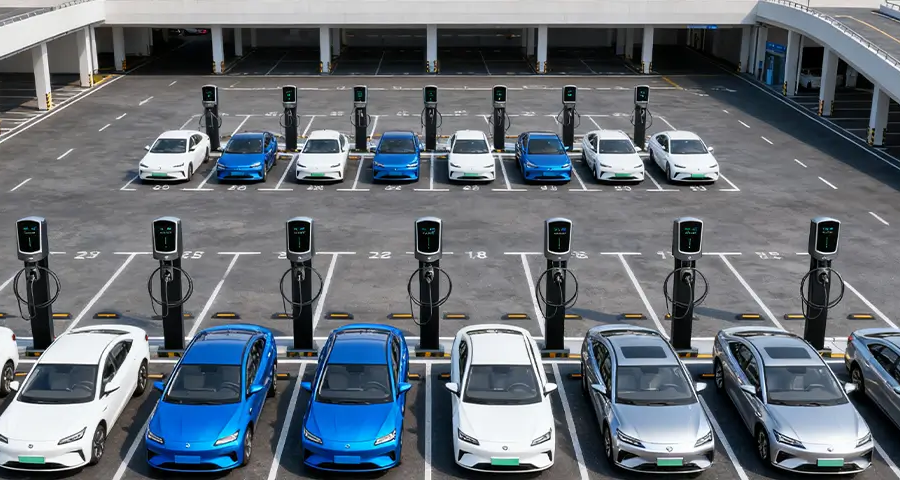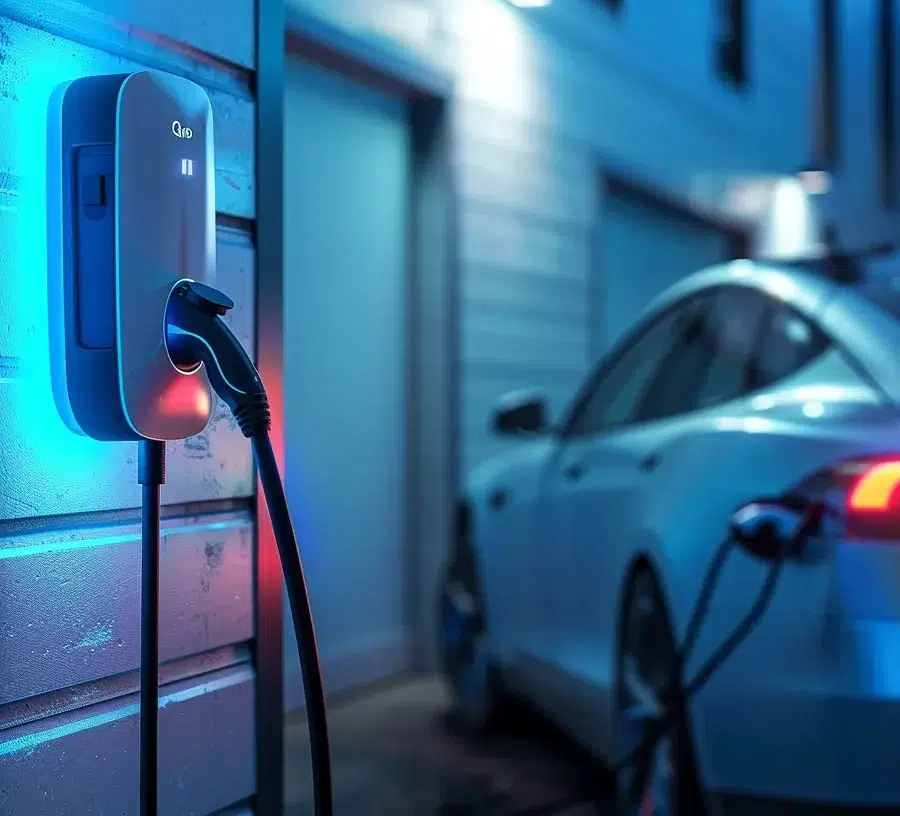

As EV adoption accelerates globally, B2B buyers—including property owners, fleet operators, retailers, and infrastructure investors—are approaching EV charger procurement with greater rigor than ever before.
In 2026, purchasing EV chargers is no longer just about hardware. It is a systematic process involving compliance, scalability, interoperability, and long-term operational efficiency.
This guide outlines the complete B2B procurement workflow, from early planning to final acceptance.

Define the Business Use Case and Charging Scenario
Every successful procurement starts with a clear operational objective.
Typical B2B use cases include:
- Commercial parking (office buildings, shopping centers)
- Fleet depots (logistics, service vehicles)
- Residential or mixed-use properties
- Hospitality and destination charging
- Public or semi-public charging networks
Key questions to answer upfront:
| Question | Why It Matters |
| Who are the users? | Determines access control and billing |
| Charging dwell time? | Impacts AC power level selection |
| Private or public use? | Affects compliance and backend needs |
| Revenue-driven or cost-center? | Influences hardware and software choices |
Electrical Assessment and Infrastructure Readiness
Before selecting any charger model, a site-level electrical assessment is mandatory.
Core evaluation points:
- Available grid capacity
- Single-phase vs three-phase supply
- Transformer and distribution limits
- Peak load and expansion margin
In 2026, many B2B projects already assume:
- Load balancing (DLM) as standard
- Future scalability (20–50% capacity reserve)
- Compatibility with on-site solar or energy storage
Skipping this step often leads to redesigns and delays later.
Charger Selection: Hardware Specifications That Matter
For B2B buyers, charger selection is about standardization and lifecycle value, not just power rating.
Key selection criteria:
| Category | What to Evaluate |
| Power rating | 7kW / 11kW / 22kW (AC-focused for B2B) |
| Connector standards | Type 2, GB/T, regional compliance |
| Enclosure rating | Indoor vs outdoor (IP / IK levels) |
| Mounting | Wall-mounted vs pedestal |
| Certification | CE, UKCA, TUV, local grid approvals |
AC chargers remain dominant in B2B environments due to:
- Lower installation cost
- Better grid compatibility
- Reduced operational risk
Software, Communication, and Platform Compatibility
In 2026, non-connected chargers are no longer viable for B2B use.
Minimum software requirements typically include:
- OCPP 1.6 or OCPP 2.0.1 support
- Remote monitoring and diagnostics
- User authentication (RFID, App)
- OTA firmware updates
- Energy reporting and fault logs
Common mistake:
Selecting hardware before confirming backend compatibility with:
- Existing property management systems
- Fleet management platforms
- Billing or ERP systems
Supplier Evaluation and Commercial Due Diligence
B2B procurement is as much about the supplier as the product.
Evaluation checklist:
- Manufacturing capacity and lead times
- Regional certification experience
- API and software documentation quality
- Long-term firmware support policy
- Local technical support or partners
Increasingly, buyers favor suppliers that provide:
- Integrated solutions (hardware + software + deployment support)
- Proven global project references
- Clear post-sales responsibilities
Pilot Deployment and Functional Testing
Before full rollout, many B2B projects conduct a pilot phase.
Typical pilot objectives:
- Validate electrical stability
- Test backend connectivity
- Confirm load balancing behavior
- Simulate user access and billing flows
This phase helps identify:
- Configuration gaps
- Grid interaction issues
- Installation process inefficiencies

Installation, Commissioning, and Documentation
Installation must follow local electrical codes and manufacturer guidelines.
Commissioning usually includes:
- Electrical safety checks
- Network connectivity validation
- OCPP handshake confirmation
- Load management calibration
- Firmware version verification
Required documentation often includes:
- Electrical drawings
- As-built layouts
- Serial number lists
- Commissioning reports
Final Acceptance and Handover
Final acceptance marks the transition from project delivery to operations.
Acceptance criteria typically cover:
- Functional compliance with specifications
- Backend visibility and control
- Safety and protection verification
- Data accuracy (energy, sessions, users)
Once accepted, the chargers enter:
- Warranty period
- SLA-defined maintenance phase
- Ongoing performance monitoring
Post-Deployment Operations and Optimization
In 2026, B2B buyers increasingly view EV chargers as long-term digital assets.
Key post-deployment priorities:
- Firmware and security updates
- Usage data analysis
- Load optimization
- Expansion planning
A well-chosen platform enables continuous optimization rather than static operation.
Final Thoughts: Why Process Matters More Than Price
For B2B buyers, EV charger procurement is no longer a one-off purchase—it is a multi-year infrastructure investment.
Suppliers that understand the full lifecycle, from selection to acceptance and beyond, are better positioned to support scalable, compliant, and future-ready deployments.This is where solution-oriented providers—such as QIAO, focusing on AC charging, intelligent control, and global B2B compatibility—can support businesses throughout the entire procurement journey.