
Electric vehicle charging performance is not determined solely by the charger itself. One of the most critical components influencing charging speed, safety, and efficiency is the Battery Management System (BMS).
The BMS is responsible for monitoring and controlling how energy flows into the battery pack during charging. Without it, modern lithium-ion batteries could not operate safely or efficiently.
Understanding the relationship between the BMS and EV charging is essential for infrastructure planners, charging station operators, and fleet managers.
What Is a Battery Management System (BMS)?
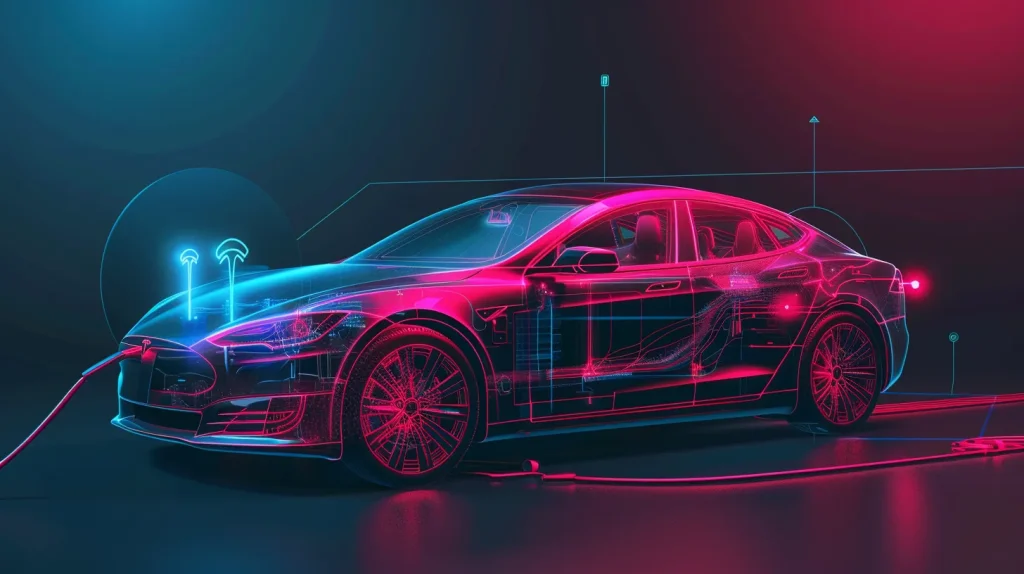
A Battery Management System is an electronic control system that monitors and manages rechargeable battery packs.
Its main functions include:
- Monitoring battery voltage and current
- Tracking State of Charge (SOC)
- Monitoring battery temperature
- Protecting cells from overcharging or over-discharging
- Balancing individual battery cells
The BMS acts as the central controller for battery safety and charging behavior.
Reference:
Battery University – Battery Management System basics
https://batteryuniversity.com/article/bu-908-battery-management-system-bms
How the BMS Controls the Charging Process
During charging, the BMS continuously communicates with the charger to regulate the charging process.
Typical steps include:
- Charger connects to the vehicle
- Vehicle communication handshake begins
- BMS evaluates battery conditions
- BMS determines allowable charging current
- Charger adjusts power output accordingly
This interaction ensures the battery receives power within safe electrical and thermal limits.
More on EV charging communication:
ISO 15118 vehicle-to-grid communication standard
https://www.iso.org/standard/55366.html
Key Charging Parameters Managed by the BMS
Charging Current Limits
The BMS defines the maximum charging current the battery can safely accept.
Factors affecting this include:
- Battery temperature
- State of charge
- Cell voltage balance
- Battery age and degradation
If conditions are unsafe, the BMS can immediately reduce or stop charging power.
State of Charge (SOC)
State of Charge (SOC) represents how full the battery is.
SOC reference:
https://en.wikipedia.org/wiki/State_of_charge
As SOC increases, the BMS gradually reduces charging current to protect battery life. This is why EV charging often slows down near 80–100% battery capacity.
Thermal Management
Lithium-ion batteries must operate within a safe temperature range.
The BMS works together with the vehicle’s thermal management system to:
- Prevent overheating
- Maintain optimal charging conditions
- Protect battery lifespan
Thermal management reference:
https://www.energy.gov/eere/vehicles/articles/fotw-1179-april-26-2021-electric-vehicle-batteries-operate-best-moderate
Cell Balancing
EV battery packs consist of hundreds or thousands of individual cells.
Small voltage differences can develop between cells over time.
The BMS performs cell balancing, ensuring:
- Equal charge distribution
- Improved battery lifespan
- Stable charging performance
Cell balancing overview:
https://en.wikipedia.org/wiki/Battery_balancing
Why Charging Speed Changes During a Session
Many EV drivers notice that charging slows down during the process.
This behavior is controlled primarily by the BMS charging algorithm.
Typical charging profile:
- Constant Current Phase – fast charging
- Transition Phase – power gradually reduced
- Constant Voltage Phase – slow top-off charging
This method protects the battery from stress while maximizing usable capacity.
Charging curve explanation:
https://www.sciencedirect.com/topics/engineering/lithium-ion-battery-charging
Impact of BMS on Charging Infrastructure Planning
For charging infrastructure providers, understanding BMS limitations is important.
Key considerations include:
Real Charging Power
A charger rated for 22 kW AC may still deliver lower power if the vehicle BMS limits current.
Compatibility Across EV Models
Different EV manufacturers implement different BMS charging strategies, which affects:
- charging curve behavior
- power limits
- charging time
Load Management Systems
Smart charging systems must respond dynamically to vehicle BMS requests.
This interaction is managed through communication standards such as:
OCPP (Open Charge Point Protocol)
https://www.openchargealliance.org/protocols/ocpp/
Future Trends in BMS Technology
Battery management technology continues to evolve rapidly.
Key developments include:
- AI-based battery optimization
- Predictive battery health monitoring
- Integration with Vehicle-to-Grid (V2G) systems
- Advanced thermal management systems
These improvements will enable faster charging while maintaining battery longevity.
Conclusion
The Battery Management System is one of the most important components determining how EVs charge.
It controls:
- Charging speed
- Battery safety
- Temperature protection
- Energy efficiency
For charging infrastructure operators and commercial deployment planners, understanding BMS behavior is critical to designing reliable and efficient EV charging networks.
About QIAO
QIAO provides intelligent AC EV charging solutions designed for modern charging ecosystems.
Our commercial charging systems support:
- Smart load balancing
- OCPP platform integration
- Scalable commercial deployments
- Compatibility with global EV standards
By combining reliable hardware with intelligent charging management, QIAO helps businesses deploy EV charging infrastructure that works seamlessly with modern vehicle battery systems.
FAQ
What does a BMS do during EV charging?
The BMS monitors battery conditions and determines the safe charging current and voltage.
Why does charging slow down after 80%?
The BMS reduces charging power to protect battery health and prevent overheating.
Can a charger override the BMS charging limit?
No. The vehicle BMS always has final control over charging power.
Does BMS affect charging time?
Yes. Charging speed depends on battery temperature, SOC, and the BMS charging algorithm.