
As electric vehicles become more widespread and energy systems grow more complex, the way vehicles charge is rapidly evolving. Traditional charging methods are gradually giving way to smart charging technologies, especially AC smart charging, which enables more efficient energy management and infrastructure utilization.
In the era of artificial intelligence and connected energy systems, AC smart charging is expected to become a standard feature for EV charging networks, homes, and commercial properties.
This article explores why AC smart charging will play a central role in the future EV ecosystem.
What Is AC Smart Charging?
AC smart charging refers to EV charging systems that use communication technology and software platforms to optimize charging behavior based on grid conditions, energy prices, and charging demand.
These systems allow charging stations to dynamically adjust charging power and scheduling.
Smart charging platforms can coordinate multiple chargers, monitor energy usage, and automatically balance loads across a charging network.
The Role of AI in Smart Charging Systems
Artificial intelligence is increasingly being integrated into energy systems to improve efficiency and forecasting.
AI-driven charging platforms can analyze large volumes of data, including:
- electricity demand patterns
- charging behavior
- grid load conditions
- energy price fluctuations
This allows charging networks to automatically optimize charging schedules and power allocation.
AI in energy systems research:
https://www.iea.org/reports/artificial-intelligence-and-energy
According to the International Energy Agency, AI technologies are expected to significantly improve the efficiency of electricity systems and energy infrastructure.
Why AC Charging Is Ideal for Smart Energy Management
While DC fast charging is important for highways and rapid charging needs, AC charging is better suited for smart energy management scenarios.
This is because AC charging typically occurs over longer periods, such as:
- overnight home charging
- workplace charging
- destination charging
These longer charging windows allow software systems to optimize charging schedules more effectively.
Charging level overview:
https://www.energy.gov/eere/electricvehicles/charging-electric-vehicles
For many applications, AC chargers provide sufficient power while enabling more flexible energy management.
Smart Charging Helps Balance the Power Grid
As EV adoption grows, uncontrolled charging could place additional stress on electricity grids.
Smart charging helps solve this problem by coordinating when vehicles charge.
For example, systems can:
- delay charging during peak electricity demand
- increase charging during off-peak periods
- distribute power across multiple chargers
Grid management strategies increasingly rely on intelligent charging infrastructure.
Electric grid overview:
https://en.wikipedia.org/wiki/Electric_power_system
Smart charging therefore plays an important role in stabilizing energy systems while supporting EV growth.
Integration With Renewable Energy
Another major advantage of AC smart charging is its compatibility with renewable energy systems.
Many households and commercial buildings now integrate EV charging with:
- solar power systems
- energy storage systems
- smart home energy management
Renewable energy overview:
https://en.wikipedia.org/wiki/Renewable_energy
Smart charging platforms can automatically schedule EV charging when solar energy generation is highest, maximizing the use of clean energy.
Data and Connectivity in the AI Charging Ecosystem
Modern EV chargers are no longer standalone devices. Instead, they operate as part of connected networks.
Many chargers use communication protocols such as OCPP (Open Charge Point Protocol) to connect with charging management platforms.
These platforms collect operational data and enable remote monitoring, predictive maintenance, and AI-driven optimization.
As the EV ecosystem grows, data-driven charging management will become increasingly important.
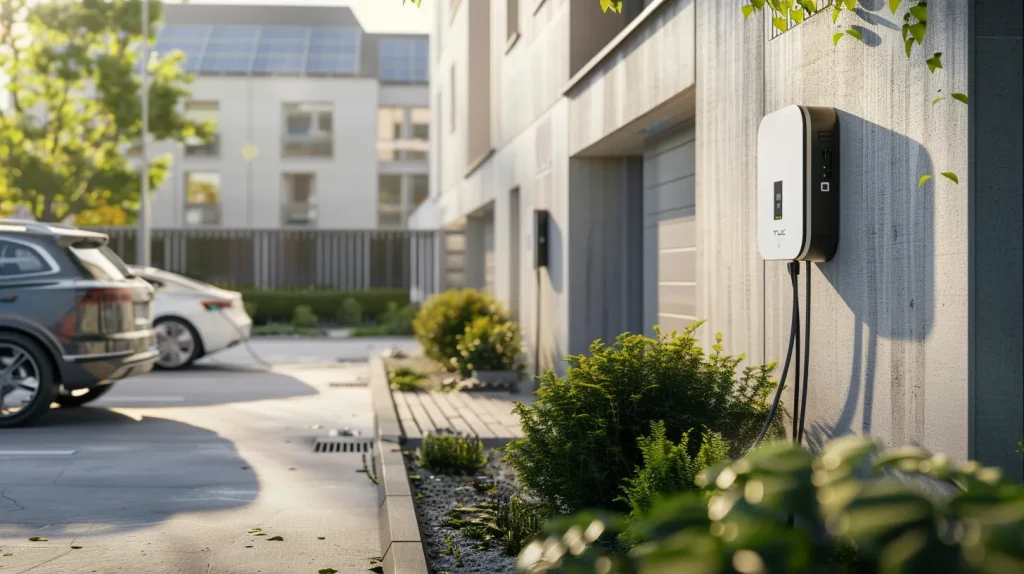
Why AC Smart Charging Is Becoming the Industry Standard
Several trends suggest that AC smart charging will become a standard feature in future charging infrastructure.
Key reasons include:
- increasing EV adoption
- growing demand for grid stability
- integration with renewable energy
- development of AI-powered energy management systems
Because AC chargers are widely used in residential and commercial environments, they are the most suitable platforms for implementing intelligent charging strategies.
Conclusion
The rapid growth of electric vehicles and smart energy systems is transforming the EV charging landscape.
In the AI era, charging infrastructure must do more than simply deliver electricity. It must adapt dynamically to energy demand, grid conditions, and renewable energy availability.
AC smart charging provides the flexibility, connectivity, and scalability required for this next generation of energy systems.
As a result, AC smart charging is expected to become a fundamental component of future EV charging networks.
About QIAO
QIAO focuses on providing advanced AC EV charging solutions for global commercial and residential applications.
Our charging systems support:
- smart load management
- OCPP-compatible connectivity
- scalable charging infrastructure
- intelligent charging management
QIAO helps businesses and property developers deploy future-ready EV charging solutions for the smart energy era.
FAQ
What is smart EV charging?
Smart charging allows EV chargers to communicate with software systems to optimize charging schedules and energy usage.
Why is AC charging suitable for smart charging?
AC charging typically occurs over longer periods, allowing software platforms to adjust charging schedules efficiently.
How does AI improve EV charging systems?
AI can analyze charging patterns and energy demand to automatically optimize charging operations.
Can smart charging reduce electricity costs?
Yes. Smart charging can shift charging to off-peak electricity periods when energy prices are lower.