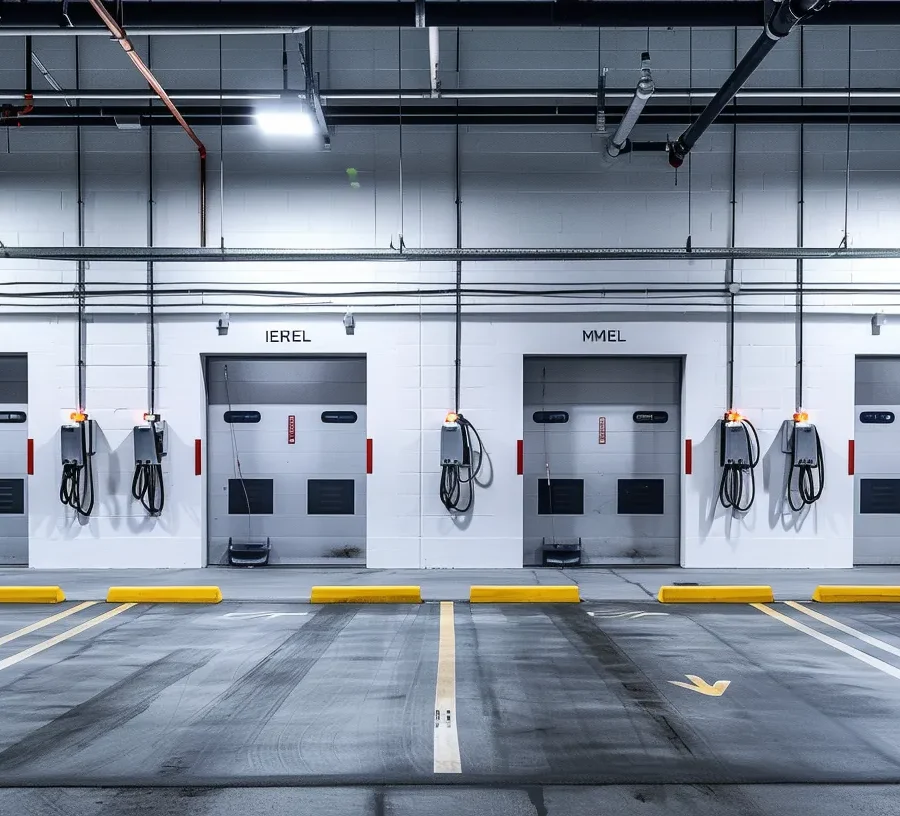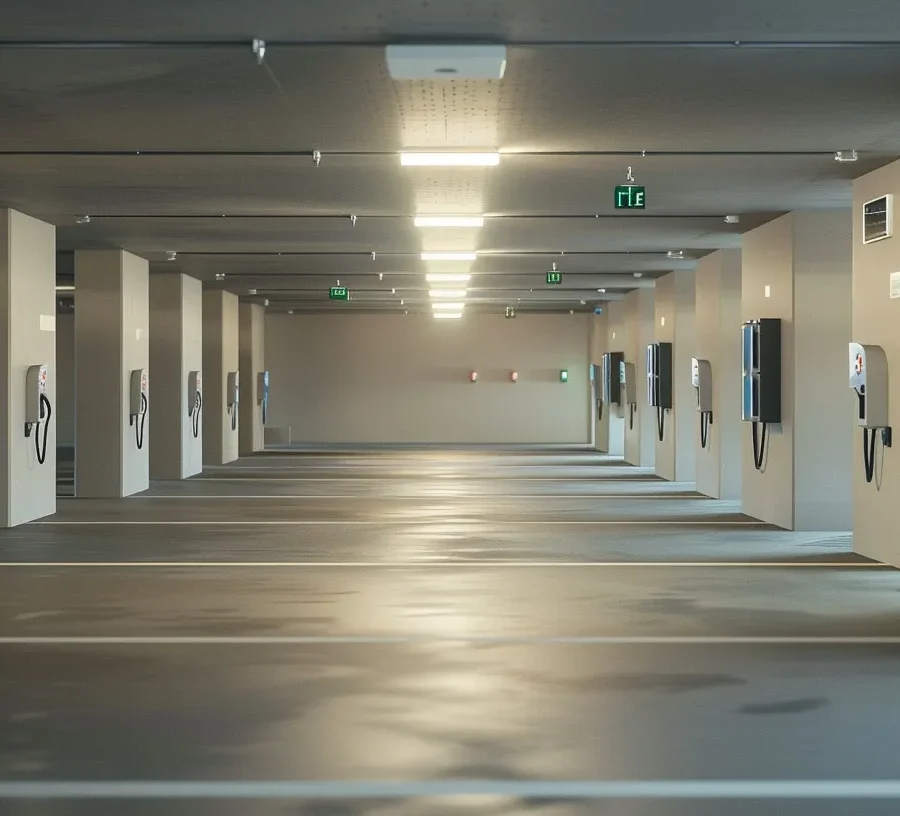

As EV adoption accelerates, public parking garages are becoming one of the most important charging scenarios.
However, many operators face a key challenge:
How to deploy EV charging without high upfront investment?
The answer for most facilities is clear:
Use AC charging to build a scalable, low-cost charging network
Why AC Charging Is Ideal for Public Garages
Compared with DC fast charging, AC charging offers significant advantages for parking scenarios.
EV charging overview:
https://en.wikipedia.org/wiki/Charging_station
| Factor | AC Charging | DC Fast Charging |
| Installation cost | Low | High |
| Power requirement | 7–22 kW | 60–350 kW |
| Infrastructure upgrade | Minimal | Significant |
| Suitable duration | 1–8 hours | 15–60 minutes |
Public parking garages typically have long dwell times, making AC charging the optimal solution.
The Core Idea: Low-Cost Retrofit Instead of Full Upgrade
Instead of rebuilding electrical infrastructure, operators can:
retrofit existing parking facilities with AC chargers
This approach minimizes:
- electrical upgrades
- installation complexity
- downtime
Step 1: Assess Existing Electrical Capacity
Before deployment, evaluate available power.
Electric power distribution overview:
https://en.wikipedia.org/wiki/Electric_power_distribution
Check:
- transformer capacity
- panel load
- spare circuits
Example:
| Total Capacity | Current Load | Available Capacity |
| 100 kW | 70 kW | 30 kW |
Even limited capacity can support multiple AC chargers with proper management.
Step 2: Use Load Management to Maximize Capacity
Load management overview:
https://en.wikipedia.org/wiki/Load_management
Dynamic load management allows:
- multiple chargers to share limited power
- automatic power distribution
- avoidance of grid overload
Example:
| Chargers Installed | Available Power | Avg Power per Charger |
| 4 | 40 kW | 10 kW |
| 8 | 40 kW | 5 kW |
This enables more charging points without upgrading the grid
Step 3: Deploy Wall-Mounted AC Chargers
Wall-mounted AC chargers are ideal for garages because they:
- save space
- reduce installation cost
- simplify wiring
Typical configuration:
- 7 kW (residential/light use)
- 11–22 kW (commercial/public use)
Step 4: Prioritize High-Utilization Zones
Not all parking spaces need chargers initially.
Focus on:
- high-traffic areas
- long-duration parking spots
- easy-to-access locations
Start small and scale based on usage.
Step 5: Implement Smart Charging Systems
Smart charging overview:
https://en.wikipedia.org/wiki/Smart_charging
Smart systems enable:
- user authentication
- billing and payment
- remote monitoring
- energy optimization
This transforms chargers into revenue-generating assets.
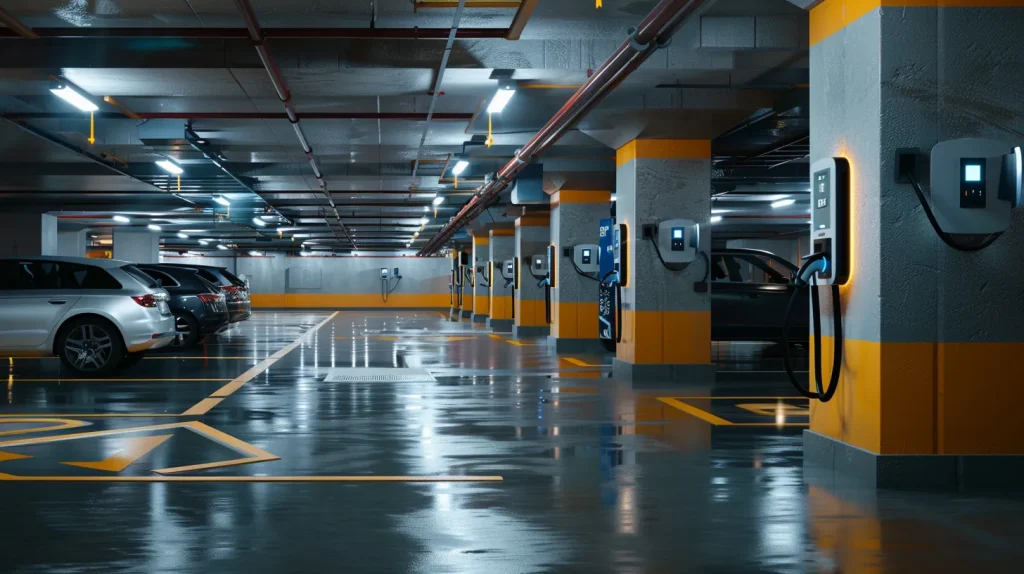
Cost Comparison: AC Retrofit vs DC Installation
| Item | AC Retrofit | DC Fast Charging |
| Equipment cost | Low | Very high |
| Installation complexity | Low | High |
| Grid upgrade | Rare | Often required |
| ROI period | Short | Long |
For most parking garages, AC offers the fastest return on investment
Revenue Opportunities for Parking Operators
AC charging enables:
- pay-per-use charging
- subscription models
- parking + charging bundles
As EV adoption grows:
charging becomes an additional revenue stream.
Real-World Use Cases
Public parking garages using AC charging:
- shopping malls
- office parking structures
- municipal parking facilities
- airport parking
These locations benefit from:
- predictable dwell time
- scalable deployment
- lower operational costs
Common Mistakes to Avoid
- overbuilding infrastructure too early
- ignoring load management
- installing chargers in low-usage areas
- underestimating future demand
Why This Strategy Works in 2026
With rising EV adoption:
- demand for public charging is increasing
- grid capacity remains limited
- cost control is critical
AC charging provides the best balance between:
- cost
- scalability
- practicality
About QIAO
QIAO provides cost-effective AC EV charging solutions designed for public and commercial environments.
Our solutions support:
- dynamic load management
- wall-mounted space-saving design
- OCPP-based smart charging
- scalable deployment for parking facilities
QIAO helps parking operators build low-cost, high-efficiency charging networks.
FAQ
Is AC charging enough for public parking garages?
Yes, especially for long parking durations.
Do I need to upgrade my electrical system?
Not always. Load management can maximize existing capacity.
How many chargers should I install initially?
Start with high-demand areas and expand gradually.
Is AC charging profitable?
Yes, with proper pricing and utilization.