
As EV charging infrastructure becomes commercialized, one component is often underestimated:
the smart energy meter
In commercial AC charging scenarios, smart meters—especially those with MID or UL certification—are critical for:
- accurate billing
- regulatory compliance
- revenue protection
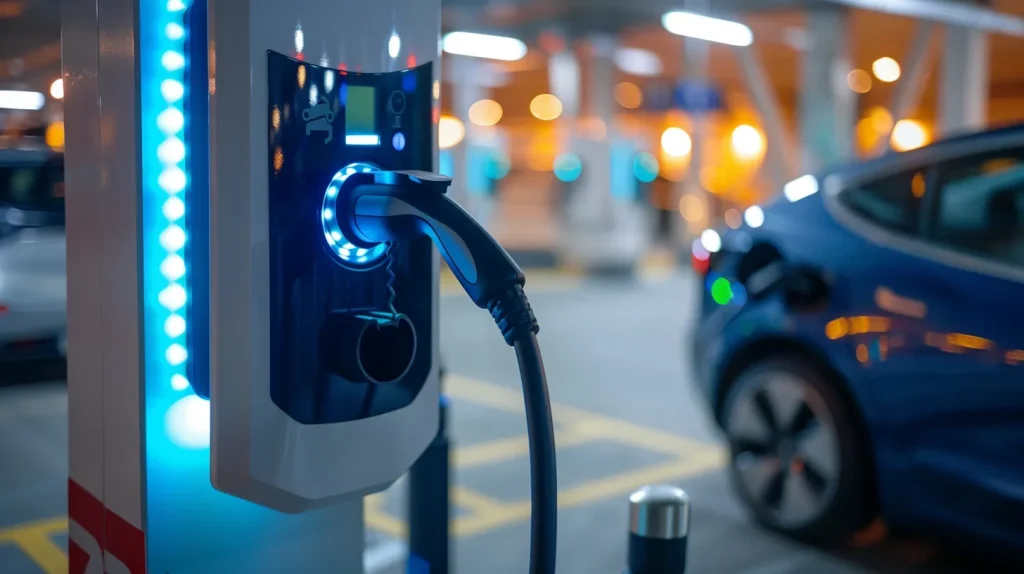
What Is a Smart Meter in EV Charging?
A smart meter is a device that measures:
- electricity consumption (kWh)
- voltage
- current
Electricity meter overview:
https://en.wikipedia.org/wiki/Electricity_meter
In EV charging, it ensures:
precise measurement of energy delivered to each vehicle
Why Metering Matters in Commercial Charging
Unlike home charging, commercial scenarios involve:
- multiple users
- billing systems
- legal compliance
Accurate metering is essential for:
- fair billing
- dispute resolution
- financial transparency
What Is MID Certification?
MID stands for Measuring Instruments Directive (EU).
MID overview:
https://en.wikipedia.org/wiki/Measuring_Instruments_Directive
It ensures that:
- energy meters meet EU legal standards
- billing is accurate and certified
Required for public and commercial charging in Europe
What Is UL Certification?
UL (Underwriters Laboratories) is a U.S. safety certification.
UL overview:
https://en.wikipedia.org/wiki/UL_(safety_organization)
For EV charging:
- UL certification ensures safety and compliance
- supports North American market requirements
While UL focuses more on safety, it is critical for market access
MID vs UL: Key Differences
| Factor | MID | UL |
| Region | Europe | North America |
| Focus | Billing accuracy | Safety |
| Mandatory for billing | Yes (EU) | Not always |
| Application | Commercial charging | Product certification |
Both are essential depending on target market.
Key Functions of Smart Meters in AC Charging
1. Accurate Energy Measurement
Tracks:
- energy per session
- total consumption
Enables precise billing.
2. Billing and Revenue Management
Supports:
- pay-per-kWh models
- dynamic pricing
Prevents revenue loss.
3. Compliance With Regulations
Many regions require:
- certified metering
- transparent billing
Non-compliance can lead to legal issues.
4. Data Collection and Analytics
Smart meters provide data for:
- usage analysis
- demand forecasting
- optimization
5. Integration With Charging Platforms
Smart charging overview:
https://en.wikipedia.org/wiki/Smart_charging
Meters integrate with:
- backend systems
- payment platforms
- energy management systems
Use Cases in Commercial Environments
Public Charging Stations
- require certified billing
- need transparent pricing
Workplace Charging
- track employee usage
- enable cost allocation
Multi-Unit Residential (MUD)
- separate billing for residents
- prevent disputes
Fleet Charging
- monitor energy consumption per vehicle
- optimize operational cost
Internal vs External Metering
| Type | Description |
| Internal meter | built into charger |
| External meter | separate certified device |
Many commercial deployments require certified external or MID-compliant internal meters
Risks of Non-Certified Metering
- inaccurate billing
- customer disputes
- regulatory penalties
- loss of trust
Certification is not optional in many markets.
Best Practices for Deployment
1. Choose Certified Chargers
Ensure:
- MID compliance (EU)
- UL certification (US)
2. Align With Business Model
If using:
- pay-per-use → certified meter required
- free charging → less critical
3. Integrate With Backend Systems
Ensure seamless:
- data transmission
- billing
- reporting
4. Plan for Future Regulations
Standards are evolving.
Future-proof your infrastructure.
Business Impact
Using certified smart meters helps:
- ensure billing accuracy
- protect revenue
- enable scalable operations
- meet regulatory requirements
Essential for commercial EV charging success
About QIAO
QIAO provides AC EV charging solutions with integrated smart metering options compliant with MID and UL standards.
Our solutions support:
- accurate energy measurement
- billing integration
- regulatory compliance
- scalable commercial deployment
QIAO helps businesses build trusted and compliant EV charging infrastructure.
FAQ
Is MID certification mandatory?
Yes, for billing-based charging in Europe.
Does UL certification cover billing accuracy?
No, it focuses mainly on safety.
Can I use non-certified meters?
Only for non-billing scenarios.
Do all chargers include smart meters?
Most modern chargers do, but certification varies.