
Two decades ago, WiFi was considered a premium feature
Today, it’s expected everywhere:
- Hotels
- Offices
- Cafés
- Homes
Now, a similar transformation is happening with EV charging.
The key question is:
Will EV charging become a “must-have” infrastructure—just like WiFi?

The Evolution of Infrastructure: From Luxury to Standard
Many technologies follow the same path:
| Stage | Example (WiFi) | EV Charging Today |
| Early adoption | Limited, premium | Growing, selective |
| Expansion | Competitive advantage | Differentiator |
| Standardization | Expected everywhere | Emerging trend |
Insight:
EV charging is currently in the transition phase
Why EV Charging Is Following the Same Path as WiFi
1. Rapid Growth of EV Adoption
Global EV sales are increasing rapidly.
According to:
- International Energy Agency (IEA)
- energy.gov
More EVs = more demand for charging access
2. User Expectation Shift
Just like WiFi:
- Users no longer ask “if”
- They expect it to exist
For EV drivers:
Charging availability is becoming a basic expectation
3. Competitive Pressure
Businesses without charging:
- Lose customers
- Appear outdated
Early adopters gain:
- Higher traffic
- Better customer retention
4. Government Policies & Incentives
Many countries are:
- Mandating EV infrastructure
- Offering subsidies
Suggested external links:
- “EV policy trends” → IEA
- “charging infrastructure programs” → energy.gov
5. Real Estate Value Impact
Properties with EV charging:
- Attract more tenants
- Increase asset value
Charging becomes a value-added feature
WiFi vs EV Charging: Key Differences
| Factor | WiFi | EV Charging |
| Installation cost | Low | Medium |
| Usage behavior | Continuous | Periodic |
| Revenue potential | Limited | High |
| Infrastructure complexity | Low | Moderate |
Insight:
EV charging is not just infrastructure—it’s also a revenue generator
Where Standardization Will Happen First
1. Residential Buildings
- Apartments
- Condominiums
High demand from EV owners
2. Commercial Properties
- Office buildings
- Shopping centers
3. Hospitality Industry
- Hotels
- Resorts
Charging becomes part of the guest experience
4. Fleet and Logistics
- Depots
- Warehouses
Operational necessity
Why AC Charging Will Lead This Transition
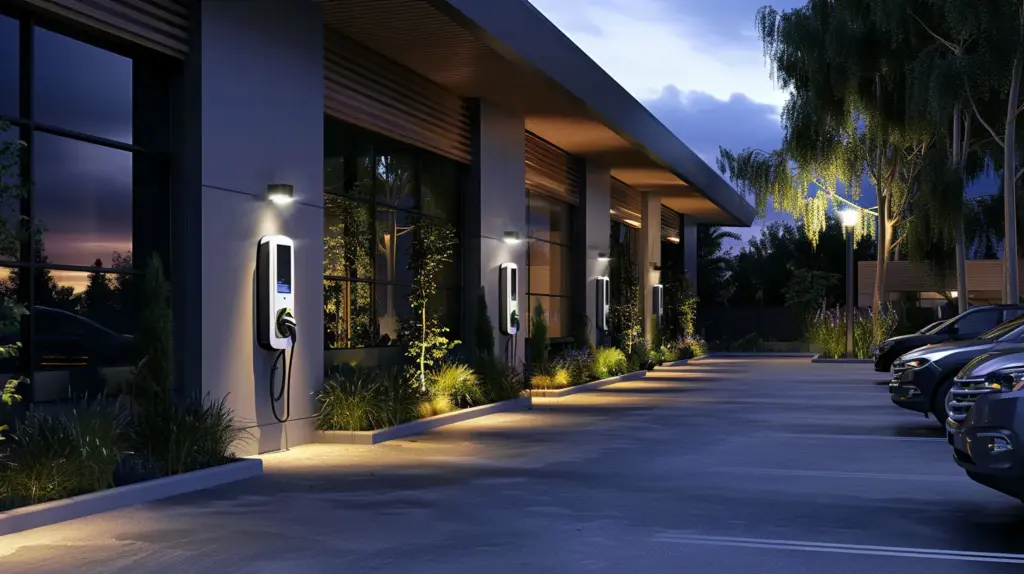
AC charging is best suited for widespread adoption:
- Lower cost
- Easier installation
- Scalable deployment
Perfect for:
- Daily parking scenarios
- Long-duration charging
AC EV charging solutions will form the foundation of standard infrastructure
Business Implications for Early Adopters
1. Competitive Advantage
Early adopters:
- Stand out in the market
- Attract EV users
2. New Revenue Streams
Charging enables:
- Pay-per-use
- Subscription models
3. Future-Proofing Assets
Installing now avoids:
- Higher future costs
- Infrastructure retrofits
Risks of Delayed Adoption
Businesses that wait may face:
- Higher installation costs later
- Lost customers
- Competitive disadvantage
Where QIAO Fits In
At QIAO, we focus on:
- AC EV charging solutions designed for scalable deployment
- Supporting businesses to:
- Prepare for future demand
- Build competitive advantage
- Generate new revenue
Our systems are built for:
- Reliability
- Scalability
- Long-term infrastructure value
Helping clients transition from:
Optional feature → to essential infrastructure
Future Outlook (2027–2035)
By the next decade:
- EV charging will be expected in most properties
- Regulations may require installation
- Smart charging systems will become standard
Just like WiFi today:
Charging will shift from “nice-to-have” → to “must-have”
Key Takeaway
EV charging is on the same path as WiFi—but with even greater business impact.
FAQ
1. Will EV charging become standard infrastructure?
Yes. As EV adoption grows, charging will become a basic expectation.
2. Why is EV charging compared to WiFi?
Because both follow a similar path from optional feature to essential service.
3. Which industries will adopt it first?
Residential, commercial real estate, hospitality, and fleet operations.
4. Is EV charging a cost or an investment?
It is both infrastructure and a revenue-generating asset.
5. Why is AC charging important in this trend?
Because it is cost-effective and scalable for widespread deployment.