Table of Contents
AC EV Charging Power Levels Explained
What Are AC EV Charging Power Levels?
AC EV charging power levels describe the maximum electrical power an AC charger (EVSE) can deliver to an electric vehicle, typically measured in kilowatts (kW). Unlike DC fast charging, AC chargers supply alternating current, and the vehicle’s onboard charger (OBC) determines how much power is actually accepted.
As a result, AC charging power levels are defined by the interaction between the grid, the EVSE, and the vehicle, not by the charger alone.
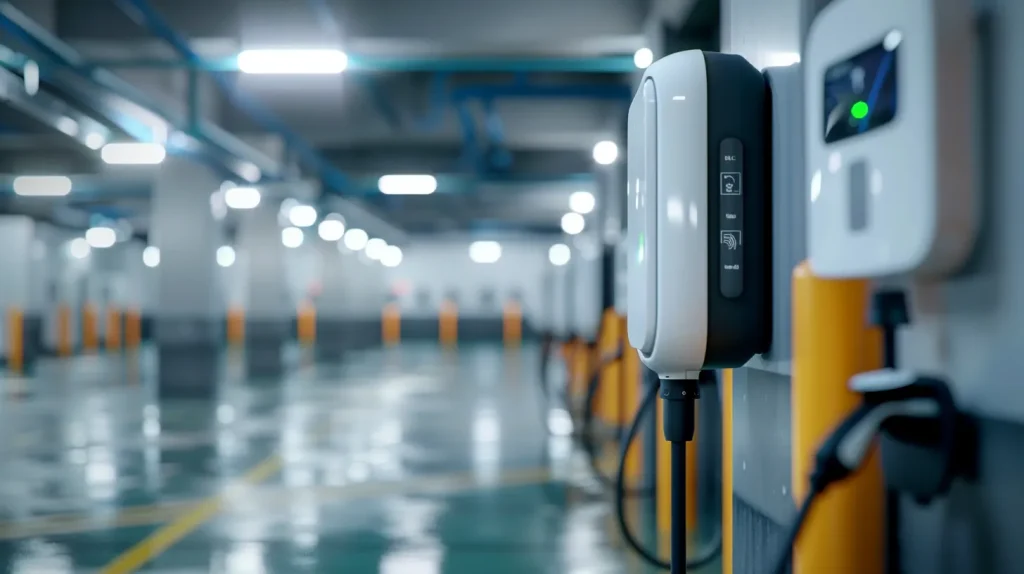
Common AC Charging Power Levels (Global Overview)
| Power Level | Electrical Configuration | Typical Use Cases |
| 3.6 kW | Single-phase, 16 A | Residential, long dwell time |
| 7.2–7.4 kW | Single-phase, 32 A | Homes, workplaces |
| 11 kW | Three-phase, 16 A | Commercial, apartments |
| 22 kW | Three-phase, 32 A | Fleet depots, retail, hospitality |
Key principle:
Installing a higher-power AC charger does not increase charging speed if the vehicle’s OBC cannot support it.
Grid Constraints and Power Level Selection
Single-Phase vs. Three-Phase Power
| Grid Type | Max Practical AC Power |
| Single-phase | 7.4 kW |
| Three-phase | 11 kW / 22 kW |
In regions without three-phase access, deploying 11 kW or 22 kW chargers is technically impossible without major electrical upgrades.
Vehicle Onboard Charger (OBC) as the Limiting Factor
The EVSE only advertises available power; the vehicle decides how much to draw.
| Vehicle OBC Rating | Real Charging Outcome |
| 3.3 kW OBC | Any AC charger limited to 3.3 kW |
| 7.4 kW OBC | Full speed on single-phase |
| 11 kW OBC | Requires three-phase grid |
| 22 kW OBC | Rare, premium vehicles only |
Deployment insight:
Fleet and commercial operators should analyze their vehicle mix before selecting AC power levels.
Charging Time Comparison by Power Level
| Battery Size | 7.4 kW | 11 kW | 22 kW |
| 40 kWh | ~6 h | ~4 h | ~2 h |
| 60 kWh | ~8 h | ~6 h | ~3 h |
| 80 kWh | ~11 h | ~8 h | ~4 h |
Approximate values; actual time depends on OBC and efficiency.
Power Levels vs. Deployment Scenarios
Residential & Apartments
- 3.6–7.4 kW is sufficient
- Lower infrastructure cost
- Compatible with overnight charging
Workplace & Office Parking
- 7.4–11 kW balances cost and performance
- Suitable for 6–8 hour dwell times
Retail, Hospitality & Public Parking
- 11–22 kW supports higher vehicle turnover
- Improves charger utilization
Fleet Depots
- Power level matched to vehicle OBC and schedule
- Load management often more important than raw power
Load Management and Power Level Optimization
Higher AC power does not always mean better performance.
Dynamic Load Management (DLM) allows:
- Power sharing across multiple chargers
- Peak demand control
- Reduced grid upgrade costs
In many commercial projects, multiple 7.4–11 kW chargers with load balancing outperform fewer 22 kW units in total energy delivered.
Regulatory and Safety Considerations
Higher power levels require:
- Proper cable sizing
- Thermal monitoring
- Residual current detection (AC + DC leakage)
- Compliance with local standards (IEC, UL, NEC)
Ignoring these factors can lead to installation failure or operational risk.
Common Mistakes When Choosing AC Power Levels
- Selecting maximum kW without vehicle data
- Ignoring grid phase limitations
- Overinvesting in unused charging capacity
- Not planning for load balancing
- Assuming charger rating equals charging speed
Best Practices for AC Charging Power Planning
- Base power levels on vehicle OBC capability
- Match charger count to dwell time, not peak power
- Use load management to reduce infrastructure cost
- Choose chargers with adjustable power settings
- Plan for future scalability, not short-term specs
How QIAO Designs AC Charging Power Solutions
At QIAO, AC charging power levels are designed around real-world usage, not theoretical maximums.
QIAO AC EV chargers:
- Support 3.6 kW to 22 kW configurations
- Work with single-phase and three-phase grids
- Allow flexible power settings for different sites
- Integrate load management for commercial deployments
- Serve residential, commercial, and fleet applications globally
This approach enables B2B customers to deploy cost-efficient, reliable, and future-ready AC charging infrastructure.