Table of Contents
Apartment EV Charging Planning Guide for Property Owners
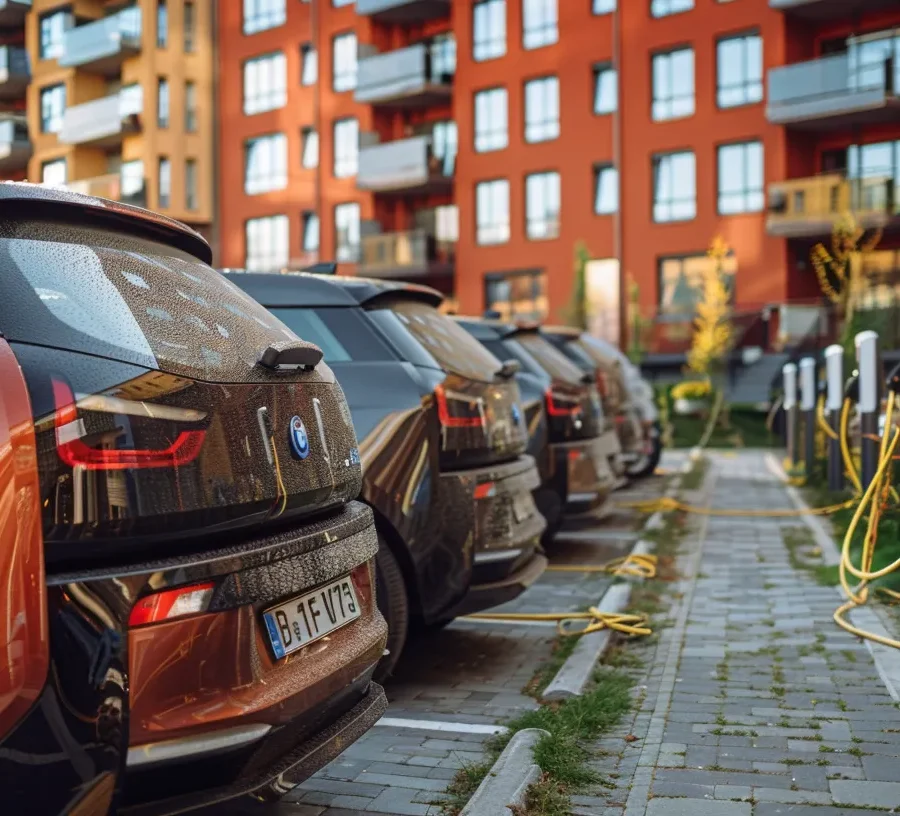
As electric vehicle adoption continues to rise, apartment buildings and multi-unit residential properties are becoming one of the most important—and complex—EV charging scenarios.
Unlike single-family homes, apartment EV charging requires careful planning, shared infrastructure, and long-term scalability.
This article outlines how property owners and managers can design practical, future-ready EV charging plans for apartment buildings.
Why Apartment EV Charging Requires Planning
Apartment charging is fundamentally different from other scenarios:
- Multiple users share limited electrical capacity
- Parking ownership may be private, shared, or assigned
- Usage patterns vary widely
- Infrastructure decisions affect long-term property value
Without proper planning, EV charging can quickly lead to power constraints, tenant disputes, and high retrofit costs.
Key Challenges in Apartment EV Charging
Limited Electrical Capacity
Most existing apartment buildings were not designed for EV charging.
Upgrading transformers or main panels can be expensive and disruptive.
Shared Infrastructure
Unlike single homes, chargers must coexist with:
- Elevators
- HVAC systems
- Lighting and common facilities
Fair Access and Billing
Residents expect:
- Transparent usage tracking
- Fair cost allocation
- Reliable daily charging access
Centralized vs Distributed Charging Layouts
Centralized Charging Areas
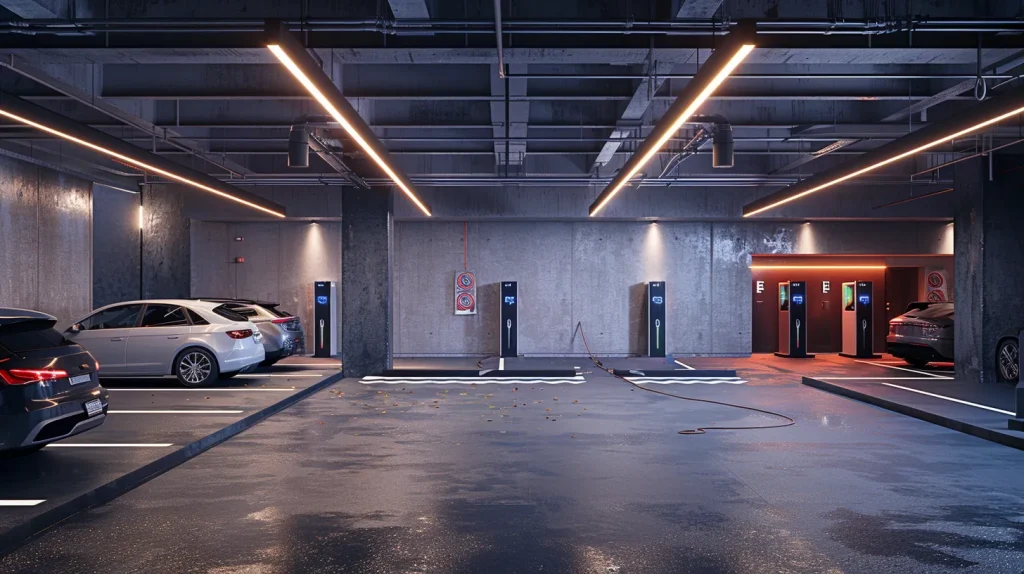
- Shared charging zones in parking garages
- Easier to manage and maintain
- Suitable for early-stage deployments
Distributed Charging (Assigned Parking)
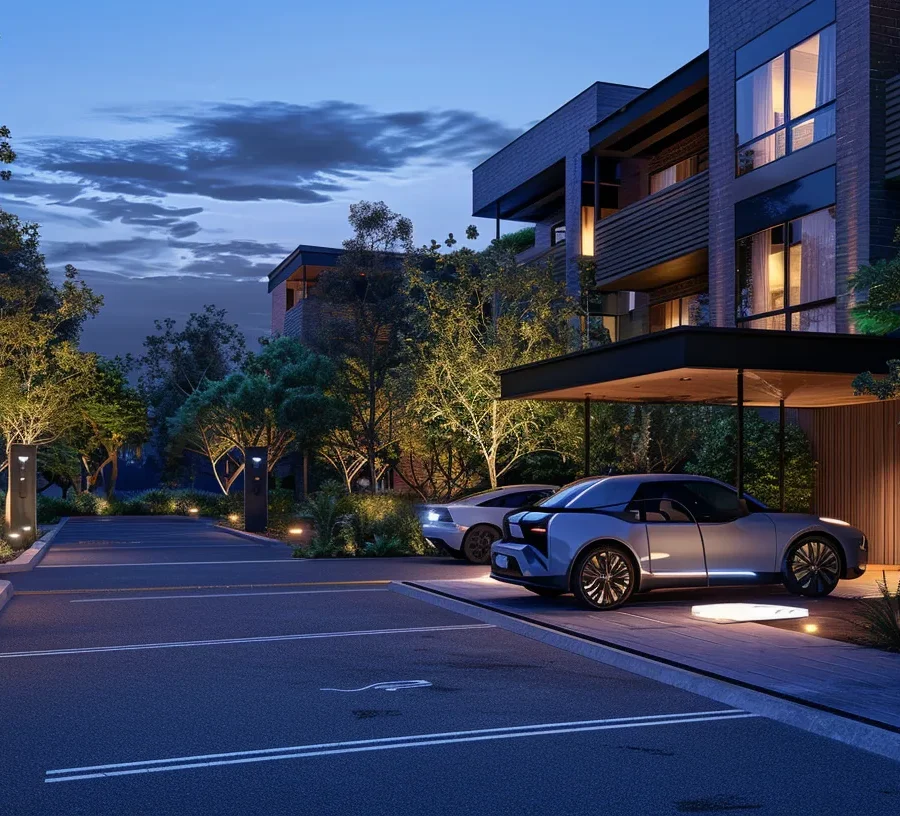
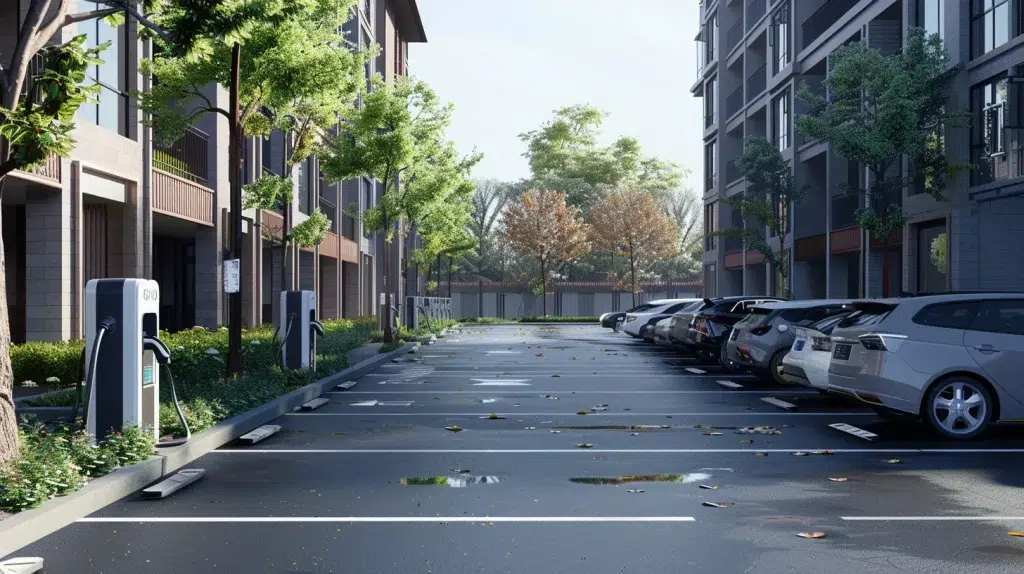
- Chargers installed at individual parking spots
- Better user convenience
- Requires stronger load management planning
In most cases, a phased hybrid approach works best.
The Role of AC Chargers in Apartment Buildings
For apartments, AC charging is the most practical solution:
- Matches overnight charging behavior
- Lower installation cost
- Less stress on the electrical system
- Safer and easier to manage
Typical power levels:
- 7 kW for single-phase
- 11–22 kW for three-phase (where available)
DC fast charging is rarely suitable for residential apartments due to cost and grid impact.
Load Management Is Essential
Dynamic Load Management (DLM) allows:
- Multiple chargers to share limited power
- Automatic adjustment based on building load
- Expansion without immediate grid upgrades
For apartment projects, DLM is often the difference between “possible” and “not feasible.”
Planning for Growth, Not Just Today
EV adoption among residents will increase over time.
A good apartment EV charging plan should:
- Start with partial deployment
- Reserve capacity for future chargers
- Use OCPP-compatible chargers
- Avoid vendor lock-in
Planning only for current demand almost always leads to costly redesigns later.
User Experience Matters
From a market perspective, residents care about:
- Simple charging access
- Reliable performance
- Clear pricing
- Minimal downtime
Even the best technical solution will fail if the daily user experience is poor.
Common Mistakes to Avoid
Installing chargers without load management
Choosing non-upgradable hardware
Ignoring future expansion
Overbuilding with unnecessary high power
Treating EV charging as a one-time project instead of infrastructure
Apartment EV Charging as a Property Value Driver
Well-planned EV charging:
- Increases property attractiveness
- Improves tenant retention
- Supports sustainability goals
- Prepares assets for future regulations
In many markets, EV readiness is shifting from a “nice-to-have” to an expectation.
Conclusion: Practical Planning Wins
Apartment EV charging does not require extreme power or complex systems.
It requires realistic planning, scalable AC charging, and smart load control.
The most successful projects focus on:
- Simplicity
- Reliability
- Future readiness
About QIAO: AC Charging Solutions for Residential Properties
QIAO provides B2B AC EV charging solutions designed for apartment buildings and multi-unit residential projects.
Our wall-mounted and portable AC chargers support:
- Apartment-friendly power levels
- Load management integration
- OCPP-based backend compatibility
- Long-term, scalable deployment
By focusing on practical AC charging infrastructure, QIAO helps property owners deploy EV charging that residents can actually use—today and tomorrow.