Table of Contents
Charging Station Intelligence: APP, 4G/Wi-Fi & Platform Trends
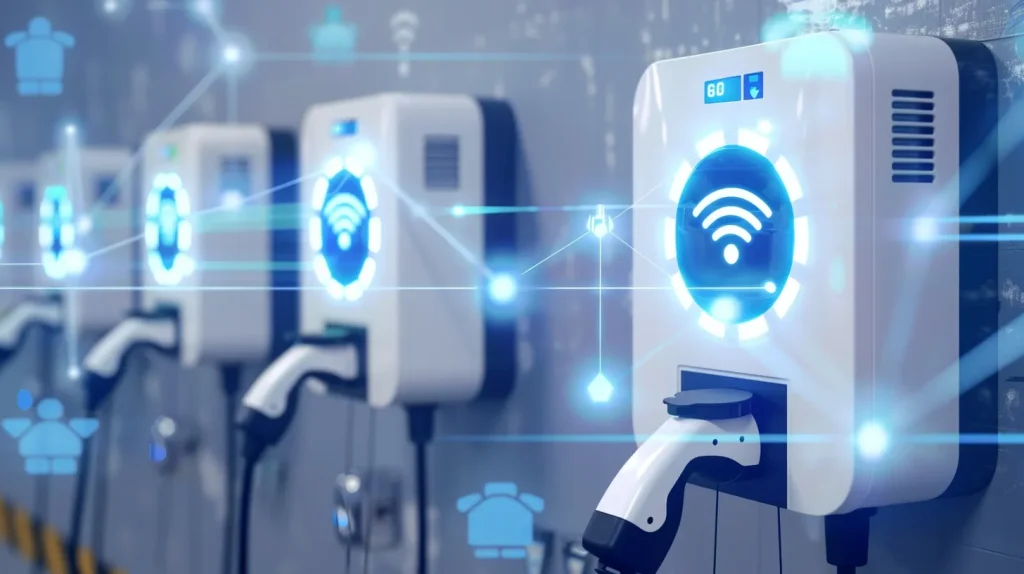
Electric vehicle (EV) infrastructure has evolved rapidly from basic standalone chargers to fully networked, intelligent systems. With commercial deployments scaling and B2B customers demanding more control, visibility, and operational efficiency, charging station intelligence—powered by mobile apps, cellular/Wi-Fi connectivity, and centralized platforms—is becoming a core differentiator in the EV charging ecosystem.
This article explores the key trends driving charging station intelligence, the technologies enabling it, and why this shift matters for businesses deploying EV infrastructure at scale.
Why Charging Station Intelligence Matters for B2B Deployments
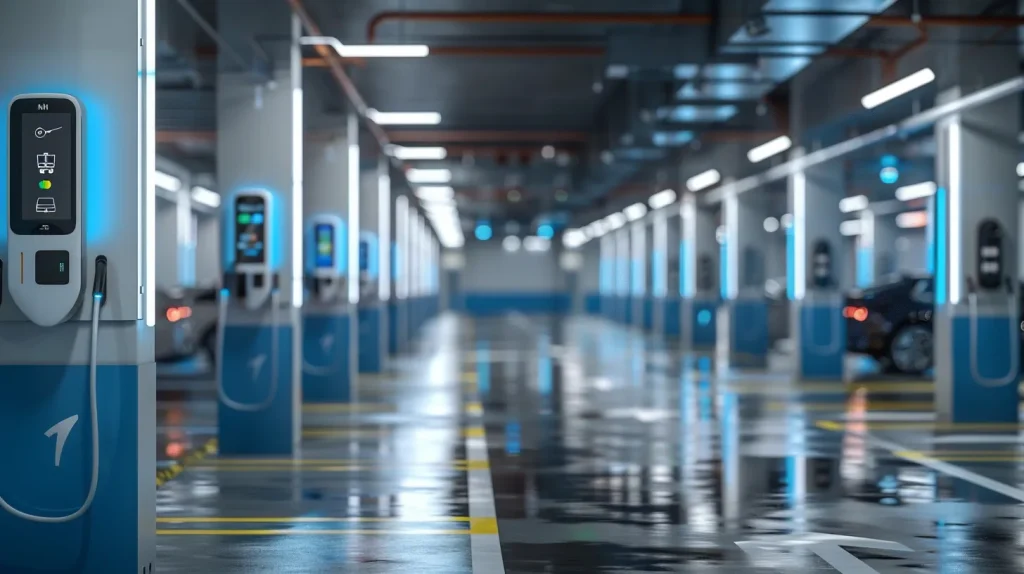
For B2C users, a charging station might simply provide electrons. For B2B operators—commercial properties, fleet managers, parking operators, and integrators—the objectives are broader:
- Operational visibility and uptime monitoring
- Remote control and firmware management
- Dynamic pricing and billing integration
- Load balancing and energy optimization
- User access control and reporting
Intelligent EV charging not only enhances user experience, but also lowers operational cost, reduces downtime, and empowers data-driven decision making.
The Role of Mobile Apps in Smart Charging
Mobile applications have become the central interface between users and chargers. Beyond simple start/stop functions, modern charging apps now provide:
• Real-Time Status and Control
Users and operators can see charging progress, session history, and device health instantly.
• Remote Start/Stop with Authorization
Operators can restrict access, schedule charging windows, and enable user authentication.
• Billing and Payment Integration
Tiered pricing, membership tariffs, and usage reports are increasingly embedded in apps.
• Notifications and Alerts
Apps notify users and administrators about completed charging, network errors, or maintenance needs.
Data Insight: According to a survey by Statista, over 60% of public charging sessions in Europe in 2024 were initiated via mobile apps—a clear indicator of user reliance on app-based charging controls. (Source: Statista EV Charging Report 2025)
Connectivity: 4G/LTE vs Wi-Fi vs Ethernet
Reliable connectivity is foundational for charging station intelligence. Each connection type has pros and cons:
• 4G/LTE
- Wide coverage; no dependency on local network
- Good option for outdoor and standalone sites
- Often used where Wi-Fi is unstable
• Wi-Fi
- Lower operating cost once deployed
- High bandwidth suitable for OTA updates and rich telemetry
- Requires local network management
• Ethernet
- Most stable wired option
- Ideal for indoor stations integrated with building systems
- Higher install cost and complexity
In practice, many B2B deployments use dual connectivity (Wi-Fi + 4G fallback) to ensure reliability.
Industry Data: A recent report by Wood Mackenzie projects that by 2027, over 70% of commercial EV chargers worldwide will support cellular connectivity alongside Wi-Fi, reflecting the importance of always-online operations. (Source: Wood Mackenzie EV Infrastructure Forecast
Platformization: Centralized Management and Data Intelligence
Charging station platformization refers to bringing all chargers under a unified cloud-based management system. Key benefits include:
• Centralized Monitoring
Operators can see the status of all chargers across sites from a single dashboard.
• Remote Maintenance
Remote diagnostics reduce on-site service calls and shorten Mean Time to Repair (MTTR).
• Load and Energy Management
Platforms can coordinate charging behavior to avoid grid overload and reduce energy costs through smart scheduling.
• Analytics and Reporting
Usage patterns, peak times, and revenue KPIs become visible for strategic decision making.
• Integration with Building Systems
Platforms increasingly connect with building energy management systems (BEMS) to optimize total energy consumption.
Trend: Gartner’s 2025 Infrastructure Report highlights that cloud-based platform adoption in industrial deployments has reached 55%, up from 32% in 2022. EV charging is rapidly aligning with this enterprise trend. (Source: Gartner IoT & Edge Report 2025)
Standards and Interoperability
Intelligent charging depends on open protocols to ensure chargers can communicate with apps and platforms reliably. Key standards include:
- OCPP (Open Charge Point Protocol): enables charger-to-backend communication.
- OCPI: supports roaming and tariff exchange between networks.
- OpenADR: allows demand response integration with utilities.
For B2B deployments, protocol compliance is a strategic requirement to avoid vendor lock-in and ensure system integrability.
Security and Data Protection in Connected Charging
With connected infrastructure comes increased cybersecurity risk. Intelligent charging platforms must address:
- Secure remote firmware updates
- Data encryption in transit and at rest
- Authentication controls
- Role-based access controls
- Regular security audits
In Europe, compliance with NIS2 Directive and GDPR is increasingly influencing how charging data is collected and managed.
How Intelligent Charging Reduces Operational Cost
Smart charging intelligence delivers operational savings by:
• Reducing Downtime
Remote alerts and diagnostics mean issues are resolved faster.
• Optimizing Load and Energy Use
Avoid peak tariffs with scheduled charging and load distribution.
• Reducing Service Visits
OTA updates replace many on-site technician trips.
• Improving Charge Point Utilization
Data insights help allocate resources more efficiently.
According to a study by Deloitte, operators who deploy intelligent management can reduce total operating costs by up to 30% over five years, compared to unmanaged installations. (Source: Deloitte EV Operations Report 2024)
Modular Intelligence Options: What B2B Customers Should Look For
When evaluating charging station intelligence, B2B buyers should prioritize:
| Feature | Importance |
| OCPP Compliance | High |
| Dual Connectivity (4G + Wi-Fi) | High |
| Mobile App Controls | High |
| OTA Firmware Updates | Medium |
| Analytics & Reporting | High |
| Energy Management Integration | High |
| Roaming Support (OCPI) | Medium |
Future Directions: AI, Predictive Maintenance, and Edge Computing
Charging station intelligence is maturing toward:
- AI-Driven Demand Forecasting: Predict usage peaks and optimize scheduling.
- Predictive Maintenance: Anticipate faults before they occur.
- Edge Processing: Reduce latency and operate even when disconnected from cloud.
These advances will further enhance reliability and reduce operating overhead for B2B deployments.
Conclusion
The evolution toward smart charging station intelligence—powered by mobile apps, hybrid connectivity (4G/LTE + Wi-Fi), and platformized cloud management—is no longer an option. It is a fundamental requirement for scalable, efficient, and profitable commercial EV deployments.
B2B customers focusing on these capabilities will gain:
- Better operational visibility
- Lower energy & service costs
- Scalable architectures
- Higher uptime and user satisfaction
For businesses planning or expanding EV infrastructure, choosing chargers with inherent intelligence and platform support will be a defining success factor in the coming decade.