Table of Contents
How to Deploy AC EV Chargers in Shopping Malls, Hotels, and Parking Facilities (Commercial Scenario Guide)
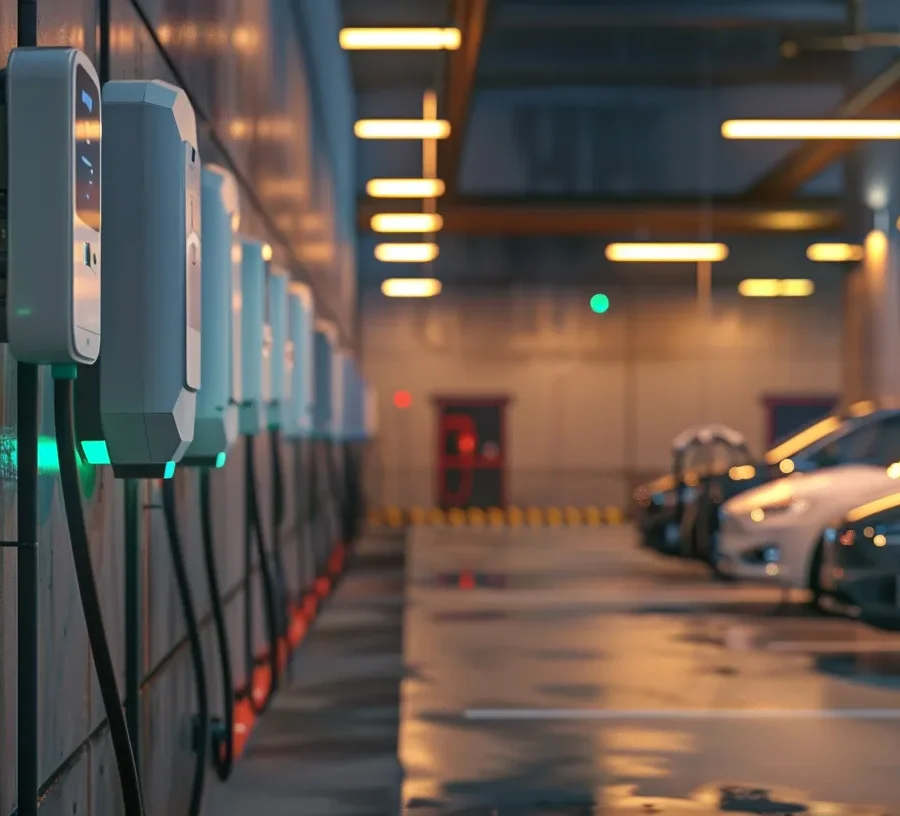
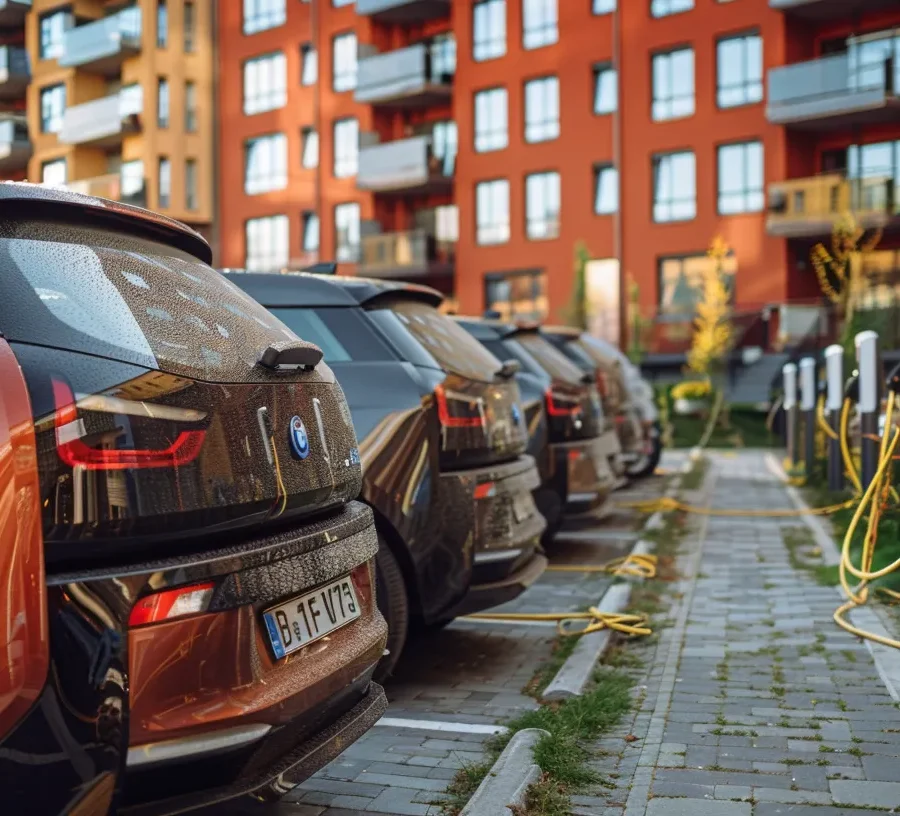
As electric vehicles continue to scale globally, commercial properties such as shopping malls, hotels, and public parking facilities are under increasing pressure to provide reliable charging infrastructure. Among the available technologies, AC charging remains the most practical and cost-effective solution for medium- and long-duration parking scenarios.
This guide explains how to plan, size, and deploy AC EV charging infrastructure in commercial environments, with reference to key technical standards and industry best practices.
Why AC Charging Fits Commercial Scenarios
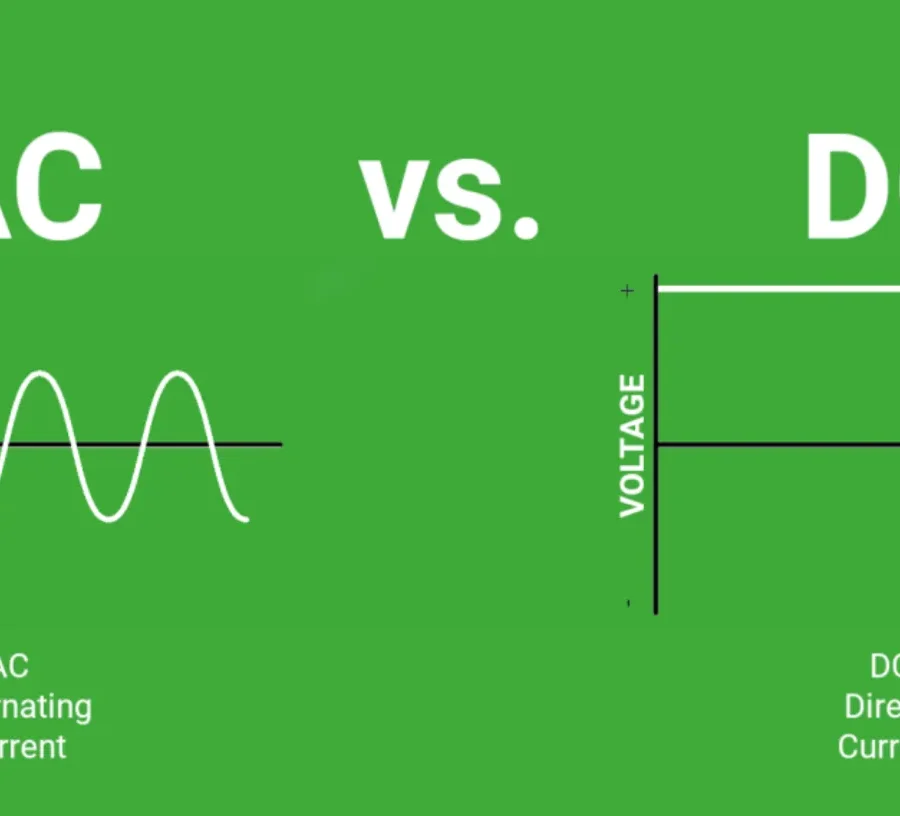
AC (alternating current) charging delivers power through the building’s existing electrical system and converts it to DC inside the vehicle using the onboard charger.
For most commercial sites:
- Parking duration typically ranges from 1–8 hours
- Grid capacity is shared with building loads
- Installation budgets must remain controlled
AC chargers are generally more suitable than DC fast chargers for these environments due to lower infrastructure cost and easier grid integration.
For background on alternating current, see:
Alternating Current – Wikipedia
https://en.wikipedia.org/wiki/Alternating_current
Step 1 – Site Assessment and Power Capacity Planning
Before installation, conduct a structured electrical assessment.
Evaluate:
- Main distribution board capacity
- Available spare capacity (kVA or kW)
- Existing load profile
- Future expansion potential
In commercial settings, power is often delivered via three-phase power systems, which allow higher and more balanced charging capacity.
Three-phase electric power – Wikipedia
https://en.wikipedia.org/wiki/Three-phase_electric_power
Load calculations should account for peak building demand and EV charging simultaneously to prevent overloading.
Step 2 – Select the Appropriate AC Charger Type
Single-Phase vs. Three-Phase
- Single-phase (230V typical) – Suitable for small retail sites or limited installations
- Three-phase (400V typical in many regions) – Recommended for hotels, malls, and structured parking
The choice impacts charging speed, cable design, and electrical protection requirements.
Connector Standards
In many regions (Europe, parts of Asia, Australia), the dominant AC interface is Type 2 (IEC 62196-2).
IEC 62196 – Wikipedia
https://en.wikipedia.org/wiki/IEC_62196
In North America, the common AC connector standard is SAE J1772.
SAE J1772 – Wikipedia
https://en.wikipedia.org/wiki/SAE_J1772
Selecting chargers compliant with regional standards ensures vehicle compatibility and regulatory approval.
Step 3 – Implement Load Management (Critical for Commercial Sites)
Commercial buildings rarely have unlimited spare capacity. Installing multiple chargers without control mechanisms can trigger:
- Main breaker trips
- Demand charge penalties
- Voltage instability
A Dynamic Load Management (DLM) system automatically distributes available power across chargers based on real-time building load.
Smart grid – Wikipedia
https://en.wikipedia.org/wiki/Smart_grid
Smart charging solutions reduce infrastructure upgrade costs and improve operational safety.
Step 4 – Electrical Protection and Safety Compliance
AC charging deployments must comply with local electrical codes and international safety frameworks.
Key Protection Elements
- Residual Current Device (RCD) protection
- Proper grounding (earthing)
- Surge protection devices (SPD)
- Circuit breakers sized per load
Residual-current device – Wikipedia
https://en.wikipedia.org/wiki/Residual-current_device
Earthing system – Wikipedia
https://en.wikipedia.org/wiki/Earthing_system
For international compliance, many AC chargers follow standards issued by the
International Electrotechnical Commission (IEC)
https://en.wikipedia.org/wiki/International_Electrotechnical_Commission
Certification ensures electrical safety and insurance compliance.
Scenario-Based Deployment Strategies
A. Shopping Malls
Typical Characteristics:
- Medium dwell time (1–3 hours)
- High daily turnover
- Marketing visibility opportunity
Best Practice:
- Install chargers near entrances
- Integrate with parking payment systems
- Enable user authentication via RFID or mobile app
AC charging supports steady vehicle rotation without excessive grid stress.
B. Hotels
Typical Characteristics:
- Long dwell time (overnight)
- Predictable occupancy patterns
- Guest expectation for amenities
Best Practice:
- Prioritize three-phase AC chargers
- Offer charging as a guest benefit or paid add-on
- Integrate monitoring for remote diagnostics
Charging becomes part of the guest experience and sustainability branding.
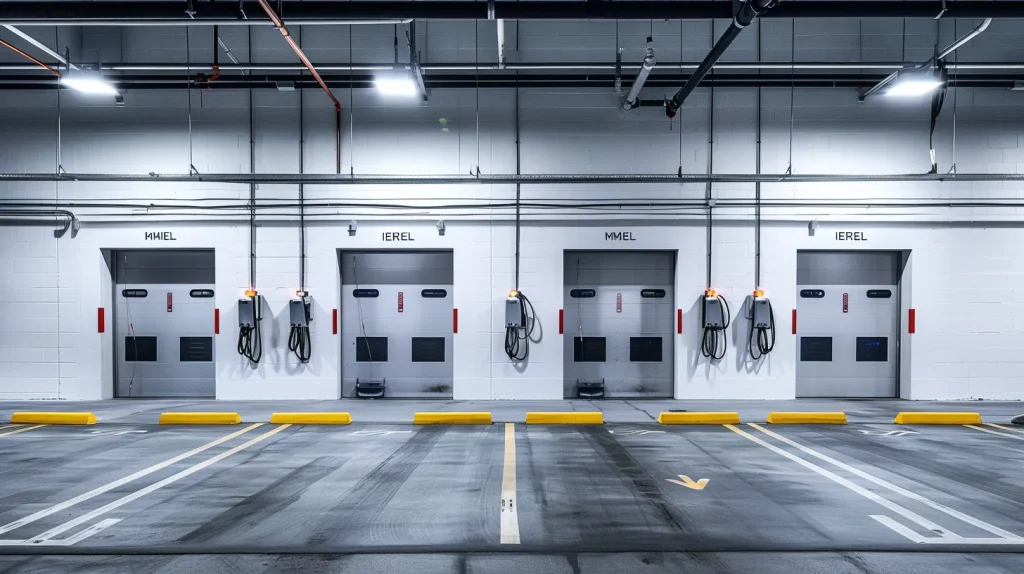
C. Public and Structured Parking Facilities
Typical Characteristics:
- Mixed dwell times
- Limited grid upgrade flexibility
- Revenue-focused operation
Best Practice:
- Deploy scalable AC infrastructure
- Use centralized load balancing
- Plan cable management carefully for safety
AC solutions are particularly effective in parking structures where DC fast charging would require substantial grid reinforcement.
Network Connectivity and Monitoring
Commercial chargers typically support communication protocols such as OCPP (Open Charge Point Protocol) for backend integration.
Open Charge Point Protocol – Wikipedia
https://en.wikipedia.org/wiki/Open_Charge_Point_Protocol
OCPP allows:
- Remote monitoring
- Usage analytics
- Firmware updates
- Fault diagnostics
For multi-site operators (hotel chains, property groups), centralized management is essential for operational efficiency.
Future-Proofing Commercial AC Charging
When deploying AC chargers in malls, hotels, or parking facilities, consider:
- Modular expansion capability
- Wide input voltage compatibility
- Software upgradeability
- Integration with renewable energy systems
Early design decisions determine long-term scalability and ROI.
Conclusion
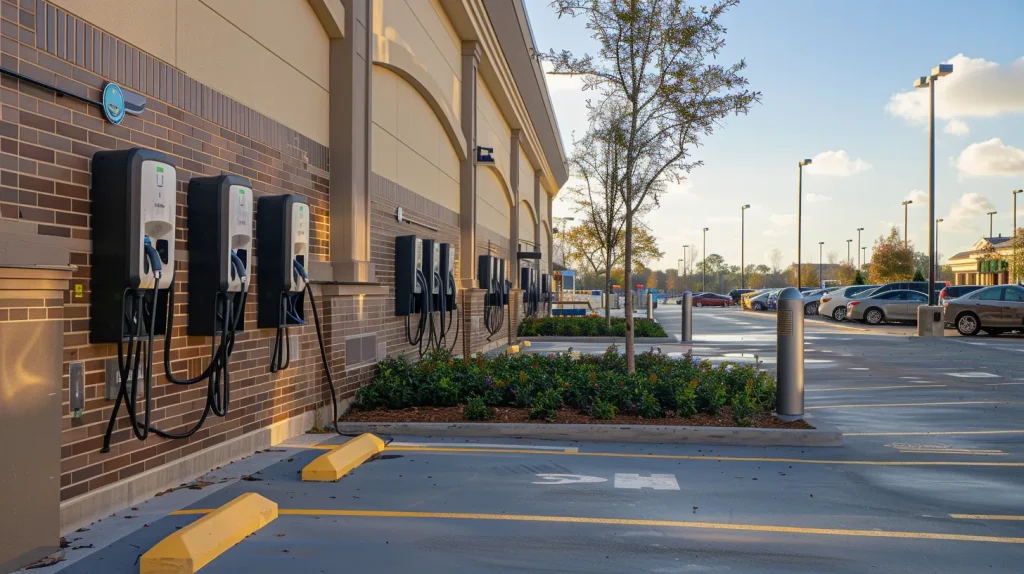
Deploying AC EV charging infrastructure in commercial environments requires more than simply installing wall-mounted chargers. It involves:
- Electrical capacity planning
- Standard compliance
- Smart load management
- User experience design
- Long-term scalability
For shopping malls, hotels, and parking operators, AC charging remains the most balanced solution between cost, performance, and operational practicality.
When properly planned and managed, commercial AC charging infrastructure becomes a long-term asset that enhances property value, attracts customers, and supports sustainable mobility.
FAQ – Commercial AC EV Charging
1.Why are AC chargers suitable for malls, hotels, and parking facilities?
AC chargers are cost-effective and ideal for medium- to long-duration parking. They integrate easily into existing building electrical systems and offer a practical balance between performance and investment.
2.How can commercial sites prevent electrical overload?
By using dynamic load management, which distributes available power across chargers in real time. This avoids breaker trips and reduces the need for grid upgrades.
3.What charging power is recommended?
- 7kW for small retail sites
- 11kW–22kW (three-phase) for hotels and structured parking
Three-phase AC charging provides efficient performance without DC infrastructure costs.
4.Is backend connectivity necessary?
Yes. OCPP-supported chargers enable remote monitoring, access control, and usage tracking—essential for multi-site commercial operations.
5.What should property owners prioritize?
- Compliance with regional connector standards
- Built-in electrical protection
- Load balancing capability
- Scalability for future expansion
Commercial-grade solutions like QIAO’s wall-mounted AC chargers are designed specifically for these requirements.