Table of Contents
Ethernet vs 4G vs WiFi: A Practical Connectivity Guide for Commercial EV Charging
Reliable connectivity is the backbone of any modern EV charging system.
In commercial deployments, chargers rely on network connections to:
- communicate with backend platforms
- process payments
- enable remote diagnostics
- support smart charging
Choosing the right communication method—Ethernet, 4G, or WiFi—directly impacts:
- system reliability
- operational cost
- scalability
Why Connectivity Matters in EV Charging
EV chargers are no longer standalone devices.
They are part of a connected ecosystem that requires:
- real-time data exchange
- remote control
- software updates (OTA)
- billing synchronization
Poor connectivity can lead to:
- charging failures
- payment issues
- downtime
Overview of Connectivity Options
| Method | Type | Typical Use |
| Ethernet | Wired | stable commercial sites |
| WiFi | Wireless (local) | indoor or small deployments |
| 4G / LTE | Cellular | distributed or outdoor sites |
Ethernet: The Most Stable Option
Advantages
- highly stable connection
- low latency
- no interference
- secure and reliable
Disadvantages
- requires cabling
- higher installation effort
- less flexible for expansion
Best Use Cases
- office buildings
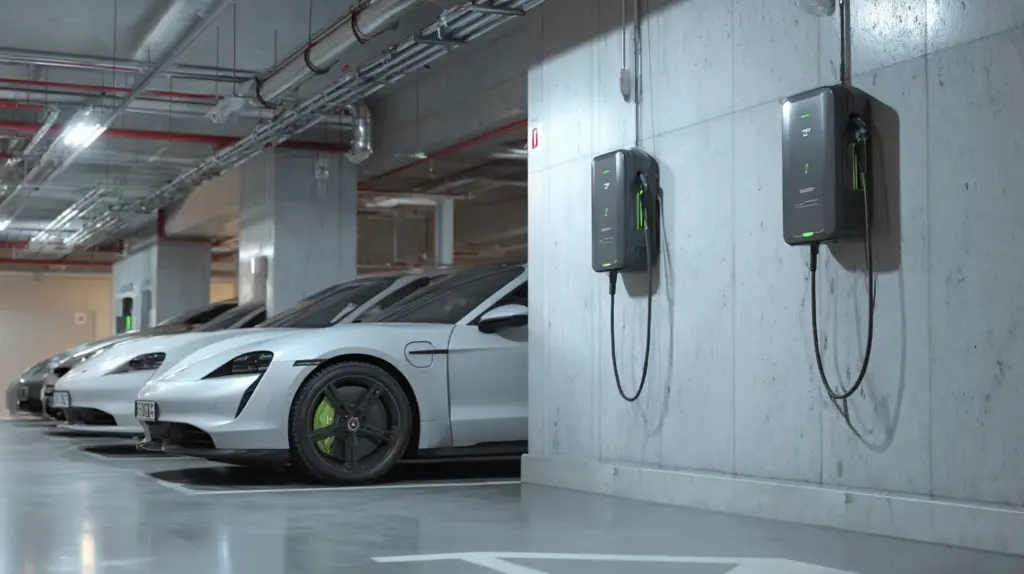
- parking garages
- fixed infrastructure
Ideal for permanent commercial installations
WiFi: Flexible but Less Reliable
Advantages
- easy to deploy
- low cost
- no cabling required
Disadvantages
- signal interference
- limited range
- stability issues in crowded environments
Best Use Cases
- small sites
- indoor locations
- low-density deployments
Suitable for non-critical or small-scale setups
4G / LTE: Maximum Flexibility
Advantages
- no local network required
- wide coverage
- fast deployment
Disadvantages
- ongoing data costs
- potential signal issues
- higher latency than Ethernet
Best Use Cases
- outdoor parking
- remote locations
- temporary installations
Ideal for distributed and scalable networks
Key Comparison: Ethernet vs WiFi vs 4G
| Factor | Ethernet | WiFi | 4G |
| Stability | High | Medium | Medium |
| Installation | Complex | Easy | Very easy |
| Cost (initial) | High | Low | Low |
| Cost (ongoing) | Low | Low | Medium |
| Scalability | Medium | Medium | High |
| Reliability | Very high | Variable | Good |
How to Choose the Right Option
1. Site Type
| Site | Recommended |
| Parking garage | Ethernet |
| Office building | Ethernet / WiFi |
| Outdoor public | 4G |
| Remote area | 4G |
2. Scale of Deployment
- small scale → WiFi
- medium scale → Ethernet
- large/distributed → 4G
3. Reliability Requirements
- mission-critical → Ethernet
- moderate → 4G
- low priority → WiFi
4. Budget Considerations
- CapEx focus → WiFi / 4G
- OpEx control → Ethernet
Hybrid Connectivity Strategy (Best Practice)
Many commercial deployments use:
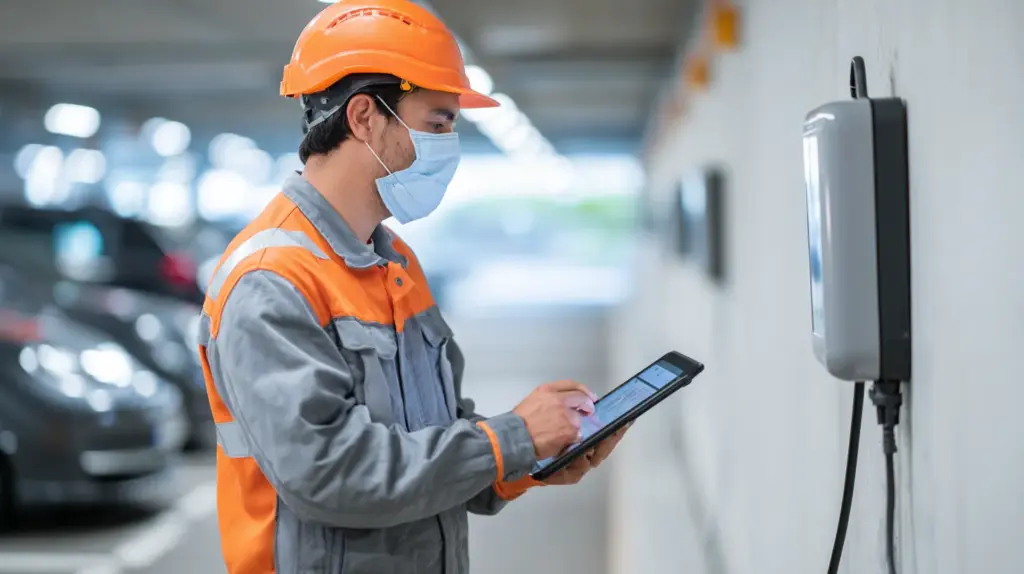
hybrid connectivity
Example:
- primary: Ethernet
- backup: 4G
Ensures:
- high reliability
- redundancy
Role of Connectivity in Smart Charging
Modern systems rely on:
- real-time load management
- dynamic pricing
- remote control
All require stable communication
Common Mistakes to Avoid
- relying only on WiFi in large sites
- ignoring signal strength for 4G
- not planning redundancy
- underestimating data usage
Future Trends
1. 5G Integration
Faster and more reliable than 4G.
2. Edge Computing
Reduces dependency on constant connectivity.
3. IoT Expansion
Internet of Things overview:
https://en.wikipedia.org/wiki/Internet_of_things
More connected devices require better network planning.
Deployment Example
A commercial parking site:
- 20 chargers
- Ethernet for main network
- 4G backup
Result:
- stable operation
- minimal downtime
Business Impact
Choosing the right connectivity helps:
- reduce downtime
- improve user experience
- enable scalable operations
- optimize costs
Connectivity is a core infrastructure decision
About QIAO
QIAO provides AC EV charging solutions with flexible connectivity options including Ethernet, WiFi, and 4G.
Our systems support:
- stable communication
- remote monitoring
- smart charging features
- scalable deployment
QIAO helps customers build reliable and future-ready charging networks.
FAQ
Which is the most reliable option?
Ethernet.
Is WiFi enough for commercial charging?
Only for small or low-demand setups.
Does 4G require a subscription?
Yes, it involves ongoing data costs.
Should I use backup connectivity?
Yes, especially for critical sites.