Table of Contents
How Schools & Hospitals Can Deploy AC EV Charging Systems
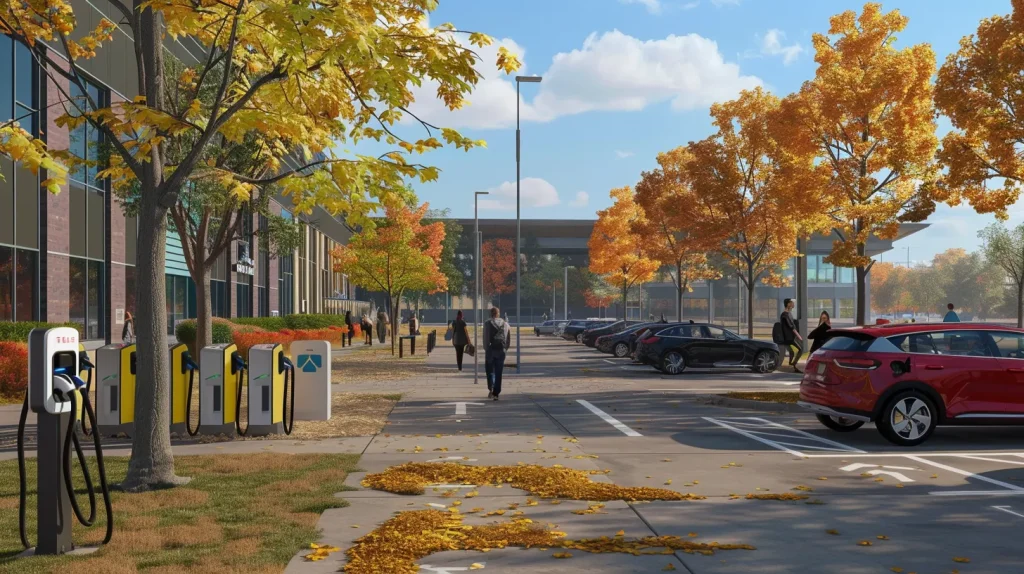
As public institutions move toward sustainability, schools and hospitals are increasingly adopting EV charging infrastructure.
These environments have unique characteristics:
- long parking durations
- mixed user groups (staff, visitors, fleets)
- strict safety and compliance requirements
This makes AC charging (Level 2) the most practical solution.
Why EV Charging Matters for Public Institutions
Providing EV charging helps institutions:
- support sustainability goals
- improve public service quality
- enhance institutional reputation
EV charging overview:
https://en.wikipedia.org/wiki/Charging_station
Why AC Charging Is the Best Fit
| Factor | AC Charging | DC Fast Charging |
| Cost | Low | High |
| Power demand | Moderate | Very high |
| Deployment scale | Large | Limited |
| Suitability | High | Moderate |
AC charging enables wide coverage at manageable cost
Key Use Scenarios
Schools
- staff parking
- student parking (universities)
- campus fleet vehicles
Hospitals
- staff parking
- patient & visitor parking
- emergency and service vehicles
Both scenarios require reliable and accessible charging
Step 1: Assess Electrical Capacity
Evaluate:
- transformer capacity
- current load
- peak demand
Electric power system overview:
https://en.wikipedia.org/wiki/Electric_power_system
Step 2: Define User Groups and Access
Different users may require different access:
| User Type | Access Strategy |
| Staff | controlled access |
| Visitors | public or paid |
| Fleet | priority access |
Clear policies prevent misuse and congestion.
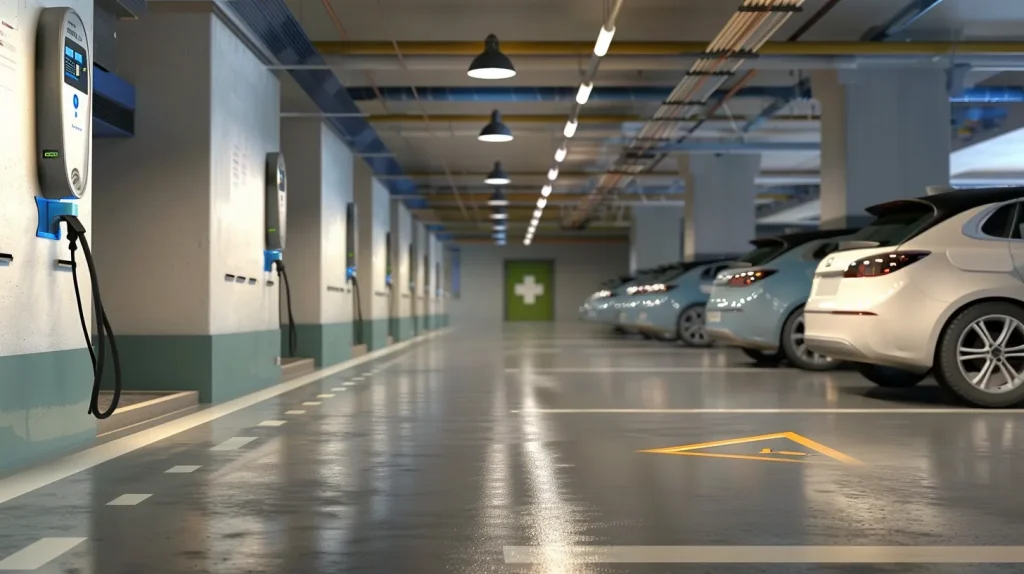
Step 3: Deploy Wall-Mounted AC Chargers
Advantages:
- space-efficient
- cost-effective
- easy installation
Recommended power:
- 7–11 kW for general use
- 22 kW for high-demand areas
Step 4: Use Load Management Systems
Load management overview:
https://en.wikipedia.org/wiki/Load_management
Benefits:
- supports multiple chargers
- avoids grid overload
- reduces upgrade costs
Essential for large campuses and hospitals.
Step 5: Ensure Safety and Compliance
Public institutions must follow strict safety standards.
Key considerations:
- grounding and protection systems
- waterproofing for outdoor installations
- accessibility compliance
Building code overview:
https://en.wikipedia.org/wiki/Building_code
Step 6: Optimize Charger Placement
Best practices:
- near main parking areas
- accessible to all users
- clearly marked EV spaces
Step 7: Implement Smart Charging Systems
Smart charging overview:
https://en.wikipedia.org/wiki/Smart_charging
Features:
- user authentication
- billing and payment
- remote monitoring
- energy optimization
Step 8: Set Pricing or Usage Policy
| Model | Use Case |
| Free | staff benefit |
| Paid | public users |
| Hybrid | mixed model |
Many institutions use hybrid models
Step 9: Plan for Future Expansion
EV adoption will increase.
Best approach:
- install partial capacity initially
- prepare infrastructure for expansion
Step 10: Integrate With Sustainability Initiatives
Renewable energy overview:
https://en.wikipedia.org/wiki/Renewable_energy
Possible integrations:
- solar power
- energy storage
Supports long-term sustainability goals.
Deployment Example
| Phase | Action |
| Phase 1 | Install 10–20 chargers |
| Phase 2 | Monitor usage |
| Phase 3 | Expand as demand grows |
Common Challenges
- limited electrical capacity
- high user diversity
- peak usage congestion
- budget constraints
Solved with:
- AC charging
- load management
- phased deployment
Business & Social Impact
EV charging helps institutions:
- improve service quality
- support environmental goals
- enhance user satisfaction
- future-proof infrastructure
About QIAO
QIAO provides reliable AC EV charging solutions for public institutions such as schools and hospitals.
Our solutions support:
- scalable deployment
- smart user management
- load balancing
- safe and compliant installation
QIAO helps institutions build efficient and sustainable EV charging systems.
FAQ
Is AC charging sufficient for schools and hospitals?
Yes, especially for long parking durations.
Should charging be free?
Many institutions offer free or subsidized charging for staff.
How to manage different users?
Use access control and smart charging systems.
Is grid upgrade required?
Not always—load management can reduce the need.