Table of Contents
Residual Current Device (RCD) Types Explained: Type A vs Type B vs Type F
When deploying AC EV charging systems, one safety component is absolutely critical:
Residual Current Device (RCD)
Choosing the wrong RCD type can lead to:
- safety risks
- non-compliance
- charger malfunction
Especially in EV charging, understanding Type A, Type B, and Type F RCDs is essential.

What Is an RCD?
A Residual Current Device (RCD) is a safety device that:
detects leakage current and disconnects power to prevent electric shock
Residual current device overview:
https://en.wikipedia.org/wiki/Residual-current_device
Why RCDs Are Critical in EV Charging
EV chargers involve:
- high power loads
- AC/DC mixed currents
- outdoor environments
This increases the risk of:
- electric leakage
- ground faults
Types of RCDs: Overview
| Type | Detects | Typical Use |
| Type A | AC + pulsating DC | standard appliances |
| Type F | AC + mixed frequency | inverter equipment |
| Type B | AC + smooth DC | EV charging |
Type A RCD
What It Detects
- AC leakage current
- pulsating DC current
Where It Is Used
- household appliances
- basic electrical systems
Limitations
Cannot detect smooth DC leakage
May become “blinded” in EV charging scenarios
Type F RCD
What It Detects
- AC leakage
- mixed-frequency leakage
Where It Is Used
- inverter-driven equipment
- heat pumps
- modern appliances
Advantages
- better performance than Type A
- handles variable frequency
Type B RCD
What It Detects
- AC leakage
- pulsating DC
- smooth DC
Where It Is Used
- EV charging systems
- industrial applications
This is the most comprehensive protection type
Why Type B Is Recommended for EV Charging
EV chargers can generate:
- smooth DC leakage currents
Type A and F may fail to detect these
Type B ensures:
- full protection
- compliance with standards
Key Differences: A vs F vs B
| Feature | Type A | Type F | Type B |
| AC detection | Yes | Yes | Yes |
| Pulsating DC | Yes | Yes | Yes |
| Smooth DC | No | Limited | Yes |
| EV compatibility | Low | Medium | High |
| Cost | Low | Medium | High |
Standards and Compliance
International standards require:
- proper RCD selection for EV chargers
In many regions:
EV chargers must use:
- Type B RCD
OR - Type A + 6mA DC leakage detection
Built-in Protection in EV Chargers
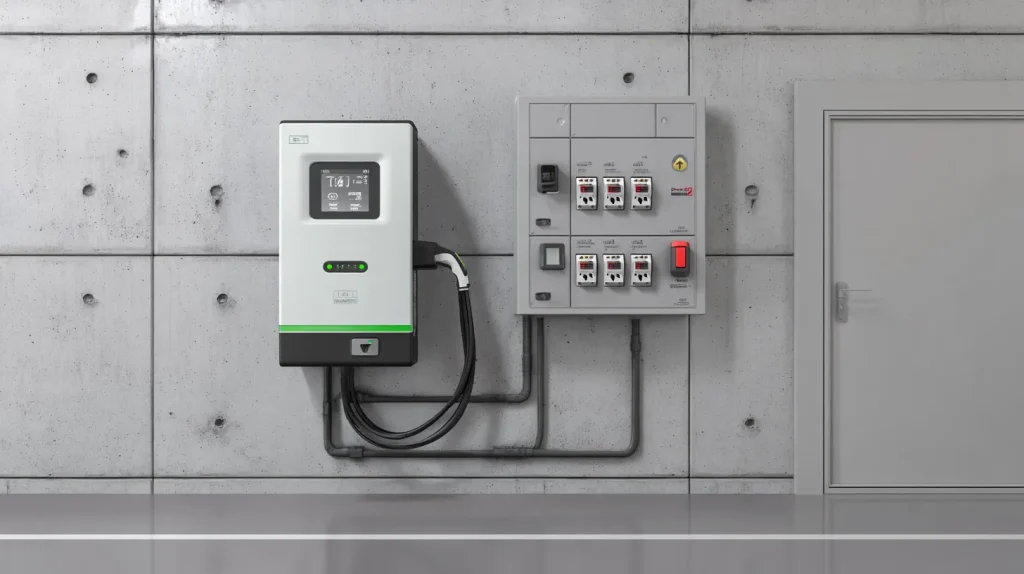
Modern chargers may include:
- integrated DC leakage detection
This allows use of:
- Type A RCD (with additional protection)
Installation Considerations
1. Match Charger Specification
Check if the charger includes:
- built-in DC protection
2. Consider Local Regulations
Different regions require:
- specific RCD types
3. Balance Cost vs Safety
| Option | Cost | Safety |
| Type A | Low | Limited |
| Type B | High | Maximum |
Common Mistakes
- using Type A without DC protection
- ignoring local standards
- improper installation
These can lead to serious safety risks.
Example Configuration
Scenario: Commercial AC Charging
- Charger: with DC leakage detection
- RCD: Type A
OR
- Charger: without DC detection
- RCD: Type B
Business Impact
Correct RCD selection helps:
- ensure safety compliance
- reduce liability risk
- avoid system failure
- protect users and assets
Future Trend
As EV adoption grows:
- safety standards will tighten
- integrated protection will become standard
RCD selection will remain critical.
About QIAO
QIAO provides AC EV charging solutions with integrated safety protection and compliance with international standards.
Our systems support:
- built-in DC leakage detection
- compatibility with Type A and Type B RCDs
- safe and reliable operation
QIAO helps customers build secure and compliant EV charging infrastructure.
FAQ
Is Type A sufficient for EV charging?
Only if the charger has built-in DC leakage protection.
Why is Type B more expensive?
Because it detects a wider range of leakage currents.
Can Type F be used for EV charging?
Generally not recommended as a primary solution.
Is RCD mandatory for EV chargers?
Yes, in most installations.