Table of Contents
Renewable Energy Grid Integration for EV Charging Infrastructure
As EV adoption accelerates globally, the next strategic step for commercial and residential charging infrastructure is renewable energy grid integration.
Integrating solar, wind, or other renewable sources into EV charging systems reduces carbon footprint, stabilizes operating costs, and aligns infrastructure with long-term energy transition goals.
This guide explains how renewable energy connects to the grid and how EV charging systems can be optimized for it.
1. What Is Renewable Energy Grid Integration?
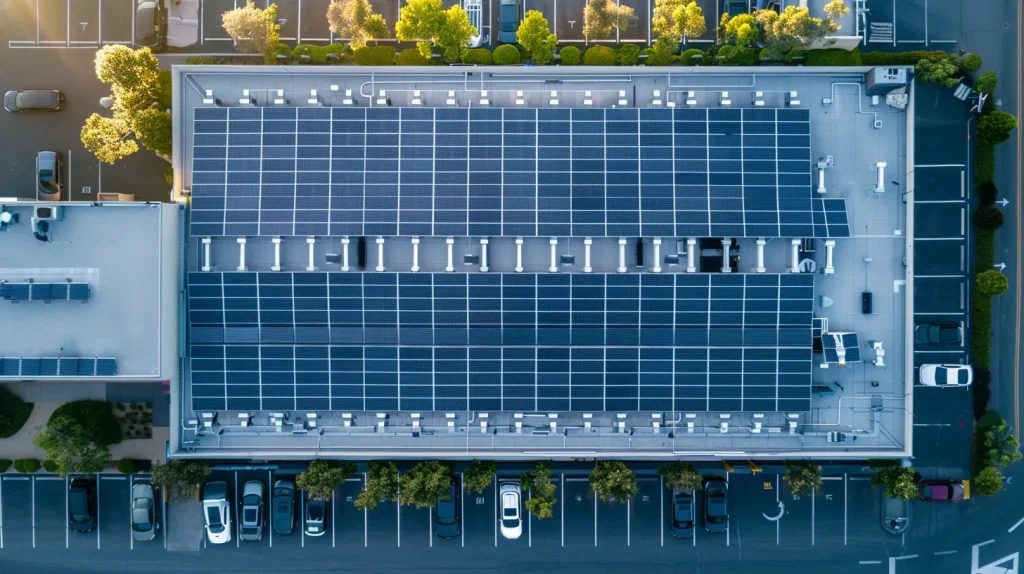
Renewable energy grid integration refers to the process of connecting renewable power sources (such as solar PV or wind) into the electrical grid in a stable and compliant manner.
Authoritative reference:
International Energy Agency (IEA) – Grid Integration of Variable Renewables
https://www.iea.org/reports/grid-integration-of-variable-renewables
Unlike conventional generation, renewable sources are variable. Therefore, integration requires:
- Smart inverters
- Load balancing
- Grid stability management
- Demand-side coordination
2. Why Renewable Integration Matters for EV Charging
EV charging increases electricity demand. If unmanaged, it may stress distribution networks.
However, when charging systems are coordinated with renewable production, they can:
- Absorb excess solar generation
- Reduce peak demand
- Improve energy cost predictability
- Lower lifecycle emissions
According to the Global EV Outlook by the IEA:
https://www.iea.org/reports/global-ev-outlook-2024
EV deployment combined with smart charging can enhance renewable energy utilization rather than strain grids.
3. Key Technologies Enabling Integration
3.1 Smart Grid Coordination
Renewable integration depends on smart grid architecture.
Definition reference:
U.S. Department of Energy – Smart Grid
https://www.energy.gov/oe/activities/technology-development/grid-modernization-and-smart-grid
Smart grids enable:
- Real-time load monitoring
- Automated demand response
- Distributed energy resource coordination
EV chargers connected through intelligent systems can respond dynamically to renewable generation levels.
3.2 Distributed Energy Resources (DER)
Renewable systems connected at local level are categorized as Distributed Energy Resources (DER).
Reference:
U.S. Federal Energy Regulatory Commission (FERC) – DER Overview
https://www.ferc.gov/industries-data/electric/power-sales-and-markets/distributed-energy-resources
In commercial properties, DER may include:
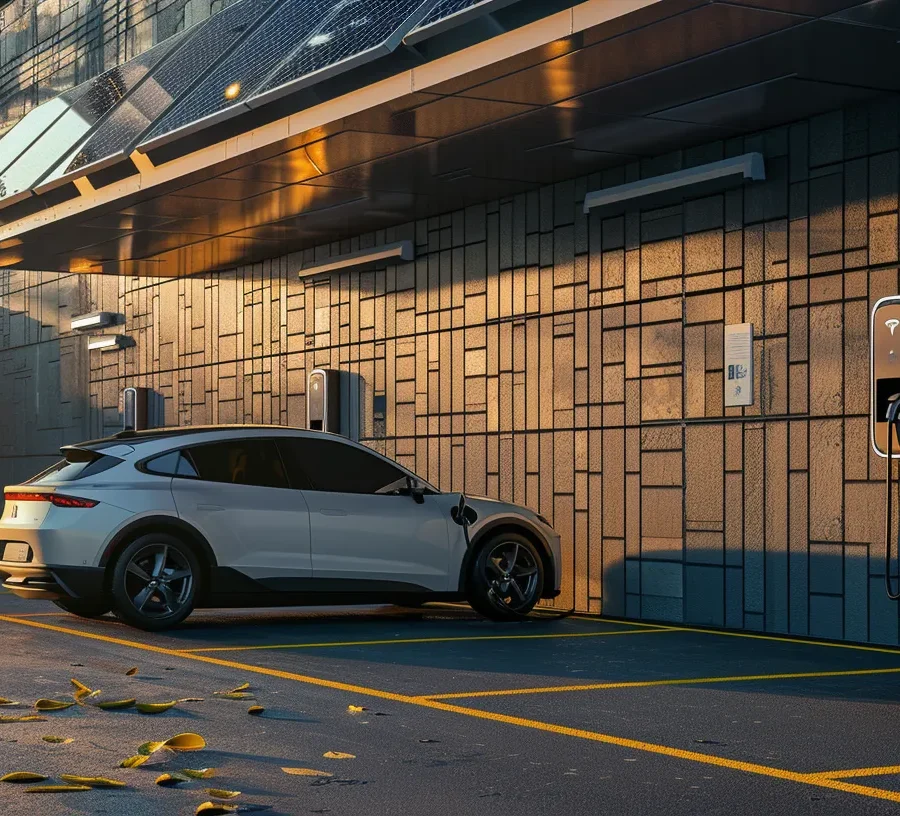
- Rooftop solar
- Battery storage
- On-site generation
EV charging can function as a controllable load within DER ecosystems.
3.3 Energy Storage Systems (ESS)
Because renewable generation is variable, battery storage stabilizes supply.
Reference:
International Renewable Energy Agency (IRENA) – Electricity Storage
https://www.irena.org/Energy-Transition/Technology/Energy-Storage
Storage enables:
- Solar-to-EV charging during evening hours
- Peak shaving
- Backup power resilience
Combining EV charging with storage significantly enhances renewable utilization.
4. Commercial Deployment Models
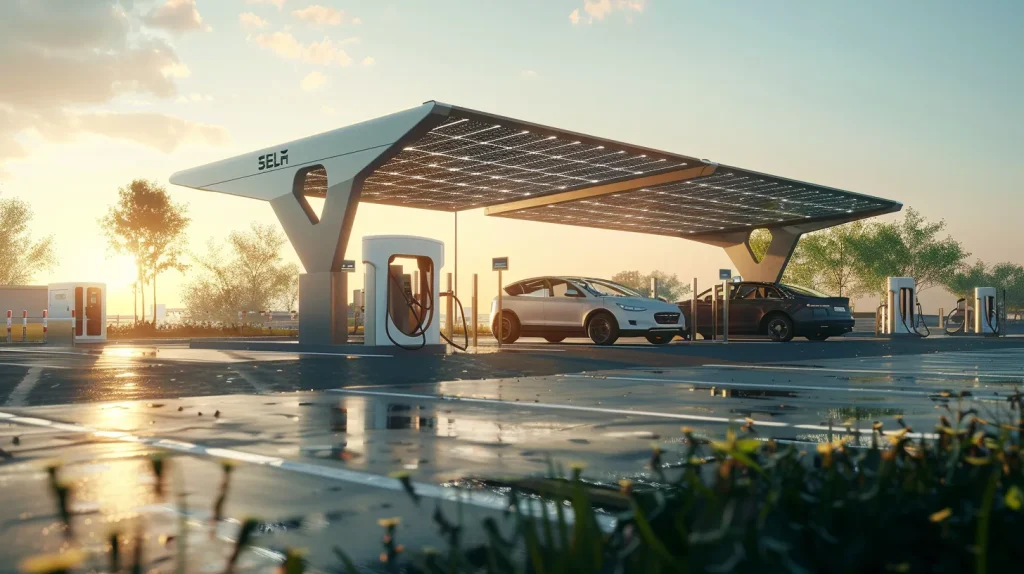
Model A: Solar + AC Charging (Direct Self-Consumption)
- Rooftop solar installed
- AC chargers connected to building distribution board
- Daytime workplace charging aligned with solar generation
Best for:
- Office buildings
- Schools
- Industrial parks
Model B: Solar + Storage + Smart Charging
- Solar system
- On-site battery
- Dynamic load management
- Time-of-use optimization
Best for:
- Hotels
- Shopping malls
- Mixed-use properties
Model C: Grid-Tied Renewable Tariff + Smart Charging
Even without on-site generation, businesses can subscribe to renewable energy tariffs from utilities and optimize charging during low-carbon periods.
5. Grid Capacity & Compliance Considerations
Renewable integration requires compliance with:
- Local interconnection standards
- Inverter certification requirements
- Grid protection systems
- Surge and grounding standards
Technical framework reference:
IEEE 1547 – Standard for Interconnection of Distributed Energy Resources
https://standards.ieee.org/standard/1547-2018.html
Proper interconnection protects both the property and the public grid.
6. Economic Impact
Renewable-integrated EV charging can reduce:
- Peak demand charges
- Exposure to volatile energy pricing
- Long-term operating costs
IEA data shows that smart charging combined with renewables can significantly flatten load curves and increase system efficiency.
Reference:
https://www.iea.org/reports/energy-technology-perspectives-2023
Conclusion
Renewable energy grid integration is not optional for long-term EV infrastructure planning — it is strategic infrastructure modernization.
By combining:
- Solar generation
- Smart charging systems
- Load management
- Storage integration
Businesses can deploy EV charging that is:
- Electrically stable
- Economically optimized
- Environmentally aligned
The future of EV infrastructure lies in synchronized energy ecosystems, not isolated hardware installations.
About QIAO
QIAO provides commercial-grade AC EV charging solutions designed to integrate seamlessly with renewable energy systems.
Our solutions support:
- Dynamic load management
- OCPP-compatible backend control
- Scalable deployment architecture
- Renewable-ready infrastructure
For businesses planning solar-integrated EV charging or grid-coordinated deployment, QIAO delivers technically aligned, future-proof solutions.
FAQ
1. Can EV chargers run entirely on solar power?
Yes, if solar generation and storage capacity are sufficient. Otherwise, systems operate in grid-tied hybrid mode.
2. Does renewable integration require battery storage?
Not always, but storage improves stability and maximizes renewable utilization.
3. Is grid approval required?
Yes. Most jurisdictions require formal interconnection approval before connecting distributed renewable systems.
4. Does smart charging increase renewable usage?
Yes. Smart charging aligns energy consumption with renewable generation availability.