Table of Contents
Residential Shared EV Charging: A Practical Deployment Guide
As EV adoption expands into urban communities and multi-family housing, one challenge becomes increasingly visible: not every resident has access to a private charger.
Residential shared charging provides a scalable solution for apartment buildings, condominiums, and gated communities where parking and electrical infrastructure are shared resources.
This guide explains how residential shared EV charging works, how to deploy it safely, and how property managers can implement it efficiently.
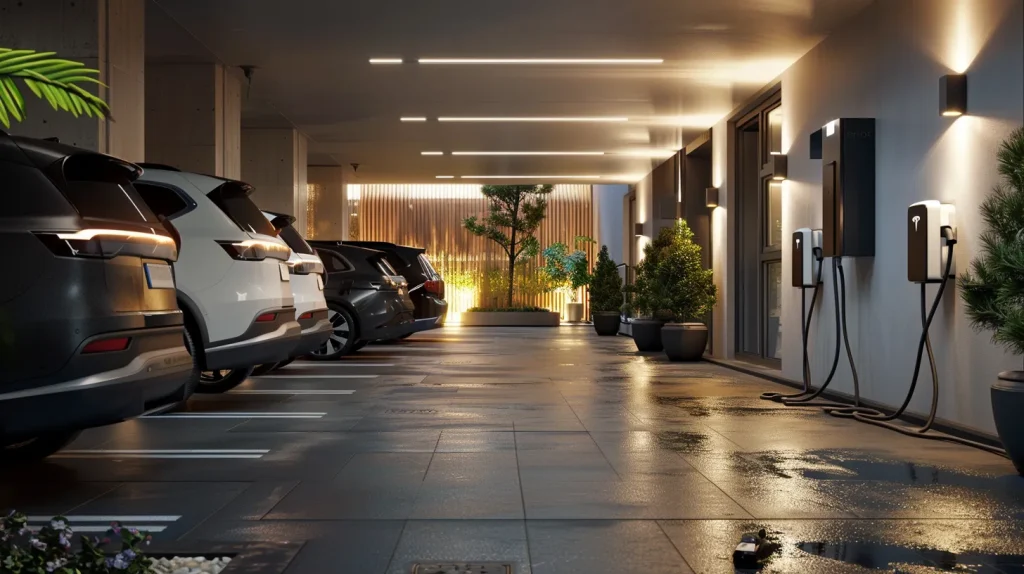
1. What Is Residential Shared Charging?
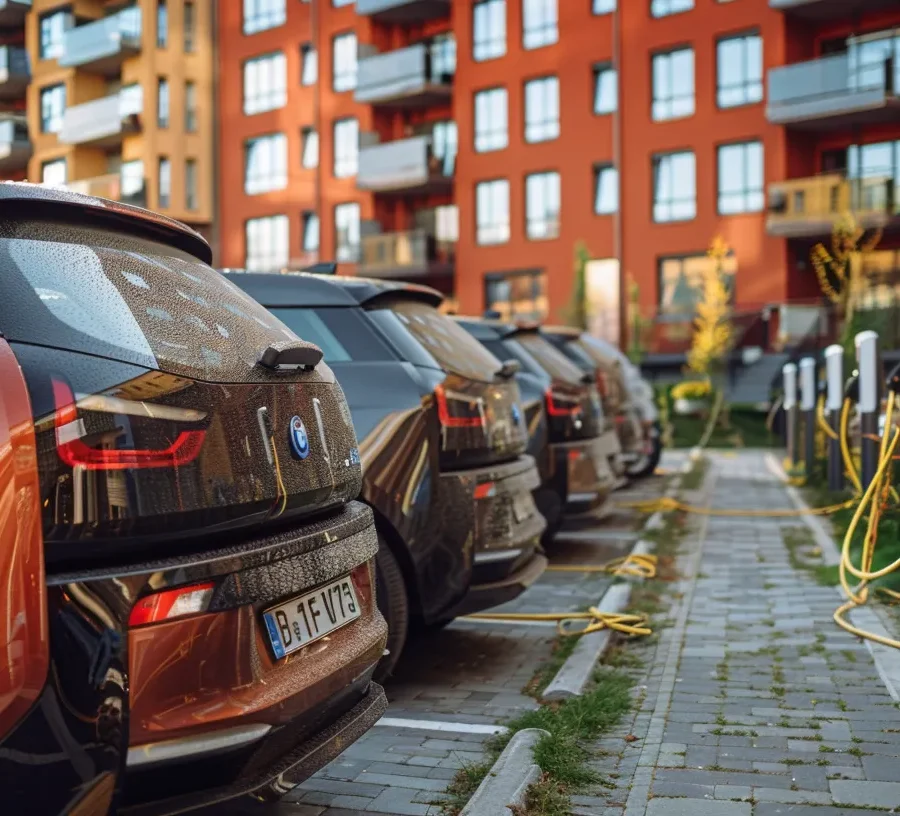
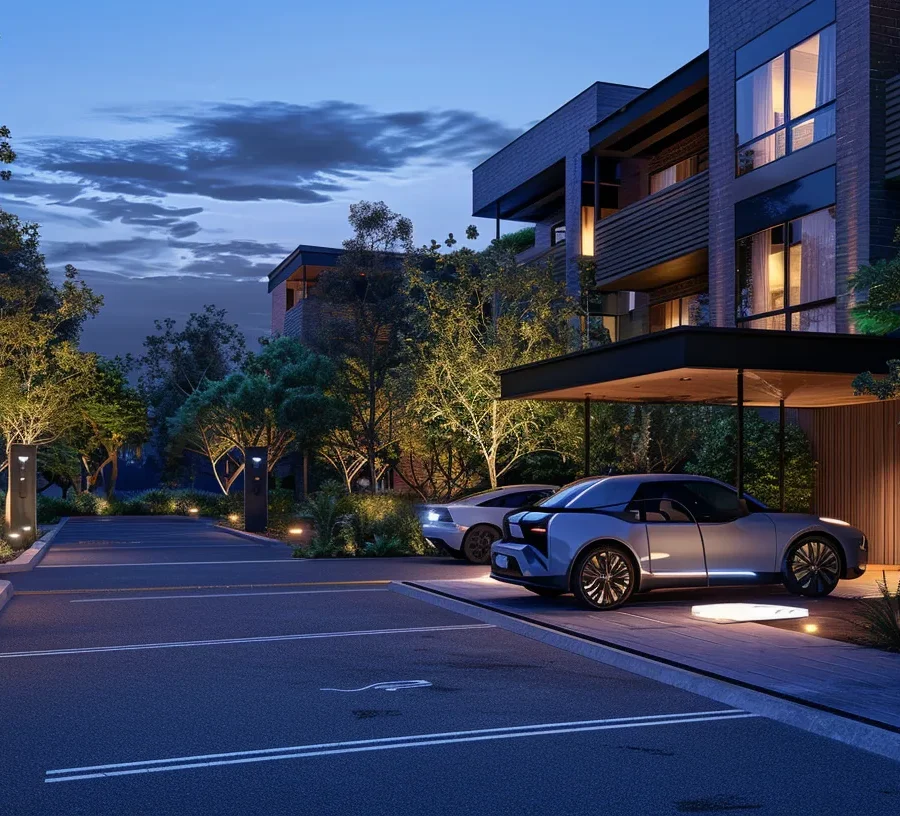
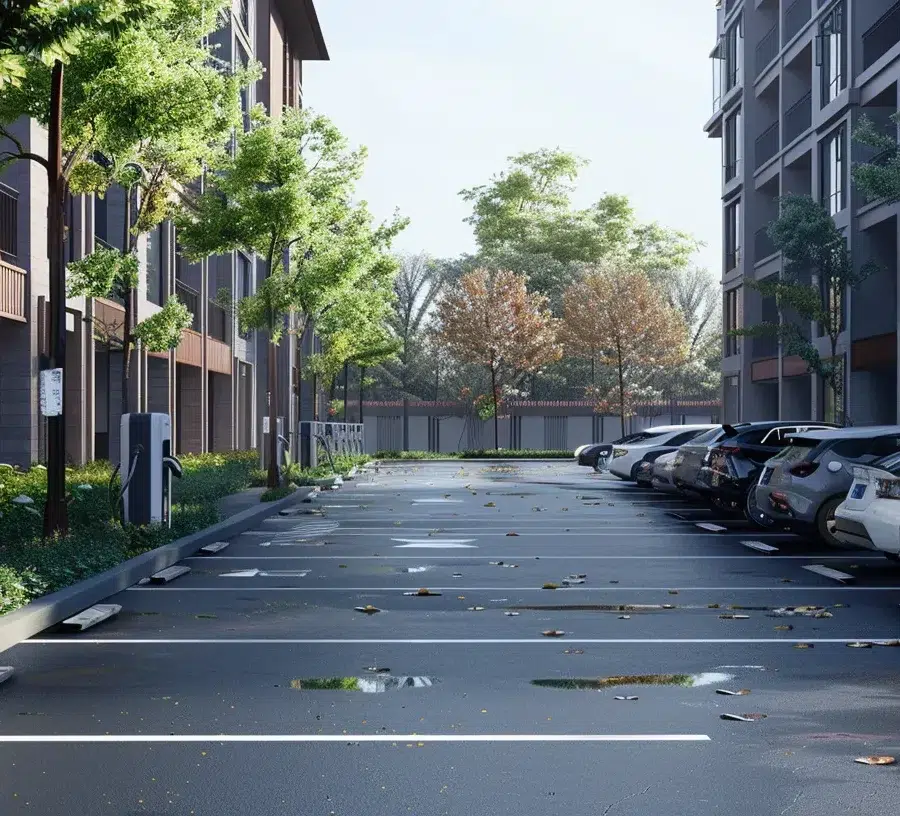
Residential shared charging refers to EV chargers installed in common parking areas of:
- Apartment buildings
- Condominiums
- Multi-family housing
- Residential compounds
Instead of assigning one charger per unit, multiple residents share a pool of chargers.
Most deployments rely on Level 2 AC charging, which uses alternating current supplied by the building’s electrical system.
Because vehicles are typically parked overnight, AC charging provides sufficient energy without requiring high-cost DC infrastructure.
2. Why Shared Charging Is More Practical Than Individual Installations
Installing individual chargers for every apartment unit presents several challenges:
- Limited electrical capacity
- High wiring and conduit costs
- Complex ownership management
- Parking reallocation conflicts
Shared infrastructure reduces capital expenditure and simplifies expansion planning.
Most residential buildings operate on a Three-phase electric power system, which allows controlled multi-charger deployment when properly managed.
3. Step One: Electrical Capacity Assessment
Before installation, conduct a load analysis:
- Transformer rating
- Main panel capacity
- Historical peak demand
- Night-time load patterns
Because residential demand typically drops overnight, shared charging can often utilize off-peak capacity without major grid upgrades.
Understanding building capacity prevents overload risks and unnecessary infrastructure expansion.
4. Step Two: Implement Smart Load Management
In shared environments, simultaneous charging is common. Without control, multiple chargers operating at full power can exceed available capacity.
This is solved by Dynamic Load Management (DLM), aligned with principles of the
DLM distributes available power across active chargers in real time.
Benefits include:
- Preventing circuit overload
- Avoiding transformer upgrades
- Enabling scalable expansion
- Ensuring fair power allocation
For residential shared systems, load balancing is essential—not optional.
5. User Authentication and Billing
Shared charging requires access control to prevent unauthorized use.
Most commercial-grade chargers support backend communication through
source: Open Charge Point Protocol (OCPP)
This enables:
- RFID or app-based authentication
- Usage tracking per resident
- Energy-based billing allocation
- Remote monitoring and maintenance
For property managers, transparent metering and automated billing simplify administration.
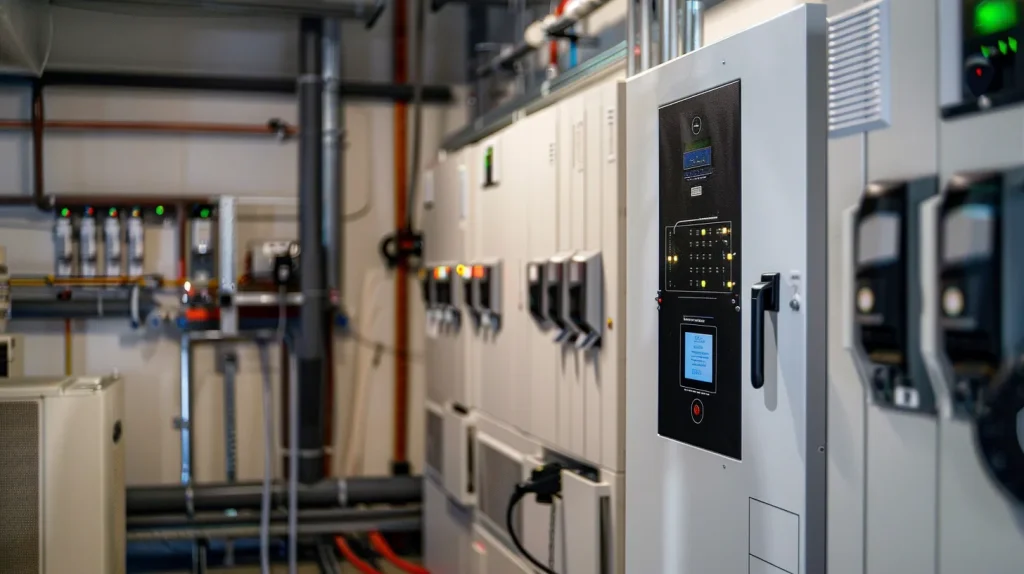
6. Safety and Compliance Considerations
Shared residential installations must include:
- Residual-current device (RCD) protection
- Proper Earthing system
- Surge protection
- Certified components compliant with standards issued by the
source: International Electrotechnical Commission (IEC)
Electrical compliance protects residents, property owners, and insurers.
7. Deployment Models for Residential Communities
Model A – Free Shared Charging
Property covers electricity cost as an amenity.
Model B – Pay-Per-Use
Residents pay per kWh via backend billing system.
Model C – Managed Subscription
Monthly charging package for EV-owning residents.
The right model depends on property positioning and operational goals.
Conclusion
Residential shared EV charging provides a practical path for electrification in multi-family housing environments.
Successful deployment requires:
- Electrical capacity assessment
- Smart load management
- User authentication
- Regulatory compliance
- Scalable infrastructure planning
When implemented properly, shared charging enhances property value, improves resident satisfaction, and prepares communities for long-term EV adoption.
About QIAO
QIAO specializes in commercial and residential shared AC EV charging solutions designed for:
- Apartment complexes
- Condominium buildings
- Gated residential communities
- Mixed-use developments
Our wall-mounted AC chargers integrate dynamic load management and OCPP compatibility, enabling secure shared usage, fair billing, and scalable deployment without unnecessary grid upgrades.
For residential properties planning shared charging infrastructure, QIAO provides technically optimized solutions aligned with real-world building constraints.
FAQ
1. Is shared EV charging suitable for apartment buildings?
Yes. Because vehicles are typically parked overnight, Level 2 AC charging provides sufficient energy for daily commuting needs.
2. Can shared chargers overload residential electrical systems?
Without load management, yes. Implementing dynamic load balancing prevents overload and protects transformers.
3. How is electricity cost allocated among residents?
OCPP-enabled systems allow per-user metering and billing through RFID or mobile authentication.
4. Do all parking spaces need a charger?
No. Many communities begin with 10–20% charger coverage and expand as EV adoption increases.