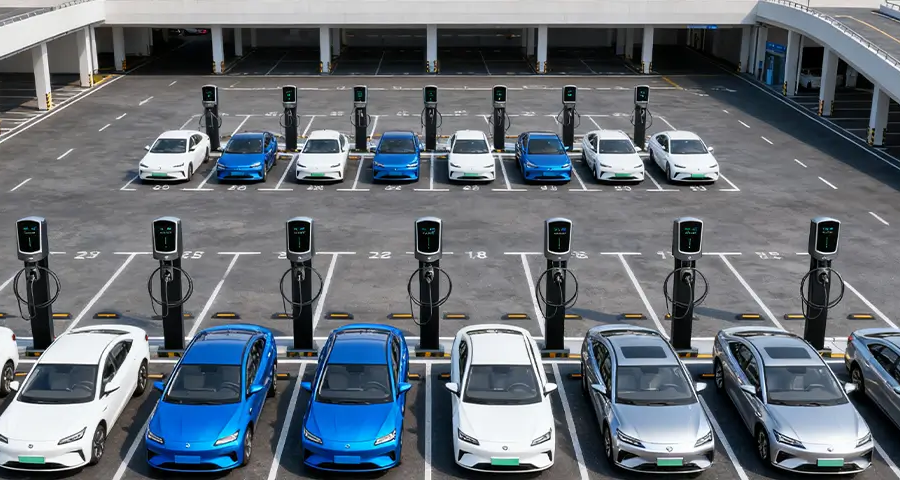

As electric fleets scale across logistics, ride-hailing, public transport, and corporate operations, overnight charging has become the backbone of daily fleet availability. Unlike public charging, fleet charging is less about speed and more about predictability, cost efficiency, and grid stability.
However, unmanaged overnight charging can lead to peak demand penalties, infrastructure overload, and inefficient energy use. This is where Energy Management Systems (EMS) play a critical role.
This article explains how energy management optimizes fleet overnight charging, reduces operational costs, and ensures vehicles are ready for daily operations—without stressing electrical infrastructure.

Why Overnight Fleet Charging Requires Energy Management
Fleet charging presents a unique operational profile:
- Large numbers of vehicles charging simultaneously
- Fixed dwell time (typically overnight, 6–10 hours)
- Limited site power capacity
- Sensitivity to electricity tariffs and demand charges
If all vehicles start charging at maximum power as soon as they are plugged in, the result is:
- High peak demand
- Increased energy costs
- Risk of tripping breakers or overloading transformers
- Underutilization of available charging windows
Energy management transforms overnight charging from a passive load into a controlled operational process.
What Is Energy Management in Fleet Charging?
Energy Management in EV fleet charging refers to a coordinated system that:
- Monitors site-level electrical capacity
- Controls and schedules EV charging power
- Aligns charging behavior with operational priorities and tariff structures
Unlike basic load balancing, fleet energy management operates at a planning and optimization layer, not just real-time protection.
Key Objectives of Overnight Charging Optimization
Guarantee Fleet Readiness by Morning
The primary objective is operational:
Every vehicle must reach its required state of charge (SoC) before departure.
Energy management allocates power based on:
- Required departure time
- Target SoC
- Battery size and charging capability
Vehicles with earlier routes or higher energy demand are prioritized automatically.
Minimize Energy Costs Through Tariff Awareness
Electricity prices often vary significantly during night hours due to:
- Time-of-use (TOU) tariffs
- Demand charges
- Capacity-based pricing
An EMS optimizes charging by:
- Shifting charging to low-cost time windows
- Avoiding synchronized peak loads
- Flattening demand curves
This directly reduces total cost of ownership (TCO) for fleet operators.
Protect Electrical Infrastructure
Fleet depots often operate close to their maximum electrical capacity.
Energy management ensures:
- Main breakers are never exceeded
- Transformers operate within safe margins
- Electrical assets experience less thermal stress
This extends infrastructure lifespan and avoids costly upgrades.
How Energy Management Works in Practice
A typical fleet energy management architecture includes:
- Site power meters / CT sensors
- Energy management controller or cloud platform
- Smart AC EV chargers with controllable power output
- Fleet management and scheduling inputs
Operational Flow:
- Vehicles are plugged in upon return to the depot
- EMS calculates available site capacity
- Charging schedules are generated based on priorities
- Charging power is dynamically adjusted overnight
- All vehicles reach required SoC by departure time
This approach uses time as a flexibility asset, rather than relying on high power.

Load Shaping vs. Load Shifting in Fleet Charging
Load Shaping
- Smooths charging demand across the night
- Prevents sudden power spikes
- Protects infrastructure
Load Shifting
- Moves charging to lower-cost tariff periods
- Aligns energy use with grid availability
- Reduces operating expenses
Effective energy management applies both strategies simultaneously.
The Role of AC EV Chargers in Fleet Energy Management
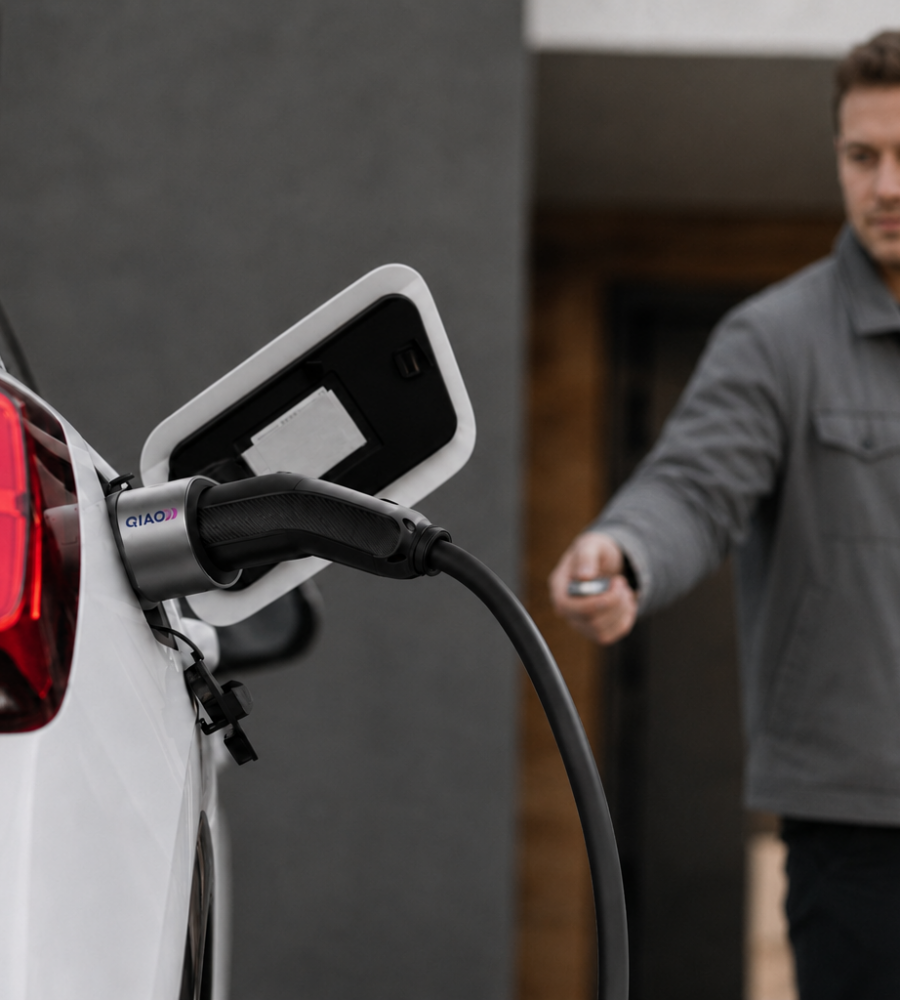
AC EV chargers are particularly well-suited for overnight fleet charging because:
- Charging sessions are long and predictable
- Power levels are flexible
- Dynamic power adjustment has minimal operational impact
As a result, AC EV chargers act as the execution layer of fleet energy management, receiving real-time power setpoints from the EMS.
Scalability and Future-Proofing Fleet Operations
An EMS-enabled charging strategy allows fleets to:
- Add vehicles without increasing grid capacity
- Integrate on-site renewables or energy storage
- Participate in demand response programs
- Adapt to future tariff and regulatory changes
Energy management turns charging infrastructure into a strategic operational asset, not a fixed cost.
Conclusion: Energy Management as the Backbone of Fleet Electrification
Overnight charging is not simply about plugging in vehicles—it is about orchestrating energy intelligently.
By implementing energy management, fleet operators can ensure:
- Guaranteed vehicle readiness
- Lower energy costs
- Protected electrical infrastructure
- Scalable and resilient operations
For large-scale fleet electrification, energy management is not an optimization—it is a necessity.
About QIAO EV Charger
QIAO EV Charger provides B2B AC EV charging solutions designed for fleet and commercial applications.
By supporting energy management integration, dynamic power control, and scalable overnight charging, QIAO enables fleet operators to deploy reliable, cost-efficient EV charging infrastructure.