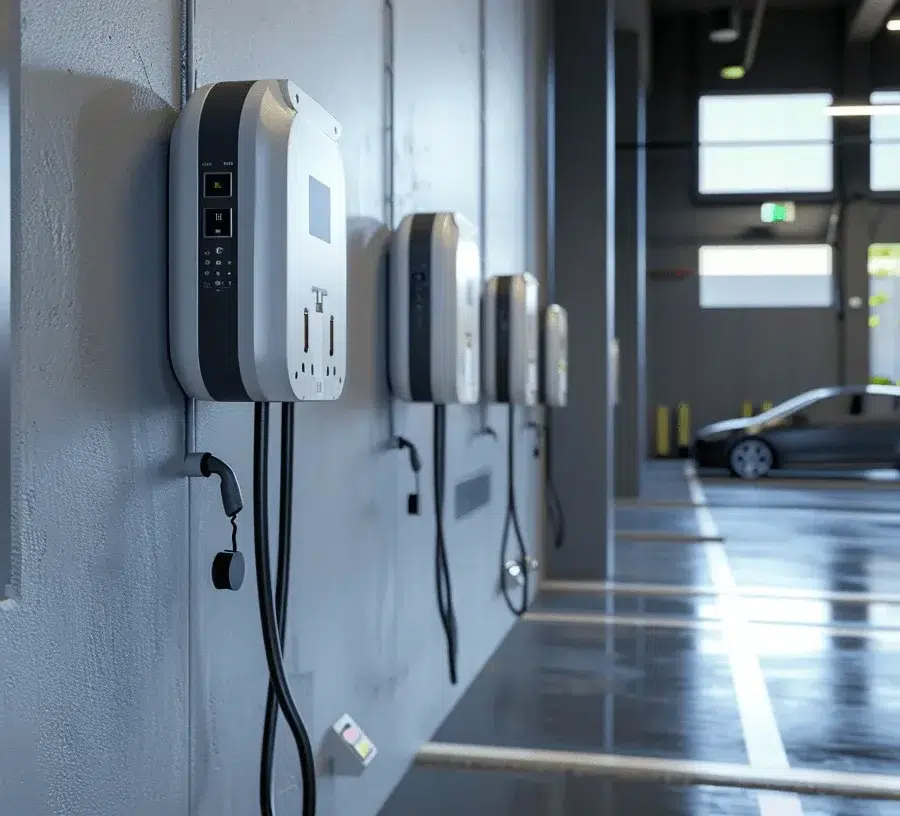

As global electrification accelerates, electric vehicle (EV) charging infrastructure has become a core component of sustainable mobility systems. By 2026, the commercial AC charging segment is expected to play a pivotal role in enabling fleets, workplaces, residential campuses, and urban infrastructures to support the fast–growing EV fleet worldwide.
This analysis discusses key market growth drivers, data–backed forecasts, regional opportunities, business models, and strategic implications for stakeholders and solution providers in the commercial AC EV charging domain—ranging from grid operators to infrastructure OEMs and energy service partners.
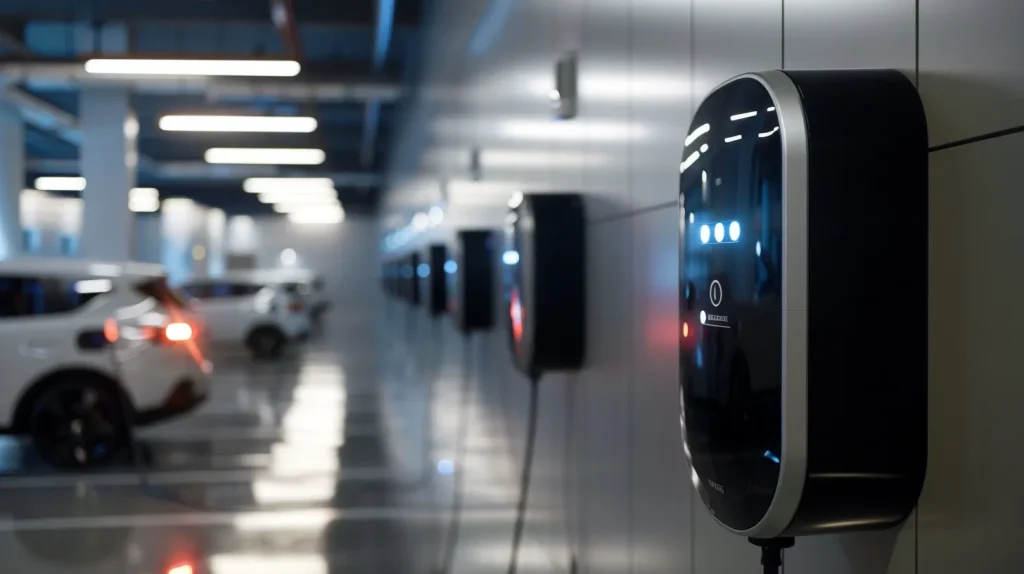
AC EV Charging Infrastructure: Market Size and Growth Trends
Rapid Growth Outlook
Recent market projections indicate strong global expansion of the overall EV charging infrastructure:
- The global EV charging infrastructure market is projected to grow from USD 43.12 billion in 2025 to an estimated USD 51.74 billion by 2026, reflecting continued investment and deployment acceleration.
- Over the medium term, forecasts suggest a CAGR of ~20% between 2026 and 2033.
AC Charging Segment Specifics
While DC fast chargers often grab headlines due to high-speed charging, AC chargers remain critical to commercial deployments:
- The AC charging segment accounted for the largest share of the charging-as-a-service market in 2025, especially in commercial applications such as workplace and fleet charging.
- By 2026, AC EV charging infrastructure revenue is forecasted to reach approximately USD 7.9 billion globally.
These figures underscore that, even as fast chargers grow, AC chargers remain the backbone of commercial and enterprise charging, particularly for predictable, long-dwell use cases.
Why Commercial AC Charging Is Key in 2026
Fleet Electrification and Enterprise Charging
Commercial AC charging is especially well suited for:
- Fleet depots and last–mile logistics
- Workplace and corporate campuses
- Multi-unit residential communities and parking facilities
Unlike DC charging, which prioritizes speed, AC charging supports overnight and predictable use patterns at a lower infrastructure and electrical cost, making it ideal for high-volume commercial operations.
Infrastructure Economics and Cost Efficiency
AC chargers typically require lower:
- Upfront installation costs
- Electrical service upgrades
- Maintenance complexity
These characteristics make AC charging more accessible to organizations with constrained CAPEX or deployment agility requirements.
Charging-as-a-Service (CaaS) Expansion
The charging-as-a-service market—where infrastructure is operated, maintained, and managed by a third party—is forecasted to grow from approximately USD 406.5 million in 2025 to USD 2.9 billion by 2033 at a CAGR of ~28.6%.
The AC segment leads this growth, driven by commercial adoption and service innovation.
Regional Growth Patterns
North America
North America remains one of the largest markets for EV charging infrastructure, supported by public and private funding for commercial deployments. Investment in workplace, fleet, and residential shared chargers continues to grow, with utilities and municipalities accelerating grid-aware charging strategies.
Europe
Europe’s regulatory environment emphasizes decarbonization and sustainable transport, incentivizing both public and private charging installations. While fast networks expand rapidly, AC charging continues to be widely deployed in workplace and residential segments, driven by policy support and fleet electrification goals.
Asia-Pacific
China leads global adoption and infrastructure rollout, and APAC accounts for the majority of installations in many projections. Availability of cost-effective AC charging options is crucial in supporting widespread EV adoption across urban and peri-urban markets.
Demand Drivers Supporting Commercial AC Charging
Predictable Charging Patterns
Commercial sites often have structured charging windows (e.g., overnight fleet charging, evening workplace demand), which align perfectly with AC charging capacity and energy management strategies.
Integration with Energy Management Systems
Smart charging and load‐balancing systems are increasingly required to:
- Reduce peak demand charges
- Optimize electricity tariffs
- Support grid stability
These systems are highly compatible with AC-based infrastructure, particularly in fleet and campus environments.
Commercial Value Proposition
AC charging provides:
- Lower total cost of ownership compared to higher-power DC solutions
- Higher per-site charger density
- Scalability for workplace and fleet installations
These benefits position AC charging as a strategic backbone of commercial charging ecosystems.

Strategic Business Models
Several commercial models are emerging:
- Hardware and installation packages for site hosts
- Managed charging services (CaaS) with performance SLAs
- Energy management and grid service integration
- Fleet charging platforms with scheduling and analytics
Charging companies that offer integrated software and services alongside AC hardware can capture higher recurring value as the market matures.
Market Risks and Challenges
Despite solid forecasts, stakeholders should address:
- Electric grid constraints in dense urban markets
- Workforce capacity for installation and maintenance
- Interoperability with diverse vehicle types and regional standards
- Capital allocation decisions, especially in emerging markets
These factors will influence the pace and scale of commercial rollout through 2026.
Conclusion: Commercial AC Charging as an Industry Growth Engine
The commercial AC EV charging market is on an upward trajectory through 2026, supported by:
- Strong global charging infrastructure growth forecasts
- Sustainable economics for commercial installations
- Rising fleet electrification and workplace charging demand
- Rapid expansion of managed charging service models
AC charging’s combination of reliability, cost efficiency, and compatibility with energy‐management strategies positions it as a key enabler of electrified mobility at scale.
As organizations and governments seek sustainable transportation solutions, commercial AC charging will be among the most strategic investments in the EV ecosystem.
About QIAO (ReliaEnergy)
QIAO is a global provider of commercial AC EV charging solutions and new energy ecosystem platforms. With advanced R&D, intelligent manufacturing, and a strong commitment to reliability, QIAO supports partners deploying scalable charging infrastructure worldwide.