
Main Controller, BMS, Metering, Communication & Safety Systems
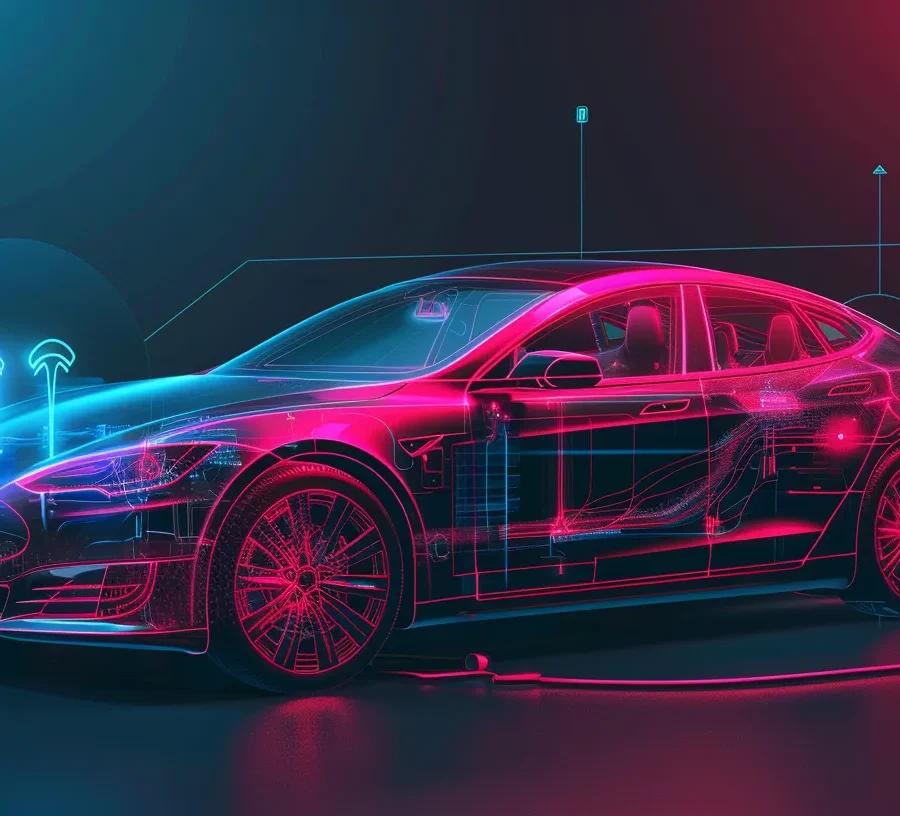
As commercial EV charging deployments scale across workplaces, fleets, retail, and public facilities, understanding the internal architecture of a commercial EV charger becomes critical. Beyond output power and appearance, the real value—and long-term reliability—of a charger lies inside its control, measurement, communication, and safety subsystems.
This article provides a system-level breakdown of commercial AC EV charger internals, focusing on five core modules:
Main Controller, BMS coordination, Energy Metering, Communication, and Safety & Protection.
Main Controller (MCU / Control Board)
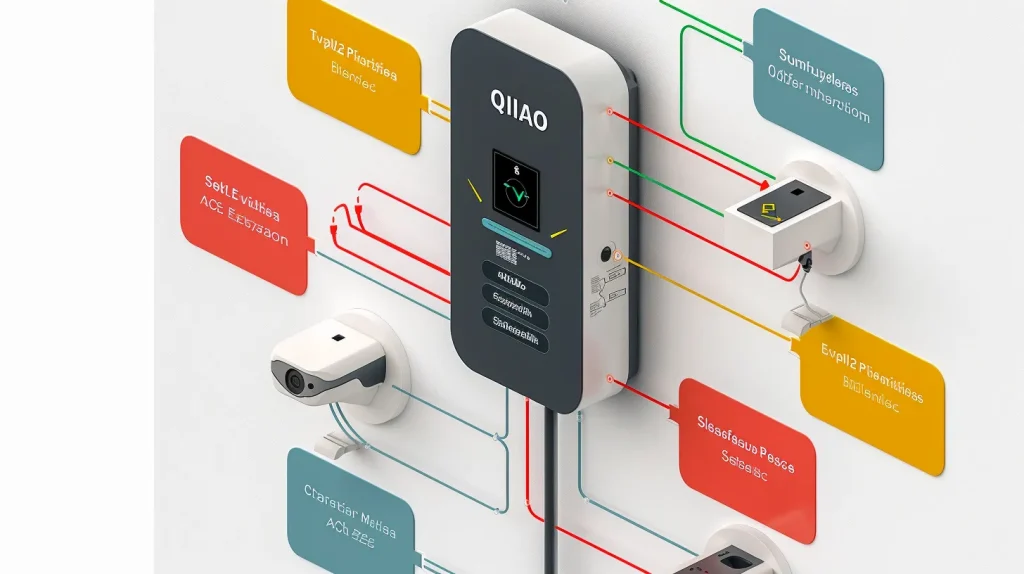
The main controller is the brain of a commercial EV charger. It orchestrates all charging logic and acts as the central coordination unit between the vehicle, the grid, and backend systems.
Key responsibilities:
- Charging state management (Idle / Handshake / Charging / Fault)
- PWM signal generation (IEC 61851)
- Load control and current regulation
- Coordination with energy metering and protection modules
- Firmware execution and OTA updates
In commercial-grade AC chargers, the controller typically uses an industrial-grade MCU or embedded SoC, designed for:
- Continuous 24/7 operation
- High EMI resistance
- Secure firmware storage
A robust controller architecture directly impacts stability, upgradeability, and protocol compatibility.
BMS Interaction (Vehicle-Side Coordination)
Unlike DC fast chargers, AC chargers do not directly manage the vehicle battery. However, they play a crucial role in coordinating with the vehicle’s Battery Management System (BMS).
How AC chargers interact with BMS:
- Exchange charging limits via Control Pilot (CP)
- Adjust current dynamically based on vehicle requests
- React to thermal or fault signals from the vehicle
- Ensure safe start/stop sequences
This indirect interaction makes signal accuracy and timing precision essential. Poor BMS coordination can lead to:
- Reduced charging efficiency
- Vehicle-side errors
- Premature charging interruptions
Commercial environments, where many vehicle models coexist, demand broad compatibility and strict protocol adherence.
Energy Metering System (Billing & Compliance)
Accurate energy measurement is a non-negotiable requirement for commercial charging.
Core functions of the metering module:
- Real-time voltage, current, and energy measurement
- Data reporting for billing and analytics
- Compliance with regional regulations (MID, CE, etc.)
High-quality commercial chargers integrate certified energy meters that support:
- Per-session kWh tracking
- Backend synchronization via OCPP
- Audit-ready data records
For operators, the metering system directly affects revenue accuracy, regulatory compliance, and customer trust.
Communication Modules (OCPP, Network & Local Interfaces)
Modern commercial EV chargers are networked energy devices, not standalone hardware.
Typical communication layers include:
| Layer | Function |
| Backend | OCPP 1.6 / 2.0.1 (CSMS integration) |
| Network | Ethernet, Wi-Fi, 4G/LTE |
| Local | RFID, Bluetooth, RS485 |
| Maintenance | Remote diagnostics & OTA |
A well-designed communication architecture enables:
- Remote monitoring and fault diagnosis
- Load management and DLM integration
- User authentication and access control
- Future protocol upgrades
For B-end deployments, communication reliability often matters more than raw charging power.
Safety & Protection Systems (Commercial-Grade Requirements)
Safety architecture is where consumer-grade chargers and commercial chargers diverge most clearly.
Typical protection layers include:
- Overcurrent & short-circuit protection
- Overtemperature monitoring (PCB, relay, enclosure)
- Residual current detection (AC + DC leakage)
- Surge protection (SPD)
- Ground fault protection
- IP-rated enclosure design
These systems operate both independently and cooperatively, ensuring that faults are isolated quickly without affecting the entire site.
In commercial environments—parking garages, outdoor installations, fleet depots—robust safety design is essential for liability control and long-term uptime.
How These Systems Work Together
A commercial AC EV charger is best understood as a distributed control system rather than a single device:
- The controller manages logic and decision-making
- The BMS interface ensures vehicle compatibility
- The meter guarantees accurate billing
- The communication module connects operations and platforms
- The safety system protects users, vehicles, and infrastructure
Weakness in any single module can compromise the entire deployment.
Why Internal Architecture Matters for B-End Buyers
For commercial operators, property managers, and fleet owners, internal design determines:
- Total cost of ownership (TCO)
- Maintenance frequency
- Software upgrade lifespan
- Regulatory and billing compliance
- Scalability across multiple sites
Selecting a charger based solely on power rating or price often leads to hidden operational risks later.
QIAO: Designed for Commercial-Grade AC Charging
At QIAO EV Charger, we focus on B-end AC EV charging solutions built around robust internal architecture—not just external specifications.
Our wall-mounted and portable AC chargers are designed with:
- Industrial-grade main controllers
- Stable BMS coordination across global vehicle models
- Certified metering options for commercial billing
- OCPP-ready communication architecture
- Multi-layer safety protection for long-term deployment
This system-level approach allows QIAO chargers to support workplaces, fleets, retail, hospitality, and public charging scenarios with reliability and scalability.If you are evaluating commercial AC EV chargers, understanding what’s inside is the first step toward making the right long-term decision.