
As electric vehicles (EVs) become a permanent part of commercial operations, electricity cost management has become a critical concern for businesses deploying EV chargers. Without proper control, EV charging can significantly increase demand charges and overall energy expenses.
Smart charging offers a practical and scalable solution. By intelligently controlling when, how fast, and how many vehicles charge simultaneously, businesses can optimize energy usage and substantially reduce electricity bills—without sacrificing charging availability.
What Is Smart Charging?
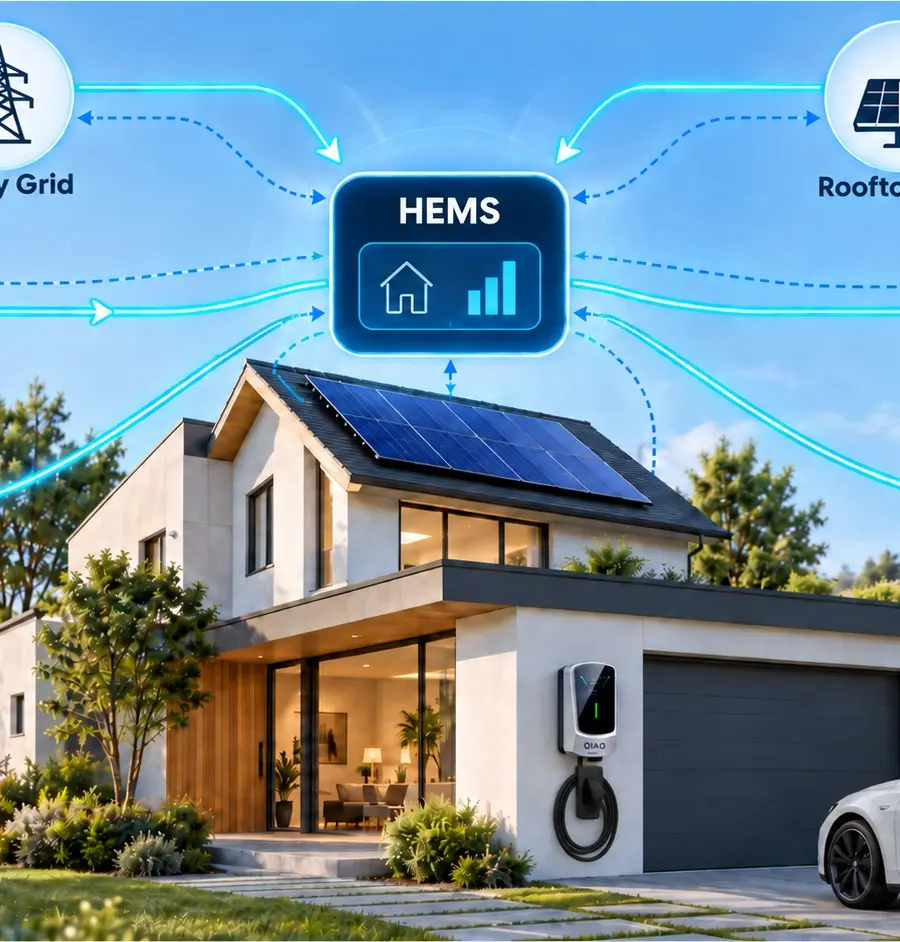
Smart charging refers to the use of software-controlled EV chargers that dynamically adjust charging behavior based on predefined rules or real-time data.
These rules can be driven by:
- Electricity tariffs (peak vs. off-peak)
- Building load availability
- Grid constraints
- Business priorities
- Fleet schedules
Instead of charging vehicles at maximum power whenever they are plugged in, smart charging delivers only the power that is needed, when it’s needed.
The Main Cost Drivers in Commercial EV Charging
Peak Demand Charges
Many utilities bill commercial customers not only for total energy consumed (kWh) but also for maximum power demand (kW) recorded during a billing period.
Uncontrolled EV charging can push the overall facility demand above historical peaks, triggering higher demand charges that can dominate monthly bills.
According to the U.S. Department of Energy, demand charges can account for 30–70% of commercial electricity costs, especially in facilities with spiky loads.
Source: U.S. DOE / National Renewable Energy Laboratory (NREL)
Time-of-Use (TOU) Pricing
Electricity prices often vary by time of day:
- Peak hours → higher cost
- Off-peak hours → lower cost
Charging EVs during peak periods without optimization increases operating expenses.
The International Energy Agency (IEA) notes that time-of-use tariff structures are widely adopted globally to shift consumption away from peak demand periods and reduce grid stress.
Source: IEA — Global EV Outlook 2025
https://www.iea.org/reports/global-ev-outlook-2025/electric-vehicle-charging
Infrastructure Upgrade Costs
If EV charging loads push electrical systems beyond existing capacity, businesses may face costly upgrades:
- Transformer upgrades
- Main panel expansions
- Higher utility service agreements
Smart charging helps avoid these capital expenditures.
According to Utility Dive, unmanaged EV charging loads are a leading factor in costly electrical service upgrades for commercial facilities.
Source: Utility Dive — EV Grid Impact
https://www.utilitydive.com/news/ev-grid-impact-infrastructure
How Smart Charging Reduces Electricity Costs
Peak Load Control (Demand Shaving)
Smart charging limits the electricity used for EV charging when the site’s total demand is approaching predefined thresholds.
Example:
If a facility has a maximum allowed demand of 250 kW, smart charging algorithms can reduce charging power when other loads rise, preventing demand charge penalties without interrupting critical loads.
Result:
✔ Lower peak demand
✔ Reduced monthly demand charges
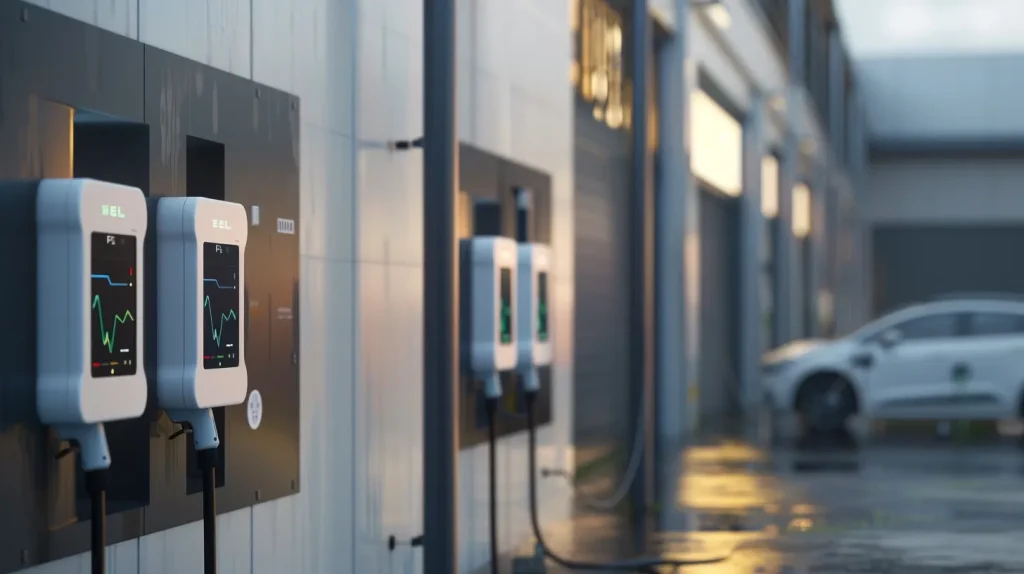
Off-Peak Charging Optimization
Smart charging can automatically prioritize charging during off-peak tariff periods, such as nighttime or early morning.
This is especially effective for:
- Fleet depots
- Workplace charging
- Overnight residential-commercial EV parking
Result:
✔ Lower average cost per kWh
✔ More predictable energy expenses
Load Balancing Across Chargers
When several EVs charge at the same time, smart management can distribute available capacity rather than letting every charger draw maximum current.
| Scenario | Without Smart Charging | With Smart Charging |
| 10 chargers active | All draw maximum power | Power shared dynamically |
| Grid impact | Sudden peak load | Stable load profile |
| Cost outcome | High demand charges | Controlled costs |
Result:
✔ No need for costly grid upgrades
✔ Better use of existing electrical capacity
Avoiding Infrastructure Upgrade Costs
By actively managing loads, smart charging can delay or eliminate the need for expensive electrical infrastructure upgrades.
Upgrades such as transformer replacements or panel expansions can cost tens or hundreds of thousands of dollars.
Result:
✔ Lower CapEx
✔ Faster ROI on EV charging investments
Priority-Based Charging for Business Operations
Smart charging allows businesses to define charging priorities so that critical vehicles receive power first.
Examples:
- Prioritize fleet vehicles before visitor EVs
- Align charging with shift schedules
- Ensure emergency response vehicles stay charged
This prevents unnecessary overcharging and wasted energy.
Result:
✔ Energy focused where it creates business value
✔ Operational continuity
Smart Charging Use Cases With the Highest Cost Savings
Smart charging delivers the strongest financial impact in the following scenarios:
- Fleet depots (logistics, delivery, service vehicles)
- Commercial buildings with limited electrical capacity
- Retail and hospitality locations with high customer turnover
- Multi-tenant properties sharing a single service connection
- Workplace charging with predictable parking duration
Requirements for Effective Smart Charging
To achieve actual cost savings, EV chargers must support:
- Network connectivity (Ethernet / Wi-Fi / 4G)
- Dynamic Load Management (DLM)
- Time-based charging rules
- Remote configuration and monitoring
- Open communication protocols like OCPP
Without these capabilities, “smart charging” cannot function in true business-ready mode.
Conclusion: Smart Charging Is a Business Strategy, Not Just a Feature
For modern businesses deploying EV charging, electricity cost is one of the largest operational variables. Smart charging transforms EV infrastructure into a controllable energy asset—not a cost risk.
By integrating smart load control, off-peak optimization, and priority scheduling, companies can significantly reduce electric bills, defer costly infrastructure upgrades, and improve total cost of ownership (TCO).Commercial EV chargers that support robust smart charging—such as those offered by QIAO EV Charger—provide businesses with energy cost control, load stability, and future scalability, making them an essential part of any enterprise electrification strategy.