
As electric vehicle adoption grows, one fundamental question remains:
How much charging do drivers actually need for daily use?
Understanding daily driving behavior is critical for designing efficient EV charging infrastructure. Overbuilding increases costs; underbuilding creates congestion and dissatisfaction.
This article analyzes daily driving patterns and translates them into practical charging deployment strategies.
1. Average Daily Driving Distance
Global transportation data shows that most private vehicles travel far less than their maximum range.
For example:
- In the United States, average daily driving distance is roughly 30–40 miles.
Data reference: U.S. Department of Transportation - In Europe, average daily driving distance is approximately 30 km.
These distances require only a fraction of a modern EV’s battery capacity.
This is why Level 2 AC charging powered by Alternating current
is sufficient for most daily use cases.
2. Daily Energy Consumption Analysis
Typical EV energy consumption ranges between:
- 15–20 kWh per 100 km
- 0.25–0.30 kWh per mile
This means:
A driver traveling 40 miles per day consumes roughly 10–12 kWh.
An 11 kW AC charger can replenish that energy in approximately one hour.
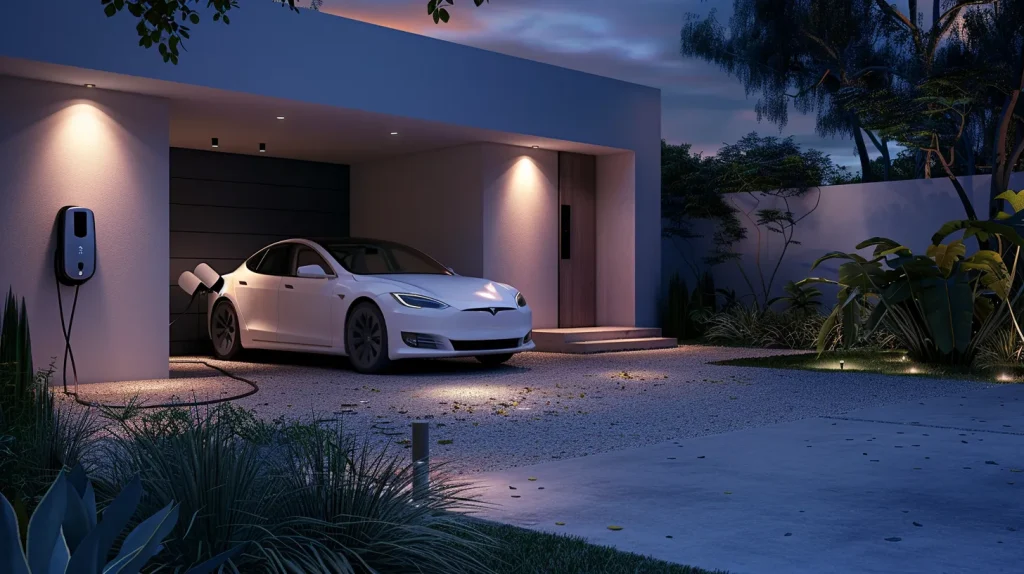
Therefore, for daily commuting, long-duration slow charging is often unnecessary — consistent overnight charging is more than adequate.
3. Charging Behavior Patterns
EV charging demand depends more on parking duration than battery size.
Common scenarios:
| Scenario | Parking Duration | Charging Strategy |
| Home | 8–10 hours | Overnight AC charging |
| Office | 6–9 hours | Workplace Level 2 charging |
| Shopping | 1–3 hours | Destination AC charging |
| Highway | 15–40 minutes | DC fast charging |
Most daily driving energy demand is fulfilled at home or workplace.
High-power DC charging is primarily needed for long-distance travel.
4. Why Overbuilding Fast Charging Is Inefficient
Many early deployments focused heavily on DC fast charging.
However, DC infrastructure requires:
- High-capacity grid connection
- Dedicated transformers
- Significant capital expenditure
- Higher demand charges
For daily commuting needs, AC infrastructure aligned with Smart grid
principles offers better cost-efficiency.
Smart load management enables multiple vehicles to share limited capacity safely.
5. Infrastructure Planning Based on Real Demand
Effective infrastructure planning requires:
- Evaluating average daily driving distance
- Understanding parking duration patterns
- Assessing electrical capacity
- Implementing dynamic load management
In most residential and commercial properties, deploying scalable AC charging infrastructure covers over 80% of real-world charging demand.
The remaining 20% (long-distance travel) is served by public fast-charging networks.
Practical Implications for Property Owners
For:
- Apartment buildings
- Office parks
- Hotels
- Shopping centers
The goal is not maximum charging speed — it is alignment with real daily usage patterns.
Providing reliable AC charging that replenishes daily driving energy is economically and operationally optimal.
Conclusion
Daily driving behavior reveals a critical insight:
Most EV users do not need high-power charging every day.
With average travel distances well below battery capacity, consistent AC charging — especially overnight — satisfies daily mobility needs efficiently.
Understanding real driving patterns allows property owners and infrastructure planners to:
- Avoid unnecessary capital expenditure
- Optimize electrical capacity
- Deploy scalable charging solutions
- Improve ROI
About QIAO
QIAO provides commercial and residential AC charging solutions optimized for real-world daily driving demand.
Our wall-mounted chargers integrate:
- Dynamic load management
- OCPP compatibility
- Scalable deployment architecture
Designed for workplaces, apartments, hotels, and mixed-use properties, QIAO solutions align infrastructure capacity with actual daily charging needs — avoiding overinvestment while maintaining operational reliability.
FAQ
1. Do most drivers need fast charging daily?
No. Average daily driving distances are significantly lower than full battery range.
2. Is overnight AC charging sufficient?
Yes. For most commuters, overnight Level 2 charging fully replenishes daily energy usage.
3. How much energy does a typical EV use per day?
A commuter driving 40 miles per day typically consumes around 10–12 kWh.
4. Should commercial properties prioritize AC or DC charging?
For daily-use environments (workplaces, residential, hotels), AC charging is generally more cost-effective and sufficient.