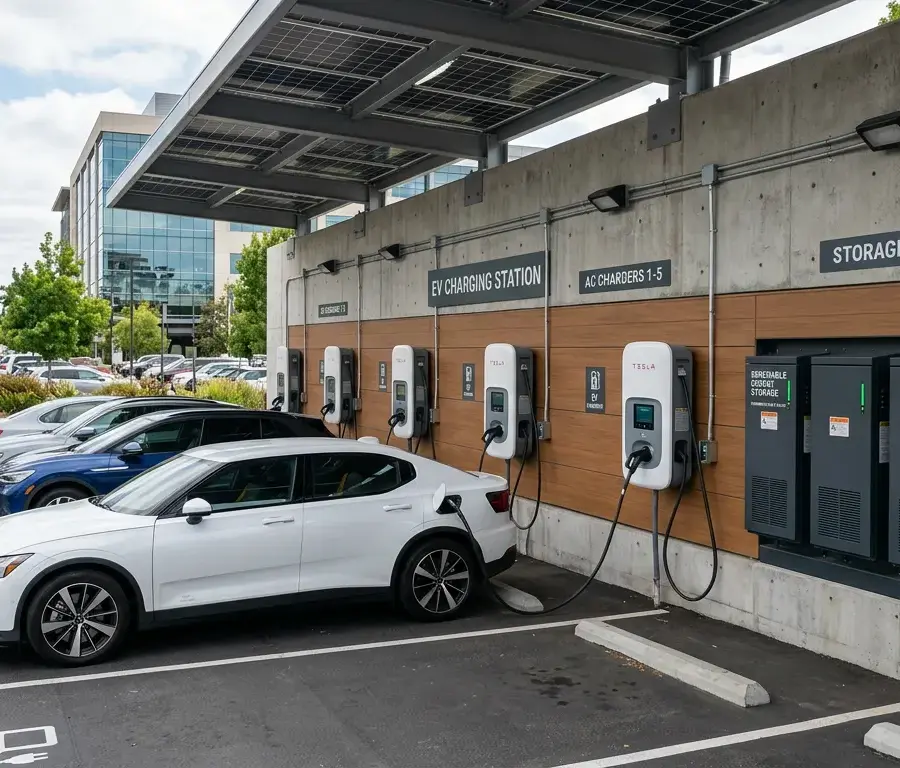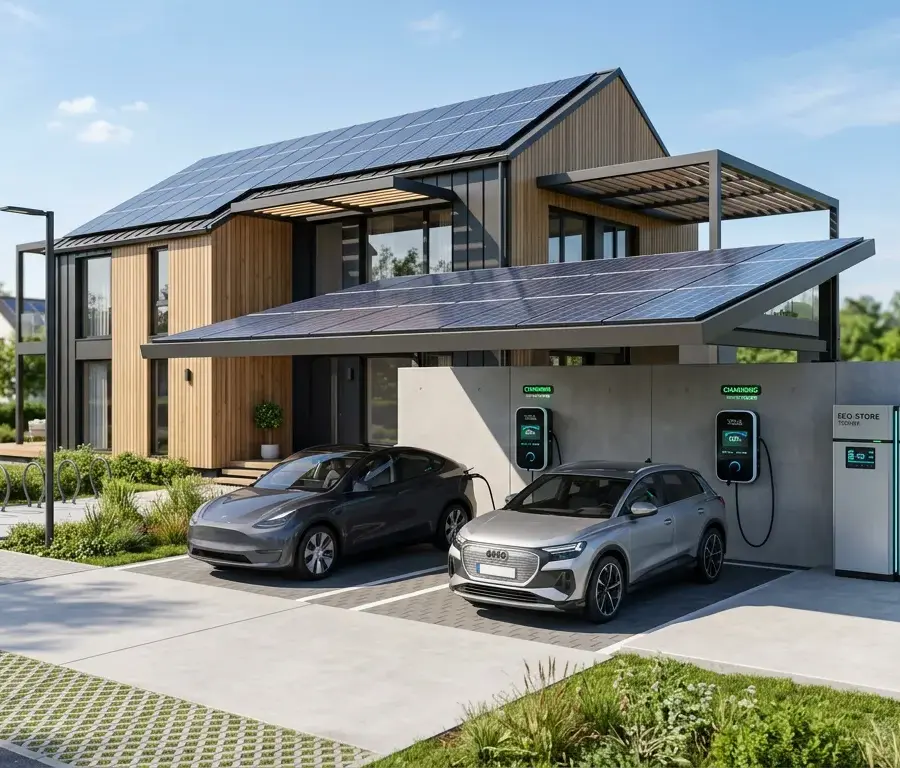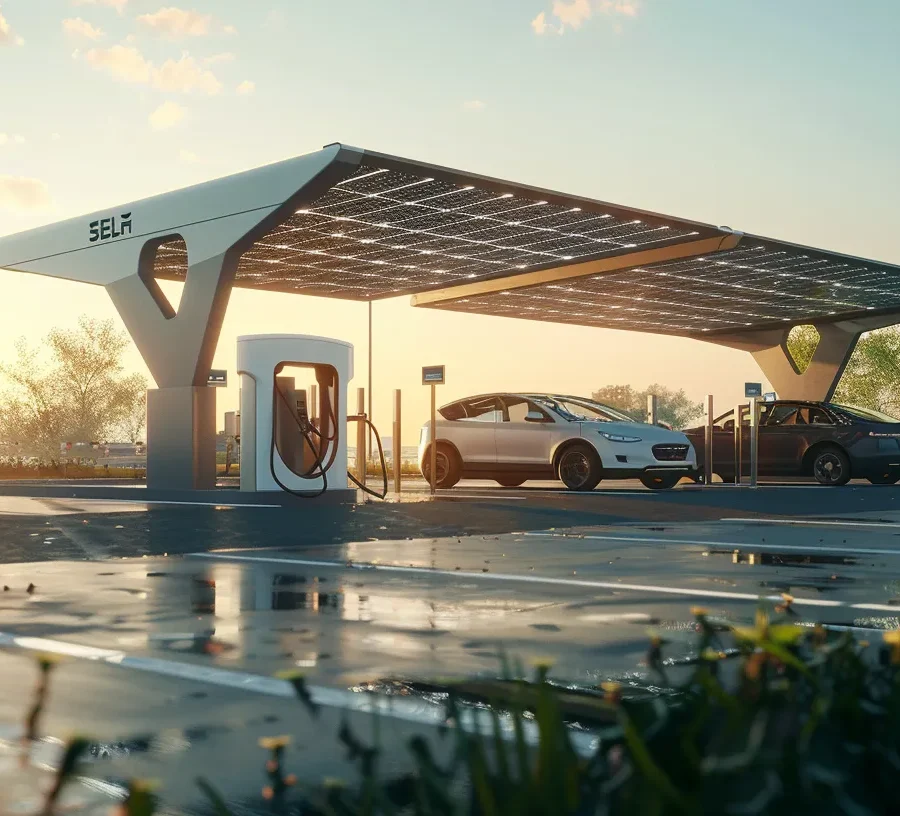

As EV charging demand grows, conventional grid-dependent deployment models are increasingly challenged by capacity limits, peak demand charges, and resilience concerns.
Integrating microgrids and energy storage systems (ESS) with EV charging provides a scalable, resilient, and cost-optimized infrastructure model.
This article explains how microgrids work, how storage integrates with EV charging, and why this architecture is becoming critical for commercial energy planning.

1.What Is a Microgrid?
A microgrid is a localized energy system capable of operating either connected to the main grid or independently (island mode).
Authoritative definition:
U.S. Department of Energy – Microgrid Overview
https://www.energy.gov/oe/activities/technology-development/grid-modernization-and-smart-grid/microgrids
Key characteristics:
- Local generation (solar, wind, CHP)
- Energy storage
- Intelligent control system
- Ability to disconnect from main grid
Microgrids enhance reliability and energy independence.
2.Role of Energy Storage Systems (ESS)
Because renewable generation is intermittent, energy storage systems (ESS) are critical for stabilizing supply.
Reference:
International Renewable Energy Agency (IRENA) – Electricity Storage
https://www.irena.org/Energy-Transition/Technology/Energy-Storage
Storage enables:
- Peak shaving
- Load shifting
- Backup power
- Renewable smoothing
In EV charging scenarios, ESS prevents sudden demand spikes from overwhelming building transformers or distribution feeders.
3. Why Microgrids Matter for EV Charging
3.1 Peak Demand Mitigation
EV charging can create high simultaneous loads, especially in:
- Office buildings
- Logistics hubs
- Hotels
- Public parking facilities
By integrating storage, charging loads are buffered, reducing utility demand charges.
3.2 Grid Capacity Constraints
Many commercial properties face transformer capacity limits. A microgrid can:
- Supplement grid supply with on-site generation
- Defer costly grid upgrades
- Stabilize voltage and frequency locally
Interconnection standards reference:
IEEE 1547 – Interconnection of Distributed Energy Resources
https://standards.ieee.org/standard/1547-2018.html
3.3 Resilience and Backup Power
Microgrids allow critical charging infrastructure to operate during outages.
This is particularly relevant for:
- Emergency fleets
- Municipal infrastructure
- Healthcare facilities
- Fleet depots
Energy resilience frameworks reference:
U.S. Department of Energy – Grid Resilience
https://www.energy.gov/oe/activities/technology-development/grid-modernization-and-smart-grid/grid-resilience
4. Typical Architecture: EV Charging + Microgrid + Storage
A commercial integrated system typically includes:
- Rooftop or ground-mounted solar PV
- Battery storage system
- Grid interconnection point
- Energy management system (EMS)
- AC or DC EV chargers
- Smart load management software
The Energy Management System (EMS) dynamically prioritizes:
- Self-consumption of solar
- Storage charging/discharging
- EV charging demand
- Grid import/export
5. Deployment Models
Model A: Solar + Storage + AC Charging
Best for:
- Office campuses
- Destination charging
- Residential complexes
Advantages:
- Lower infrastructure complexity
- Reduced peak demand
- Daytime solar utilization
Model B: Hybrid Grid + Storage for Fleet Operations
Best for:
- Commercial fleets
- Delivery hubs
- Industrial logistics centers
Advantages:
- Load buffering
- Predictable charging windows
- Controlled demand profile
Model C: Island-Capable Microgrid
Best for:
- Critical infrastructure
- Remote sites
- Energy-independent developments
Advantages:
- Operational continuity during outages
- Enhanced resilience
6. Economic Considerations
Microgrid integration can:
- Reduce peak demand charges
- Avoid transformer upgrade costs
- Increase renewable energy utilization
- Improve long-term energy price stability
According to the International Energy Agency (IEA), system-level smart charging and distributed energy coordination improve overall grid efficiency.
Reference:
https://www.iea.org/reports/energy-technology-perspectives-2023
7. Technical Considerations Before Deployment
Before integrating microgrids with EV charging, businesses must evaluate:
- Grid interconnection approval requirements
- Transformer capacity
- Protection coordination
- Grounding and surge protection
- Communication protocol compatibility (e.g., OCPP backend support)
Proper electrical engineering review is mandatory to ensure compliance and safety.
Conclusion
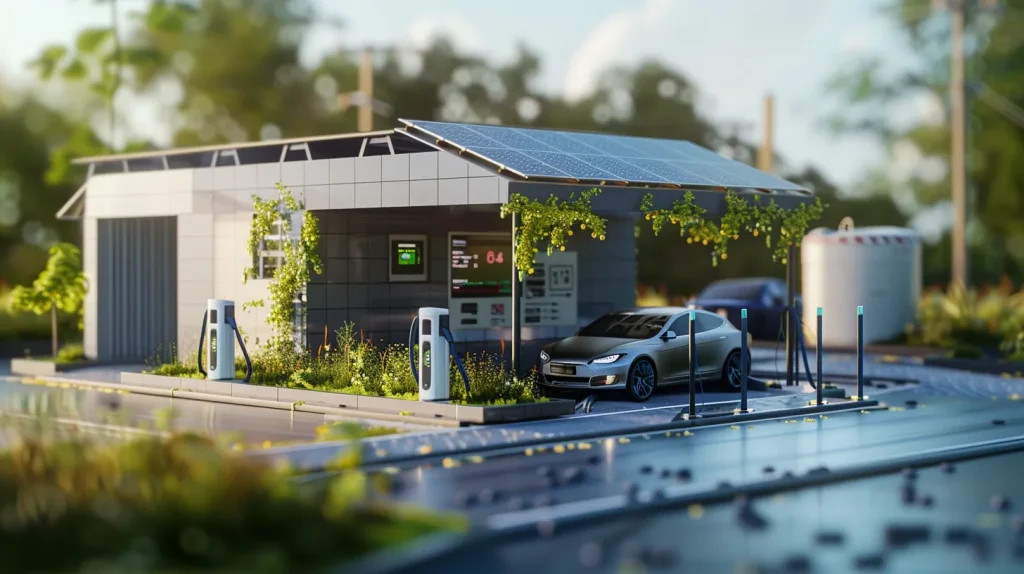
Microgrid and energy storage integration transforms EV charging from a simple load into a controllable energy asset.
By combining:
- On-site renewable generation
- Battery storage
- Intelligent energy management
- Smart EV charging
Businesses gain:
- Energy resilience
- Cost optimization
- Grid stability
- Infrastructure scalability
Future-ready EV infrastructure is not grid-dependent alone — it is grid-coordinated and storage-enabled.
About QIAO
QIAO provides commercial-grade AC EV charging solutions designed for integration within:
- Microgrid environments
- Solar + storage ecosystems
- Dynamic load management systems
Our charging solutions support scalable deployment and backend interoperability, enabling seamless integration into advanced energy architectures.
For projects involving solar integration, storage coordination, or distributed energy systems, QIAO delivers technically aligned, infrastructure-ready solutions.
FAQ
1. Is storage mandatory for microgrid EV charging?
No, but storage significantly improves load stability and renewable utilization.
2. Can a microgrid operate without the main grid?
Yes. In island mode, it can operate independently if generation and storage are sufficient.
3. Does integration reduce electricity bills?
Yes. Peak shaving and load shifting reduce demand charges in many tariff structures.
4. Is regulatory approval required?
Yes. Interconnection and protection compliance must meet local utility standards.