
As electricity prices rise and EV adoption accelerates, more businesses are considering:
Combining solar PV systems with AC EV chargers
The idea sounds attractive:
- Generate your own electricity
- Reduce charging costs
- Improve sustainability
But the key question remains:
Does solar + AC charging actually deliver strong financial returns?
The answer is:
Yes—but ROI depends heavily on system design, charging behavior, and local electricity economics.
This article breaks down the real-world economics behind solar-powered AC charging systems.
Why Solar + AC Charging Is Becoming Popular
The combination of:
- Solar photovoltaic (PV) systems
- AC EV chargers
creates a highly compatible energy model.
Why?
Because:
- AC charging is relatively low power
- Charging sessions are usually long duration
- Solar generation aligns well with daytime charging demand
How the System Works
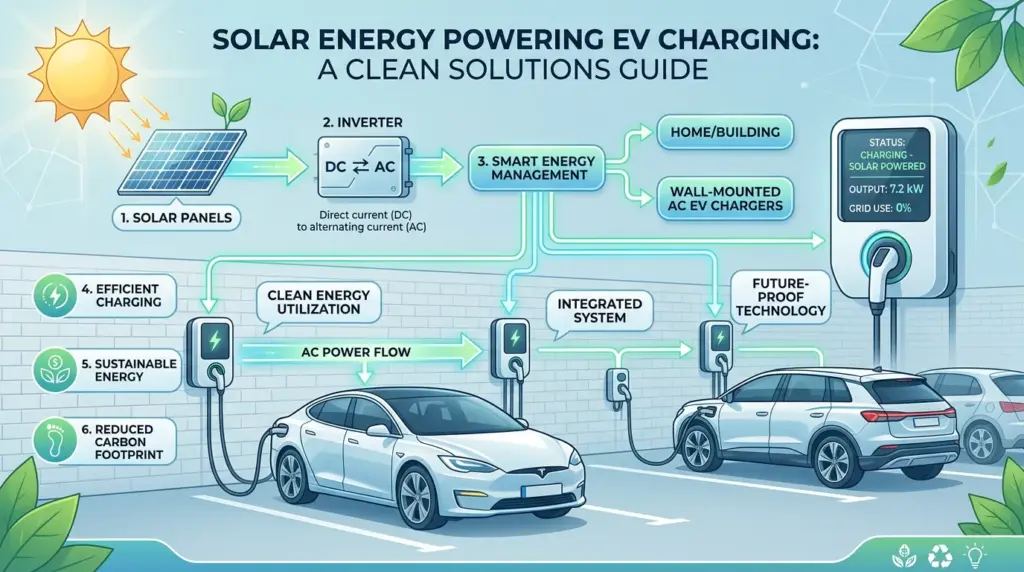
Typical structure:
Solar Panels → Inverter → AC EV Charger → EV
Optional additions:
- Energy Storage System (ESS)
- Smart Energy Management System (EMS)
Main Financial Benefits
1. Lower Electricity Costs
Solar energy reduces grid electricity consumption.
Result:
- Lower operational costs
- Reduced exposure to electricity price volatility
Source:
https://www.energy.gov/eere/solar/solar-energy-technologies-office
2. Peak Demand Reduction
Charging EVs with solar during the day can reduce:
- Peak demand charges
- Grid load stress
Source:
https://www.nrel.gov/docs/fy20osti/74426.pdf
3. Higher Energy Self-Consumption
Without EV charging:
- Excess solar power may be exported at low rates
With EV charging:
- More solar energy is consumed on-site
This improves solar ROI.
4. Sustainability & ESG Value
Solar-powered charging helps businesses:
- Improve ESG positioning
- Meet carbon reduction goals
Source:
https://www.iea.org/reports/global-ev-outlook-2024
Why AC Charging Works Well with Solar
AC Charging = Better Solar Match
Compared with DC fast charging:
| Factor | AC Charging | DC Charging |
| Power demand | Lower | Very high |
| Solar compatibility | Excellent | More difficult |
| Installation cost | Lower | Higher |
| Grid impact | Lower | Higher |
Insight:
AC charging is often the most economical solar charging solution.
Real ROI Factors
1. Electricity Price
Higher electricity prices:
→ Faster ROI
2. Solar Irradiance
Regions with stronger sunlight:
→ Higher energy generation
3. Charger Utilization Rate
More charging activity:
→ Better solar consumption efficiency
4. System Size Matching
Oversized systems may:
- Reduce economic efficiency
Proper sizing is critical.
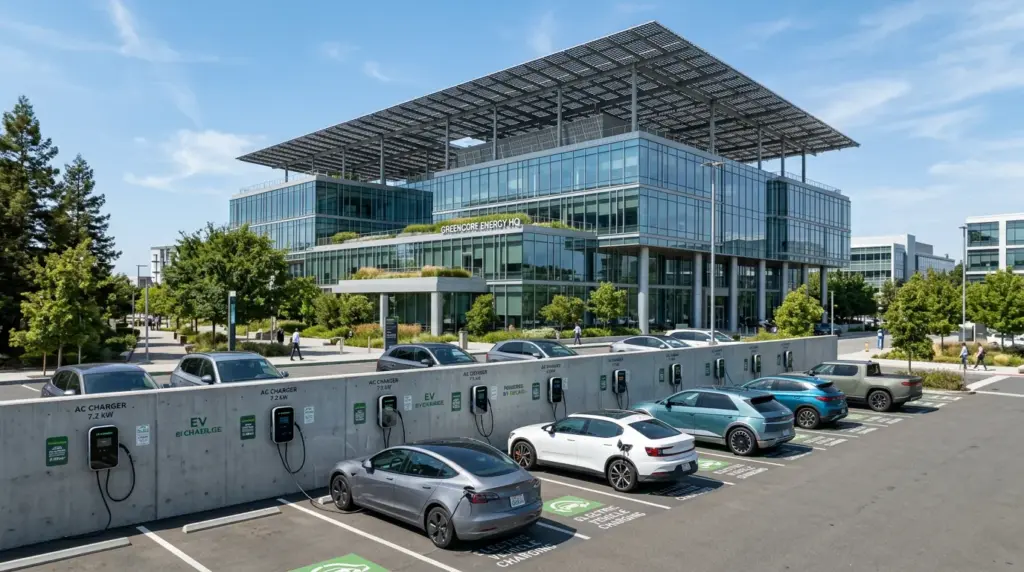
Example ROI Scenario
Commercial Parking Site
System Setup
| Component | Specification |
| Solar PV | 100 kW |
| AC Chargers | 20 units |
| Charging Power | 7–22 kW |
Estimated Benefits
| Benefit | Impact |
| Grid electricity reduction | High |
| Operating cost savings | Significant |
| Carbon reduction | Strong |
Typical Payback Period
Depending on region:
- Around 4–8 years
Source:
https://www.nrel.gov/state-local-tribal/commercial-solar.html
Hidden Costs to Consider
1. Initial Investment
Main cost drivers:
- Solar panels
- Inverters
- Electrical upgrades
2. Installation Complexity
Commercial projects may require:
- Grid approvals
- Structural assessment
3. Maintenance Costs
Although relatively low:
- Solar systems still require periodic maintenance
When Solar + AC Charging Works Best
1. Commercial Buildings
- Offices
- Business parks
2. Hotels
- Daytime parking duration matches solar generation
3. Fleet Depots
- Predictable charging schedules
4. Retail Locations
- Customers stay while charging
When ROI May Be Weak
Solar + charging may perform poorly if:
- Electricity prices are low
- Charger utilization is very low
- Solar production is weak
Not every site benefits equally.
Smart Energy Management Improves ROI
Modern systems use:
- Smart load balancing
- Dynamic charging control
- Solar prioritization
This increases self-consumption efficiency.
Future Trend: Solar + AC Charging + ESS
The next evolution combines:
- Solar PV
- AC charging
- Battery storage
Benefits include:
- Better energy flexibility
- Peak shaving
- Backup capability
Why This Matters for B2B Buyers
1. Lower Operating Costs
Energy savings become more important as electricity prices rise.
2. Stronger ESG Positioning
Sustainability increasingly affects:
- Tenant attraction
- Investor interest
- Brand image
3. Long-Term Infrastructure Value
Solar-powered charging improves future readiness.
Where QIAO Fits In
At QIAO, we provide:
- AC EV charging solutions compatible with solar energy systems
Designed for:
- Commercial properties
- Fleet charging
- Smart energy integration
Our solutions help businesses:
- Reduce electricity costs
- Improve charging efficiency
- Build scalable energy infrastructure
Supporting a smarter and more sustainable charging ecosystem.
Key Takeaways
- Solar + AC charging can deliver strong ROI
- AC charging is highly compatible with solar generation
- Real profitability depends on utilization and energy economics
- Smart management systems significantly improve returns
The future of EV charging is not only electric—it is energy integrated
FAQ
1. Is solar EV charging profitable?
Yes, especially in regions with high electricity costs.
2. Why is AC charging better for solar integration?
Because AC charging has lower and more stable power demand.
3. What affects ROI the most?
Electricity prices and charger utilization.
4. Is battery storage necessary?
Not always, but it can improve flexibility and energy optimization.
5. How long is the payback period?
Typically around 4–8 years depending on the project.