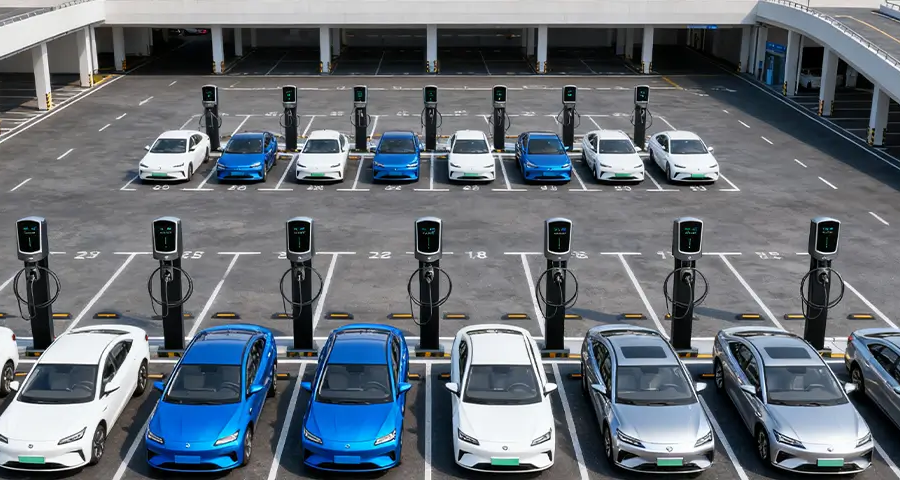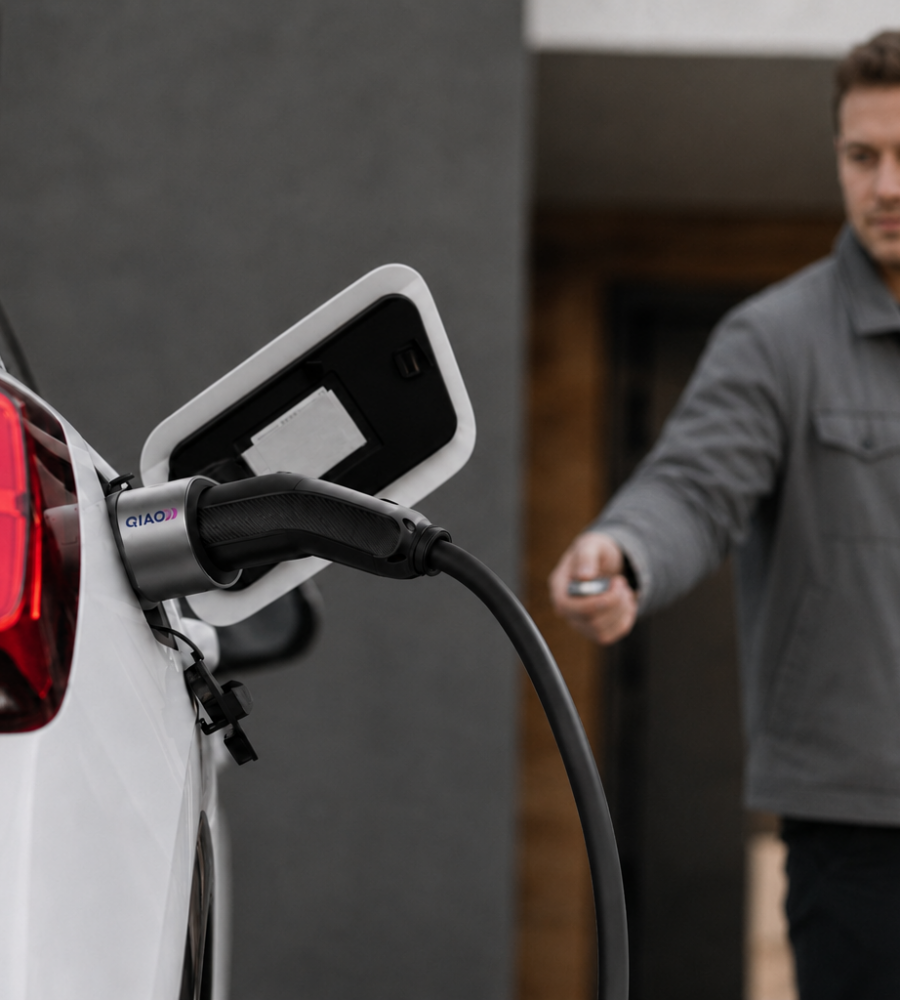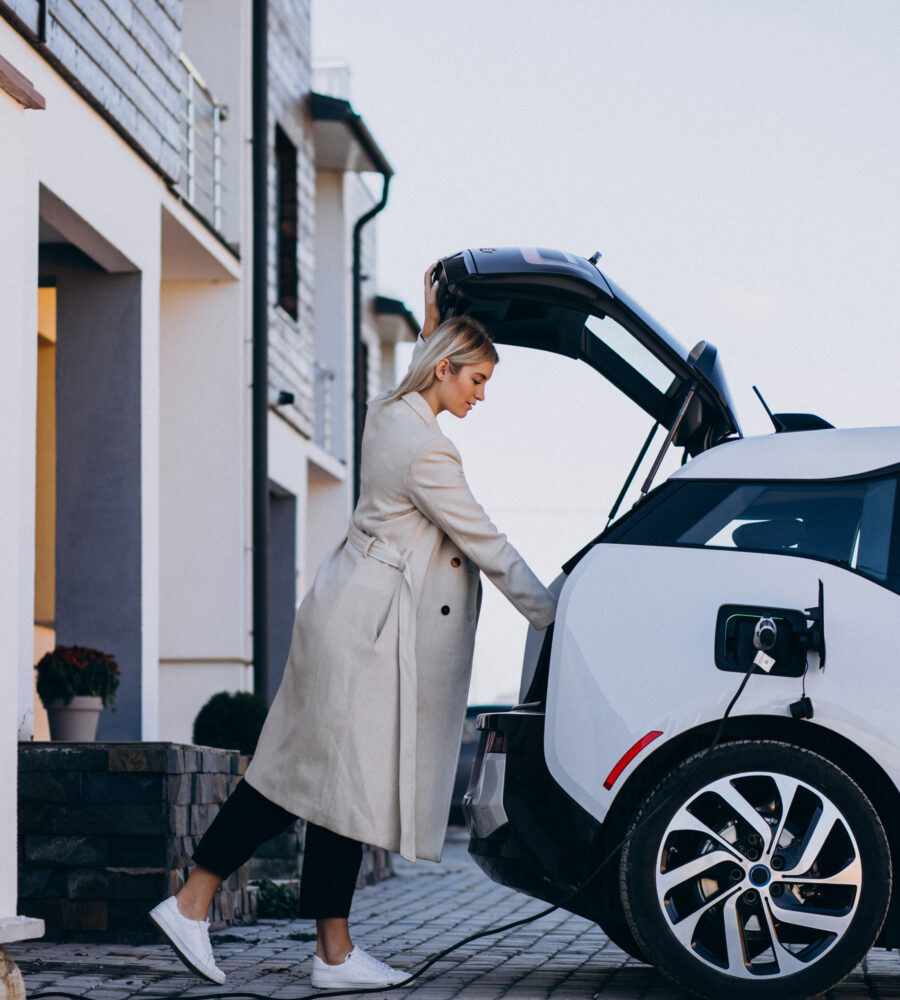

When discussing EV charging infrastructure, most conversations focus on chargers, grid capacity, and energy management systems. However, an equally important component is often overlooked: vehicle-side power reception.
This refers to how an electric vehicle receives, converts, and manages electrical energy delivered from the charging equipment.
Understanding vehicle-side power reception is critical for:
- EV charging compatibility
- Charging efficienc
- Electrical safety
- Infrastructure design
This article explains how EVs receive power, the key components involved, and why it matters for charging infrastructure planning.
1. What Is Vehicle-Side Power Reception?
Vehicle-side power reception refers to the hardware and control systems within an electric vehicle that receive electrical energy from a charging station and convert it into a form usable by the battery system.
This process typically involves:
- Charging connector interface
- Communication handshake
- On-board charger (OBC)
- Battery management system (BMS)
- Power conversion and protection circuits
Standardized charging protocols ensure safe interaction between the vehicle and the charger.
2. Key Components of Vehicle-Side Charging
2.1 Charging Inlet (Vehicle Connector)
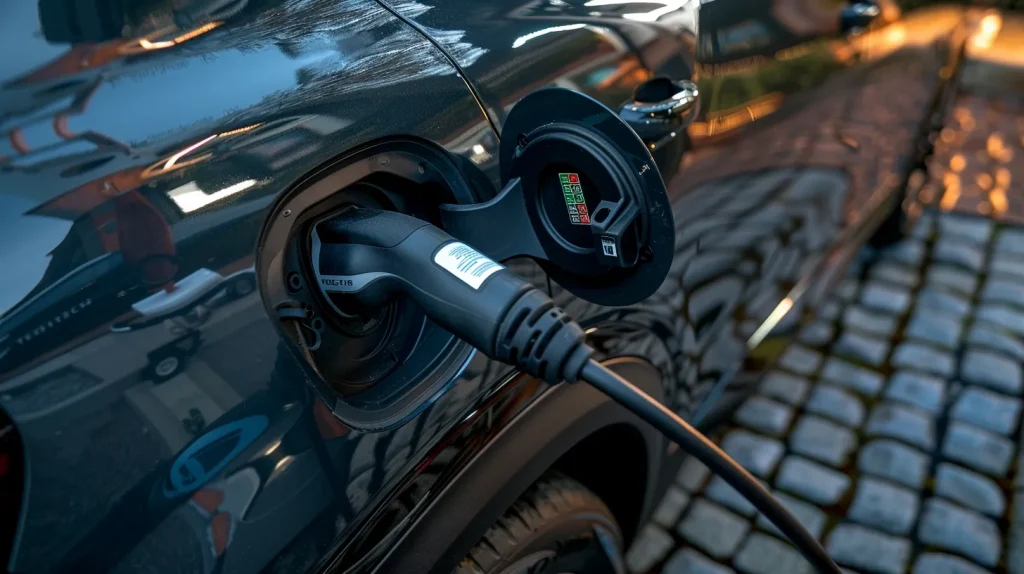
The charging inlet is the physical interface between the vehicle and the charging cable.
Common global connector standards include:
- Type 1 (SAE J1772) – North America
- Type 2 (Mennekes) – Europe
- GB/T connector – China
These connectors enable both power transfer and communication signals.
2.2 On-Board Charger (OBC)
The on-board charger converts incoming AC power from the charging station into DC power suitable for the battery.
Technical functions include:
- AC–DC conversion
- Power factor correction
- Voltage regulation
- Electrical isolation
OBC capacity determines the maximum AC charging speed of the vehicle.
For example:
- 7 kW OBC
- 11 kW OBC
- 22 kW OBC
Reference:
International Energy Agency – Global EV Outlook
https://www.iea.org/reports/global-ev-outlook
2.3 Battery Management System (BMS)
The Battery Management System (BMS) controls how energy enters the battery pack.
It manages:
- Charging current limits
- Cell balancing
- Temperature protection
- State of charge monitoring
The BMS communicates with the charger to dynamically adjust charging power.
Battery system fundamentals reference:
https://batteryuniversity.com/article/bu-908-battery-management-system-bms
2.4 Communication Protocol
Before power delivery begins, the vehicle and charger must establish communication.
Typical functions include:
- Authentication
- Maximum current negotiation
- Safety verification
- Charging session control
Communication protocols vary depending on the charging standard.
Example reference:
ISO 15118 – Vehicle to Grid Communication Interface
https://www.iso.org/standard/55366.html
3. How the Vehicle Receives Power During Charging
A simplified charging sequence looks like this:
- Vehicle connects to the charger via cable
- Charger and vehicle perform a communication handshake
- BMS confirms battery conditions
- Charger supplies power according to negotiated limits
- On-board charger converts AC power to DC
- Battery stores the energy under BMS supervision
This process ensures that charging remains safe, efficient, and compatible across different vehicles and infrastructure providers.
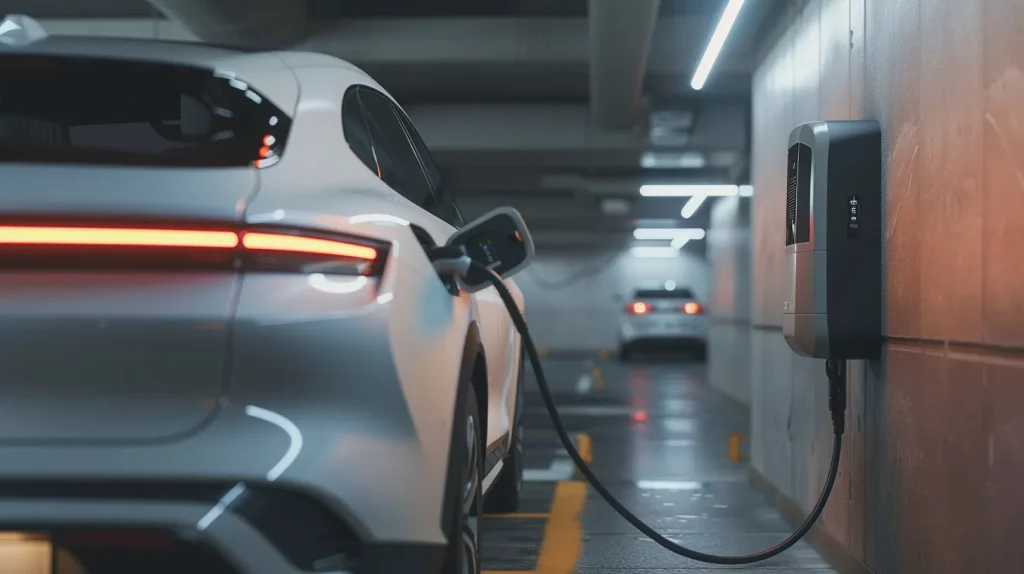
4. AC vs DC Charging from the Vehicle Perspective
AC Charging
In AC charging:
- Conversion happens inside the vehicle (via OBC)
- Charging speed is limited by the vehicle’s OBC capacity
This is typical for:
- Home charging
- Workplace charging
- Destination charging
DC Fast Charging
In DC charging:
- Power conversion happens inside the charging station
- Electricity is delivered directly to the battery
This allows significantly higher charging speeds.
However, it requires more complex infrastructure and higher grid capacity.
5. Why Vehicle-Side Reception Matters for Charging Infrastructure
Understanding vehicle-side limitations helps infrastructure planners:
- Select appropriate charger power levels
- Avoid oversizing installations
- Improve charging efficiency
- Ensure compatibility across EV models
For example, installing a 22 kW AC charger offers little benefit if most vehicles on-site only support 7–11 kW OBC capacity.
Infrastructure design should therefore consider both charger capability and vehicle-side limitations.
6. Future Trends in Vehicle Power Reception
EV power reception systems are evolving rapidly.
Emerging technologies include:
- Bidirectional charging (V2G / V2L)
- Higher-capacity onboard chargers
- Integrated thermal management
- Smart charging communication protocols
These developments will enable vehicles to become active participants in energy systems, not just energy consumers.
Conclusion
Vehicle-side power reception is a critical part of the EV charging ecosystem.
It determines:
- Charging speed
- System compatibility
- Energy efficiency
- Infrastructure requirements
As EV charging infrastructure expands globally, understanding the interaction between charger technology and vehicle power systems becomes increasingly important for businesses, fleet operators, and infrastructure planners.
About QIAO
QIAO provides commercial AC EV charging solutions designed for compatibility with global vehicle charging standards.
Our charging systems support:
- Smart load management
- OCPP backend integration
- Scalable commercial deployments
- Future-ready energy infrastructure
QIAO chargers are engineered to ensure reliable interaction between charging stations and vehicle-side power reception systems.
FAQ
1. What limits AC charging speed in an EV?
The capacity of the vehicle’s onboard charger (OBC) determines the maximum AC charging power.
2. Do all EVs support the same charging connectors?
No. Connector standards vary by region, including Type 1, Type 2, and GB/T.
3. Why does charging speed decrease at high battery levels?
The BMS reduces charging current to protect battery health as the battery approaches full charge.
4. Is DC charging faster because the vehicle processes less power?
Yes. In DC charging, the charger performs AC–DC conversion, allowing higher power delivery directly to the battery.