
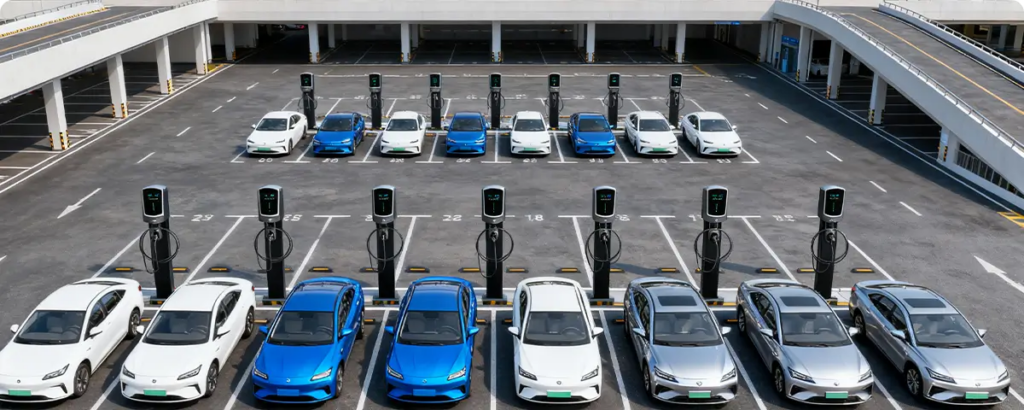
Workplace EV charging gives employees, company vehicles, and visitors a place to charge while they are parked at work. For many offices, AC charging is the most practical starting point because vehicles remain parked for several hours and do not normally require rapid charging. This longer stay allows businesses to install more charging ports at moderate power instead of paying for high-power DC equipment.
A successful project still needs careful planning. You need to know who will charge, how much energy they need, and how the site will manage access. You also need to check the building’s electrical capacity before choosing equipment.
This guide explains how to estimate port numbers, select charging power, plan installation, set user policies, and prepare for growth. It will help you create a clear project brief before you speak with a charger supplier, electrician, property owner, or utility.
What Is Workplace EV Charging?
Workplace EV charging is charging infrastructure installed at offices, corporate campuses, factories, business parks, and other work sites. Businesses use it to serve employee vehicles, company cars, approved visitors, or a mix of these groups.

Unlike public charging sites, workplace systems are usually planned around longer parking periods and controlled access. The business may also need energy metering, user authentication, payment rules, load management, and remote monitoring.
Both owned and leased properties can support workplace charging. A tenant will normally need the landlord’s or property manager’s permission before making electrical or parking-area alterations. Both parties should agree on access for the site assessment, installation responsibilities, equipment ownership, operating costs, and removal requirements.
Who Uses Workplace EV Chargers?
Workplace chargers usually serve three user groups: employees, company vehicles, and visitors. Each group has different parking times and charging priorities.
Employees
Employees can recover daily commuting energy at moderate AC power while they work. Charging is especially useful for people without a reliable home option.
Survey employees before selecting equipment. Ask about commute distance, vehicle type, work schedule, home charging access, and EV purchase plans. Sites with shift-based work should also consider gate access and changeover peaks when planning employee EV charging at factories and industrial parks.
Company and Fleet Vehicles
Company vehicles need enough energy for their next trip or shift, so they may need priority over employee cars. Both groups can share equipment when their schedules allow it. Businesses with route-based operations should plan fleet EV charging infrastructure around daily mileage, departure times, and vehicle downtime.
Visitors and Contractors
Visitors often stay for less time than employees. A business may give them temporary access, offer a short free session, or charge a set fee. Site security and parking rules should guide that choice.
Why Are Businesses Installing Workplace EV Chargers?
Businesses install workplace EV chargers to support drivers, prepare company vehicles, meet sustainability goals, and improve their parking facilities.
Support Employees Who Drive EVs
Charging at work helps employees replace the energy used during their commute. It can also strengthen an employee benefits package, especially for drivers who cannot charge at home.
Its value will depend on local commuting patterns, employee EV adoption, and actual charging demand. Someone with a short commute and a home charger may need little energy, while a long-distance commuter without home charging may depend more heavily on the service.
Support Corporate Sustainability Goals
Workplace charging can support lower-emission commuting and wider EV use. Networked chargers can record the electricity delivered to employee and company vehicles. Businesses can use this data for cost allocation, fleet energy tracking, and greenhouse gas accounting where relevant.
Actual emissions depend on vehicle use, power sources, and the local grid. Companies linking workplace charging with corporate ESG goals should measure these factors instead of treating charger installation as proof of a fixed emissions reduction.
Prepare for Company Vehicle Electrification
On-site charging reduces visits to public stations and lets a business track electricity use. Some sites serve employees by day and company vehicles at other times.
Improve Workplace and Property Readiness
Charging equipment prepares parking areas for growing EV demand. A phased design can serve future tenants without rebuilding the full electrical route. Chargers do not guarantee higher property value or staff retention.
What Type of EV Charger Works Best at a Workplace?
AC charging is generally the most practical option for workplaces where vehicles remain parked for several hours. DC fast charging fits shorter stops or vehicles that need rapid reuse.
AC Charging for Long Parking Periods
AC chargers deliver energy over the working day. Lower power per port can let a site serve more vehicles within the same electrical limit.
The U.S. Department of Energy’s Alternative Fuels Data Center notes that Level 2 charging is the most commonly used option at workplaces. Level 1 can suit low-mileage vehicles, but its outlets need dedicated circuits and suitable protection.
When DC Fast Charging May Be Neede
DC fast charging may fit vehicles that stop briefly or return to service several times per day. Examples include service vehicles, high-use pool cars, and delivery vans.
DC equipment costs more and places a larger load on the site. It should solve a measured operating need, not serve as the default choice for an office car park.
Workplace AC Charging Power by Site Type
Common workplace AC charging options include:
| Electrical Or Market Context | Common AC Option | Typical Workplace Use |
| Single-phase supply | About 3.7-7.4 kW | Employees parked for a full workday |
| Three-phase supply | About 11 kW | Employee and company vehicles |
| Higher-capacity three-phase supply | Up to 22 kW | Shared ports or shorter parking stays |
| North American Level 2 | 208/240 V; output varies | Office and employee charging |
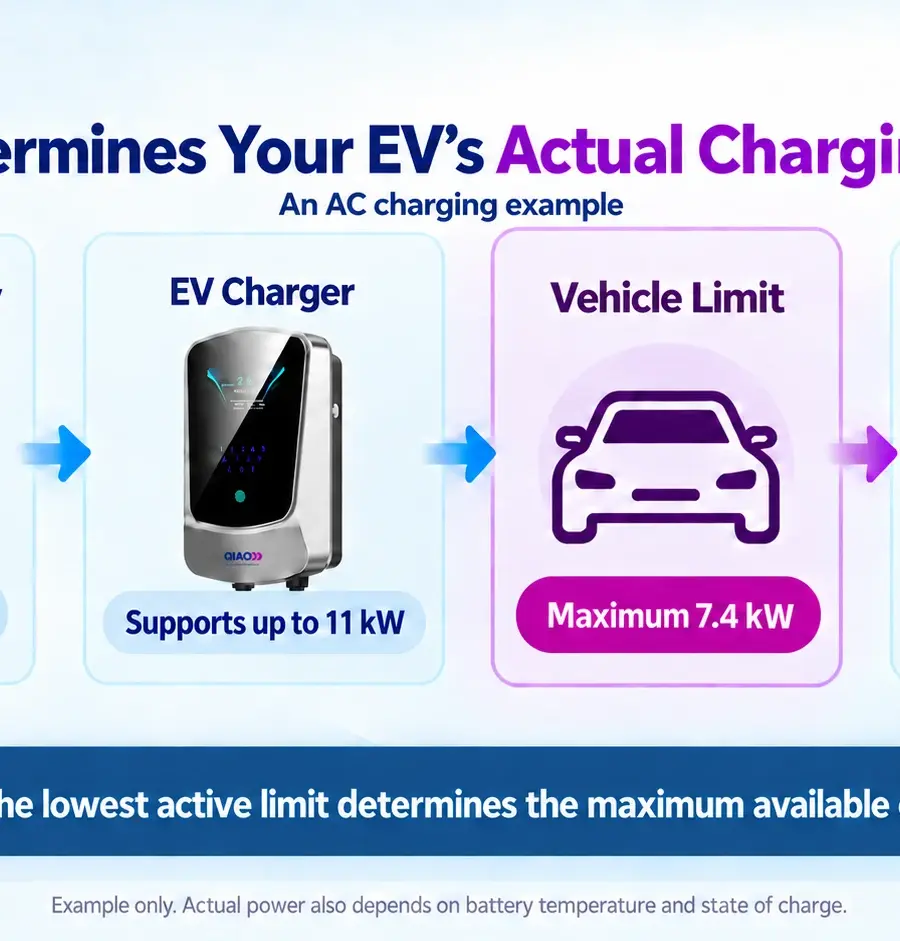
A vehicle may receive less than the charger’s rated output. Actual power depends on the circuit, supply phase, onboard charger, and active ports. Check target vehicles and local rules before selecting Type 2, J1772, NACS, or another connector.
How Many EV Chargers Does a Workplace Need?
There is no fixed charger-to-employee ratio. The right number depends on peak-day demand, parking time, port sharing, available power, and expected EV growth.
Use these five steps to estimate an initial port count:
- Count Current EVs: Record employee EVs, plug-in hybrids, pool cars, service vehicles, and other company vehicles.
- Identify Charging-Dependent Drivers: Ask which drivers lack home charging or need workplace energy to complete their commute.
- Measure Peak Attendance: Use the busiest on-site day, not the total number of registered drivers. Include hybrid work and shift patterns.
- Estimate Port Sharing: Decide if one port will serve one vehicle all day or two vehicles through planned morning and afternoon sessions.
- Allow For Growth: Install today’s required ports while preparing conduit, electrical space, and parking positions for later phases.
A simple starting formula is:
Initial ports = Round up (peak-day charging users ÷ users served per port)
This is an initial operational estimate, not a substitute for an electrical load assessment or detailed site design.
For example, a company may identify 18 peak-day users. If each port serves two cars through a reliable sharing policy, nine ports may cover current demand. The company could install 10 ports now and reserve conduit, panel space, and parking positions for a later phase. This is a planning example, not a standard industry ratio.
Review utilization, waiting lists, parking turnover, and employee feedback to decide when additional charging ports are needed. Track failed sessions and equipment downtime separately to identify maintenance or connectivity problems.
How to Plan a Workplace EV Charging Project
Plan a workplace charging project in seven stages, from user research through performance reviews.
1. Define The Users and Charging Goals
Decide if the chargers will serve employees, company vehicles, visitors, or mixed users. Define the goal, which may be an employee benefit, vehicle charging, or cost recovery. Assign an internal owner from facilities, operations, property management, or sustainability to manage policies, maintenance, user questions, and supplier communication.
2. Survey Current and Future Demand
Collect data on EV numbers, commute distance, parking time, home charging, work schedules, and future vehicle plans.
3. Assess The Site and Electrical Capacity
Ask a qualified professional to review the electrical service, distribution equipment, peak load, and spare capacity. For office properties, EV charger deployment planning should also cover cable routes, charger placement, wall or pedestal mounting, weather exposure, network coverage, lighting, signs, and accessible paths. Keep charging cables out of walkways and protect the equipment from vehicle impact.
4. Select Charger Power, Port Numbers, and Hardware
Match power to energy demand and parking time. In many offices, more moderate-power ports provide better coverage than a few high-power ports.
Confirm the connector standard, local certifications, enclosure rating, mounting method, network requirements, software compatibility, warranty, and after-sales support before selecting a model.
5. Choose Access and Payment Rules
Set the charging policy before launch. Decide who can use each port, when they can charge, which users receive priority, and what they will pay. A clear workplace charging access and pricing policy may combine free, subsidized, paid, or restricted access for different user groups.
6. Install and Commission The System
Use professionals who meet local requirements. Test protection, grounding, communications, access, metering, and platform links before launch. Give drivers instructions for charging, payment, vehicle moves, and fault reports. A typical commercial EV charger installation process includes a site survey, system design, permits, construction, testing, and final handover.
7. Monitor Use and Expand In Phases
Track utilization, energy demand, peak periods, queues, equipment faults, and downtime after launch. Expand the number of charging ports when sustained demand exceeds available capacity. Investigate failed sessions and downtime separately to identify equipment, connectivity, or platform issues.
How Should Businesses Manage Access and Charger Sharing?
Businesses should choose access and sharing rules based on the number of users, available ports, operating goals, and local charging laws.
Free, Paid and Restricted Access
Businesses can choose from several workplace charging models:
| Access Model | Best Fit | Main Consideration |
| Free charging | Employee benefit programs | Demand may rise and create queues |
| Subsidized charging | Shared employer and employee cost | The subsidy needs a clear limit |
| Paid charging | Electricity recovery or managed parking | Metering and pricing must be clear |
| Restricted access | Private offices and company vehicles | Users need an approved login or card |
| Mixed access | Employees, fleets, and visitors | Each group needs its own rules |
Local laws may affect electricity or parking fees. Review the model with the property owner, finance team, and local adviser.
Reservation and Time-Limit Policies
Calendars, time slots, paired users (sometimes called “charging buddies”), and overstay fees can help drivers share a port. The U.S. Department of Energy workplace charging guidance describes these sharing methods.
Tell users when to move a charged vehicle, who enforces the rules, and what repeated overstays will cause.
Priority Rules for Different Users
A site may prioritize a company vehicle’s next shift, an employee’s return trip, or a short-stay visitor. Apply each rule consistently.
Which Management Features Do Workplaces Need?
A networked workplace charging system may use the following management features. The required functions will depend on the site size, user groups, and operating model. Smaller sites may need fewer.
| Feature | Why It Helps |
| User authentication | Limits charging to approved employees, vehicles, or guests |
| Energy metering and billing | Records use and supports cost allocation or payment |
| Dynamic load management | Shares available site power across active chargers |
| OCPP connectivity | Links compatible chargers with management platforms |
| Session controls | Supports bookings, time limits, and user priorities |
| Remote monitoring | Shows charger status, faults, and use data |
Dynamic load management can serve more ports from a limited supply. It cannot guarantee that the site will avoid an electrical upgrade. DLB may be provided by compatible chargers, a charging platform, a site controller, or a separate energy management system. Businesses should confirm system-level compatibility before specifying this function.
OCPP can add platform options. Confirm the version and tested platform compatibility before purchase.
What Does Workplace EV Charging Cost?
Workplace EV charging cost includes equipment, site work, electrical work, software, electricity, and ongoing support. The final budget depends more on site conditions than on the charger price alone.
Main workplace charging costs include:
- Charger Hardware: Port count, output, connector type, mounting style, metering, and network hardware affect the purchase price.
- Electrical Work: New circuits, distribution panels, protective devices, transformers, and service upgrades can add major costs.
- Cabling And Trenching: Long cable routes or cuts through hard surfaces raise labor and material costs.
- Parking Area Work: Pedestals, wheel stops, protective barriers, line marking, lighting, and signs may be needed.
- Software And Communications: Networked chargers may have platform, data, payment, or cellular fees.
- Permits And Inspections: Fees and approval steps vary by country, city, and property type.
- Operation And Maintenance: Electricity, cleaning, repairs, spare parts, warranty coverage, and payment processing continue after launch.
Reduce costs by locating chargers near suitable electrical equipment and preparing future cable routes. Compare several years of ownership costs, not only the hardware quote.
Grants, tax credits, and utility programs may lower project costs. Check current local eligibility and equipment rules before setting the budget.
Common Workplace EV Charging Planning Mistakes
Most workplace charging problems begin with weak demand data, poor site planning, or unclear operating rules.
- Skipping The User Survey: Employee counts alone do not show commute distance, home charging access, or peak attendance.
- Choosing Maximum Power Everywhere: High output can raise equipment and electrical costs without adding value during an eight-hour stay.
- Ignoring Parking Rules: Drivers need clear guidance on reservations, time limits, vehicle moves, payment, and enforcement.
- Overlooking Ongoing Ownership: Someone must manage users, platform accounts, faults, maintenance, and supplier contact.
- Buying Before The Site Review: A charger may not suit the available supply, cable route, network, connector standard, or local rules.
- Failing To Prepare For Growth: Adding spare conduit and electrical space during the first phase often costs less than rebuilding later.
Plan Your Workplace Charging Project with QIAO
Start by identifying who will use the chargers, how much energy they need, and how long their vehicles remain parked. Then review the site’s power supply, parking layout, access policy, and plans for future growth. These details will help you choose the right number of ports, charging power, connector standard, and management features.
QIAO Charger provides branded AC charging products for offices, corporate campuses, and other workplace settings. Available options cover different power levels, charging standards, and installation formats. Depending on the selected model and configuration, available options may include RFID access, OCPP-based management, and Ethernet, Wi-Fi, or 4G connectivity. Businesses should confirm the OCPP version, platform compatibility, and available management functions for the selected model before ordering.
Explore QIAO commercial EV chargers or contact our team to discuss the right charging configuration for your target market, vehicle standard, and available power.
FAQs
Obtain written permission from the landlord or property manager before making electrical or parking-area alterations. Confirm who controls the parking spaces, who can approve electrical work, and who will pay for installation and ongoing costs. The agreement should also cover charger ownership and removal when the lease ends. Your installer can help identify local permit and utility approval requirements.
Not all workplace chargers need an internet connection for basic charging. However, remote monitoring, online payments, and central user management generally require a network connection. Check which functions work offline before choosing a charger. Ethernet, cellular, or Wi-Fi options vary by model and site conditions.
Yes. Chargers that support RFID access can allow employees to start a session by tapping an approved card or key fob. Some systems also support other access methods. Choose an option that fits your staff and visitor needs, and confirm how it handles user registration, charging records, and payment.
Losing internet access does not necessarily stop charging. Some chargers can continue active sessions, accept locally stored RFID credentials, or save charging records until the connection returns. Others may restrict new sessions. Confirm the model’s offline settings and test them during commissioning, especially if employees or company vehicles depend on daily charging.
Yes, provided the new chargers work with the existing platform and site power controls. Check the supported OCPP version, required functions, platform approval, and any added license fees. OCPP support alone does not guarantee full compatibility. Ask the charger supplier and platform provider to confirm integration before purchasing additional units.