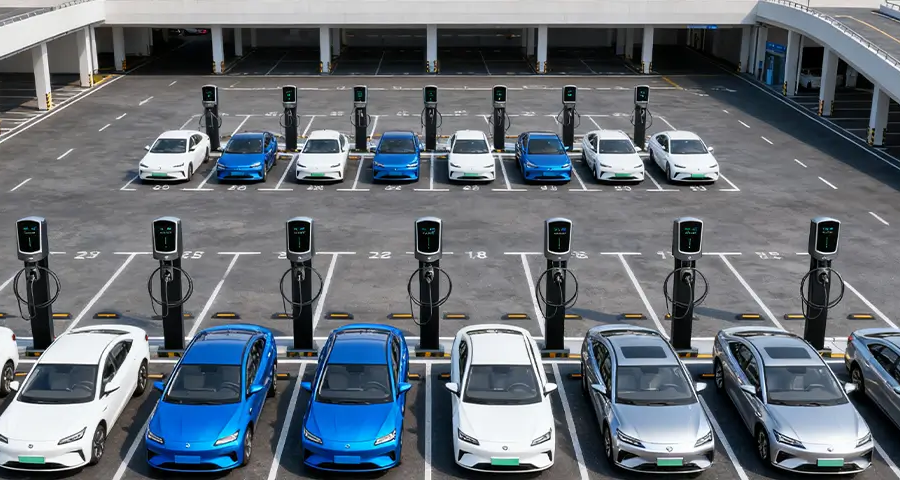

As EV adoption expands among the workforce, factories and industrial parks are increasingly expected to provide employee EV charging.
For employers, this is no longer just a perk—it is a strategic investment that improves:
- employee satisfaction
- ESG performance
- operational efficiency
The key challenge is:
How to deploy a scalable, cost-effective employee charging system?
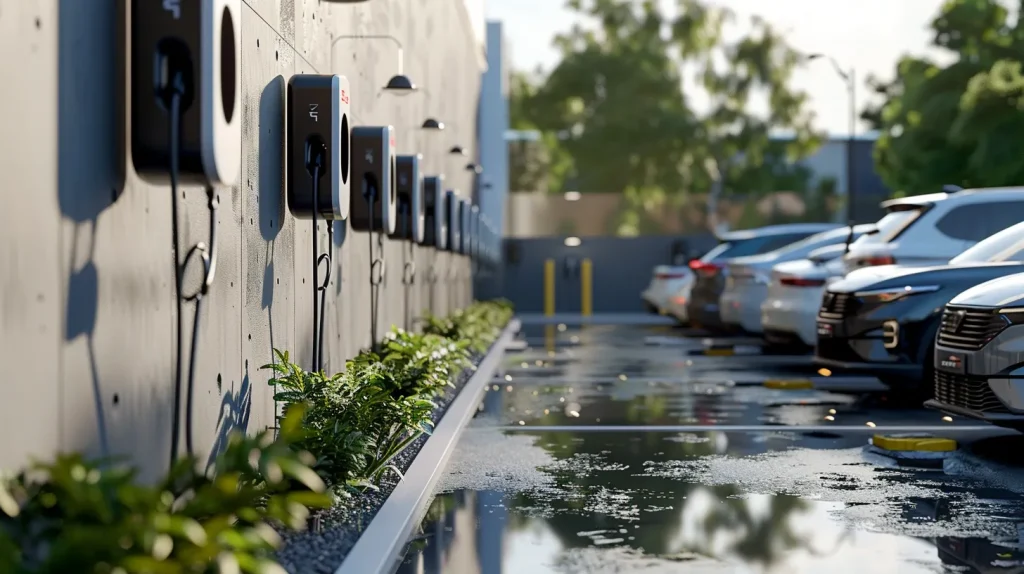
Why Employee Charging Matters
Providing workplace charging helps organizations:
- attract and retain talent
- support sustainability goals
- reduce employee commuting emissions
Workplace charging overview:
https://en.wikipedia.org/wiki/Electric_vehicle
In industrial environments, employees often:
- park for 6–10 hours
- have predictable schedules
This makes AC charging ideal
Why AC Charging Is the Best Fit
| Factor | AC Charging | DC Fast Charging |
| Cost | Low | High |
| Power demand | Moderate | Very high |
| Charging duration | Long | Short |
| Suitability | Workplace | Transit |
AC charging aligns with long parking duration and large-scale deployment
Step 1: Assess Electrical Capacity
Before installation, evaluate available power.
Electric power system overview:
https://en.wikipedia.org/wiki/Electric_power_system
Check:
- transformer capacity
- existing load
- peak demand
Example:
| Total Capacity | Current Load | Available |
| 500 kW | 350 kW | 150 kW |
Step 2: Define Charging Access Policy
Decide who can use the system:
| Access Type | Description |
| Employee-only | Controlled access |
| Mixed-use | Employees + visitors |
| Fleet priority | Company vehicles first |
Clear policies prevent misuse and congestion.
Step 3: Use Load Management Systems
Load management overview:
https://en.wikipedia.org/wiki/Load_management
Dynamic load balancing allows:
- multiple vehicles to share power
- avoidance of grid overload
- reduced infrastructure cost
Step 4: Choose the Right Charger Configuration
Typical setup:
| Scenario | Recommended Power |
| Small factory | 7 kW chargers |
| Medium site | 11 kW chargers |
| Large industrial park | 22 kW chargers |
Mix different power levels for flexibility.
Step 5: Plan Parking Layout and Placement
Best practices:
- install chargers near employee parking zones
- ensure cable reach
- avoid traffic interference
Efficient layout improves usage and safety.
Step 6: Implement Smart Charging & User Management
Smart charging overview:
https://en.wikipedia.org/wiki/Smart_charging
Features include:
- RFID / app authentication
- usage tracking
- billing or subsidy management
Step 7: Decide on Pricing Strategy
Options:
| Model | Description |
| Free charging | employee benefit |
| Subsidized | partial cost recovery |
| Paid | full cost recovery |
Many companies use subsidized models
Step 8: Enable Remote Monitoring & Maintenance
Remote diagnostics allows:
- real-time monitoring
- fault detection
- reduced maintenance cost
Essential for large-scale deployments.
Step 9: Plan for Future Expansion
EV adoption will increase over time.
Best practice:
- install 30–50% chargers initially
- prepare infrastructure for 100% coverage
Step 10: Integrate With Renewable Energy (Optional)
Renewable energy overview:
https://en.wikipedia.org/wiki/Renewable_energy
Industrial sites can integrate:
- solar PV
- battery storage
Reduces energy cost and improves sustainability.

Example Deployment Model
| Phase | Action |
| Phase 1 | Install 10 chargers |
| Phase 2 | Monitor usage |
| Phase 3 | Expand to 30+ chargers |
Common Challenges
- limited electrical capacity
- uneven usage patterns
- employee behavior (overstay)
- infrastructure scaling
Solved with smart systems + phased deployment
Business Benefits
Employee charging systems help companies:
- improve employee satisfaction
- strengthen ESG positioning
- increase operational efficiency
- future-proof infrastructure
About QIAO
QIAO provides scalable AC EV charging solutions for factories and industrial parks.
Our systems support:
- dynamic load management
- smart user authentication
- remote diagnostics
- flexible deployment for large sites
QIAO helps enterprises build efficient and future-ready employee charging networks.
FAQ
Is AC charging sufficient for employee use?
Yes, especially for long parking durations.
How many chargers should be installed initially?
Start with 30–50% of expected demand.
Should charging be free for employees?
It depends on company policy; many offer subsidized charging.
Do industrial sites need grid upgrades?
Not always—load management can optimize existing capacity.