
As the global transition toward electric mobility accelerates, businesses and property owners are searching for cost-effective EV charging solutions. While high-power DC fast chargers often attract attention, a quieter but rapidly expanding opportunity is emerging: low-cost AC charging combined with solar energy systems.
This combination offers an attractive balance between infrastructure cost, operational efficiency, and sustainability. As a result, many industry observers consider AC charging + photovoltaic (PV) integration to be one of the next major growth areas in EV charging infrastructure.

Why AC Charging Is Cost-Efficient for Infrastructure Deployment
Compared with DC fast chargers, AC chargers are significantly cheaper to install and operate.
AC charging typically requires:
- lower electrical capacity
- simpler installation
- lower equipment costs
- reduced maintenance complexity
Because of these advantages, AC charging is widely used in:
- residential charging
- workplace charging
- destination charging
- commercial parking facilities
Charging level explanation from the U.S. Department of Energy:
https://www.energy.gov/eere/electricvehicles/charging-electric-vehicles
These characteristics make AC charging particularly suitable for large-scale deployment in everyday charging scenarios.
Rapid Growth of Solar Energy Worldwide
At the same time, solar energy adoption is expanding rapidly across the world.
According to the International Energy Agency, solar PV is becoming one of the fastest-growing sources of electricity generation globally.
Global solar market data:
https://www.iea.org/reports/solar-pv
The rapid growth of rooftop solar installations means many buildings now have access to locally generated electricity, which can be used to power EV charging.
Why Solar + AC Charging Works So Well Together
AC charging typically occurs over longer time periods, such as:
- overnight home charging
- workplace charging during office hours
- destination charging in commercial locations
These longer charging windows make it easier to align EV charging with solar energy production.
Solar energy overview:
https://en.wikipedia.org/wiki/Solar_power
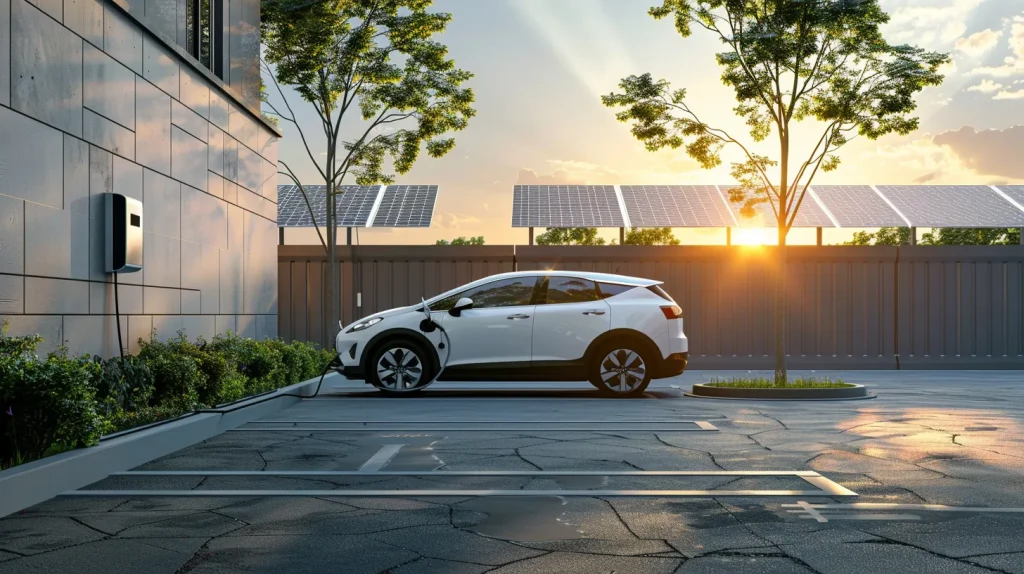
For example, vehicles parked at workplaces during the day can charge directly using solar energy generated from rooftop PV systems.
This combination helps maximize renewable energy utilization.
Reducing Electricity Costs for Charging Operators
Electricity costs are one of the largest operational expenses for EV charging infrastructure.
Integrating solar power with AC chargers allows operators to:
- reduce grid electricity consumption
- lower charging operating costs
- stabilize energy expenses over time
Energy management systems can also combine solar power with smart charging strategies to optimize electricity usage.
Smart charging concept:
https://en.wikipedia.org/wiki/Smart_charging
By coordinating solar generation and EV charging demand, operators can significantly improve energy efficiency.
Ideal Applications for Solar-Powered AC Charging
The AC + solar charging model is especially suitable for locations where vehicles remain parked for extended periods.
Common examples include:
Office buildings
Employees can charge vehicles during working hours while solar panels generate electricity.
Shopping centers
Customers’ vehicles can charge during visits while solar energy powers the charging infrastructure.
Hotels and resorts
Guests often park vehicles overnight, making AC charging highly practical.
Residential communities
Apartment complexes can integrate rooftop solar systems with shared EV charging facilities.
These applications represent some of the fastest-growing EV charging markets.
Environmental Benefits of Solar EV Charging
Combining solar energy with EV charging also significantly reduces carbon emissions.
Renewable energy integration helps ensure that EVs are powered by clean electricity rather than fossil fuels.
Renewable energy overview:
https://en.wikipedia.org/wiki/Renewable_energy
As more countries adopt climate goals and carbon-reduction policies, renewable-powered charging infrastructure will become increasingly important.
The Future of Solar-Powered Charging Infrastructure
As the cost of both AC chargers and solar PV systems continues to decline, their combined deployment will become even more attractive.
Many new buildings are already being designed with:
- rooftop solar systems
- EV charging infrastructure
- smart energy management systems
This integrated approach is expected to become a common model for sustainable buildings in the future.
For businesses and property developers, low-cost AC charging combined with solar energy represents a major opportunity in the evolving EV ecosystem.
About QIAO
QIAO provides reliable AC EV charging solutions designed for commercial and residential deployments worldwide.
Our charging systems support:
- smart charging management
- OCPP connectivity
- scalable charging infrastructure
- integration with renewable energy systems
QIAO helps businesses, property developers, and infrastructure operators build efficient and future-ready EV charging networks.
FAQ – Solar EV Charging
Can solar panels power EV charging stations?
Yes. Solar photovoltaic systems can generate electricity that is used to power EV charging stations.
Why is AC charging suitable for solar integration?
AC charging occurs over longer periods, making it easier to align charging schedules with solar energy production.
Is solar EV charging cheaper than grid charging?
Solar energy can significantly reduce electricity costs over time, especially for commercial charging sites.
Where is solar EV charging most commonly used?
It is widely used in workplaces, residential communities, parking facilities, and commercial properties.