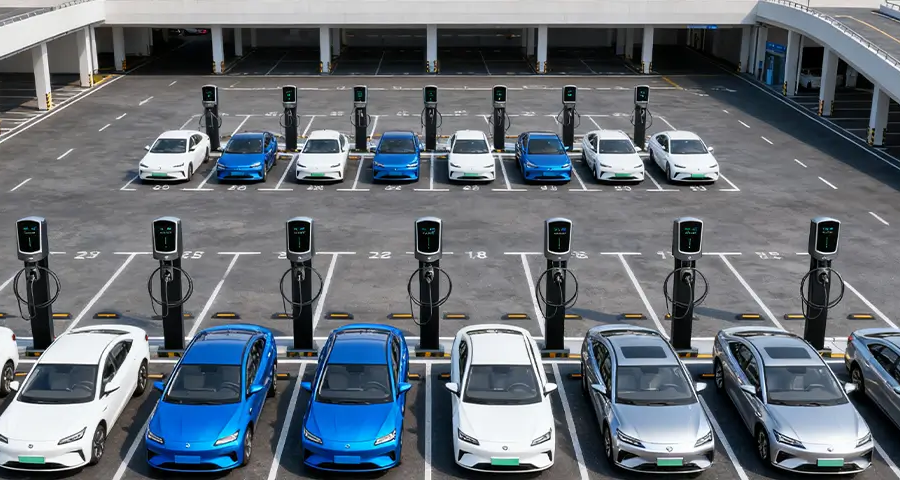

At first glance, EVs in Europe and North America may look identical.
But in reality:
They are built on fundamentally different electrical systems, charging standards, and regulatory frameworks.
For B2B buyers—especially in EV charging infrastructure—understanding these differences is critical to avoid:
- Compatibility issues
- Installation errors
- Cost overruns
1. Charging Connector Standards: The Most Critical Difference
The most visible difference lies in charging connectors.
Europe
- AC standard: Type 2 (Mennekes)
- DC fast charging: CCS2
North America
- AC standard: Type 1 (J1772)
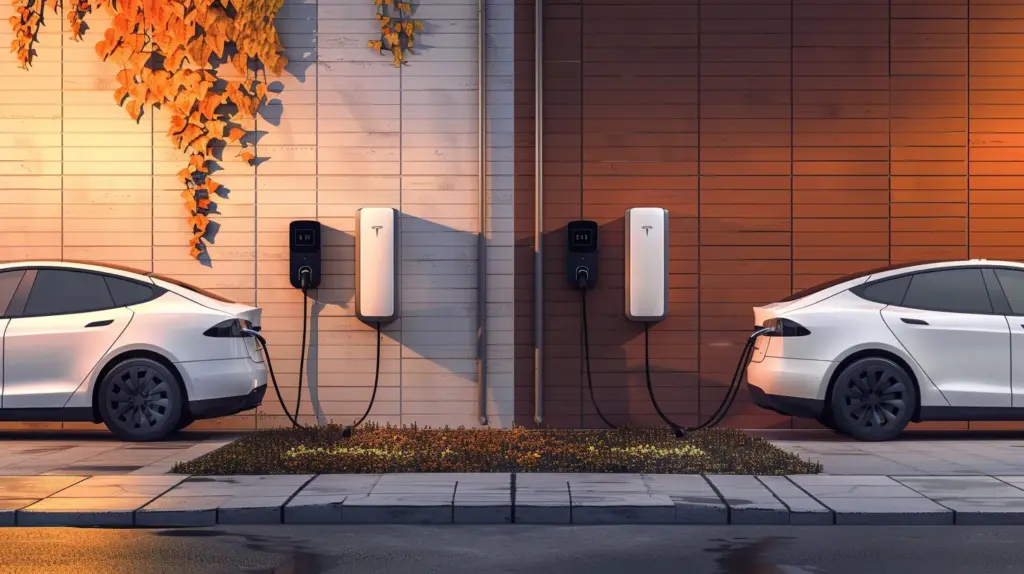
- DC fast charging: CCS1 + NACS (Tesla)
Key insight:
Same EV model may use completely different ports in different regions.
Source:
2. Grid Infrastructure: The Root Cause
The differences start from the power grid itself.
| Factor | Europe | North America |
| Voltage | 230V / 400V | 120V / 240V |
| Frequency | 50 Hz | 60 Hz |
| Phase | Three-phase common | Single-phase dominant |
Impact:
- Europe supports three-phase AC charging (up to 22 kW)
- North America is often limited to single-phase (≈7–11 kW)
Source (add external link):
3. AC Charging Performance Differences
Because of grid design:
Europe
- Faster AC charging
- More efficient for commercial use
North America
- Slower AC charging
- Greater reliance on DC fast charging
Insight:
AC charging plays a much bigger role in Europe than in North America.
Source (add external link):
4. DC Fast Charging Ecosystem
Europe
- Standardized: CCS2 mandated
- High interoperability across countries
North America
- Fragmented ecosystem:
- CCS1
- NACS (Tesla)
Result:
- Europe → unified infrastructure
- North America → competing standards
Source:
5. Regulatory Environment
Europe
- Strong government regulation
- Standardization enforced (e.g., CCS2 mandate)
North America
- Market-driven
- No single national standard
Insight:
Europe prioritizes uniformity, North America prioritizes innovation and competition
6. Tesla’s Role: A Unique Factor
North America
- Uses NACS (North American Charging Standard)
- Becoming widely adopted
Europe
- Uses CCS2 (due to regulations)
Result:
- Same Tesla vehicle → different connector depending on region
7. Real-World Impact on Charging Infrastructure
| Aspect | Europe | North America |
| AC charging importance | High | Medium |
| Standardization | Strong | Fragmented |
| Installation complexity | Lower | Higher |
| Compatibility issues | Minimal | More common |
Why This Matters for B2B Buyers
1. Product Selection
Choosing the wrong standard can lead to:
- Incompatibility
- Project delays
2. Market Expansion
If you sell globally:
- You need multi-standard compatibility
3. Cost Optimization
Understanding regional differences helps:
- Avoid over-spec or under-spec
- Optimize infrastructure investment
Where QIAO Fits In
At QIAO, we provide:
- AC EV charging solutions designed for global compatibility
- Supporting:
- Type 2 (Europe)
- Type 1 / J1772 (North America)
Our solutions help clients:
- Adapt to regional standards
- Deploy scalable infrastructure
- Reduce technical risk
Turning complexity into simple, scalable solutions
Key Takeaways
EV differences between Europe and North America are not just technical—they are systemic.
- Different grids → different charging speeds
- Different standards → different infrastructure
- Different policies → different market dynamics
FAQ
1. Why are EV chargers different in Europe and the US?
Because of differences in power grids, standards, and regulations.
2. Can a European EV charge in the US?
Yes, but often requires adapters or compatible chargers.
3. Which region has better charging standardization?
Europe, due to regulatory mandates.
4. Is AC charging faster in Europe?
Yes, due to widespread three-phase power.
5. What is the biggest difference?
Charging connectors and grid infrastructure.