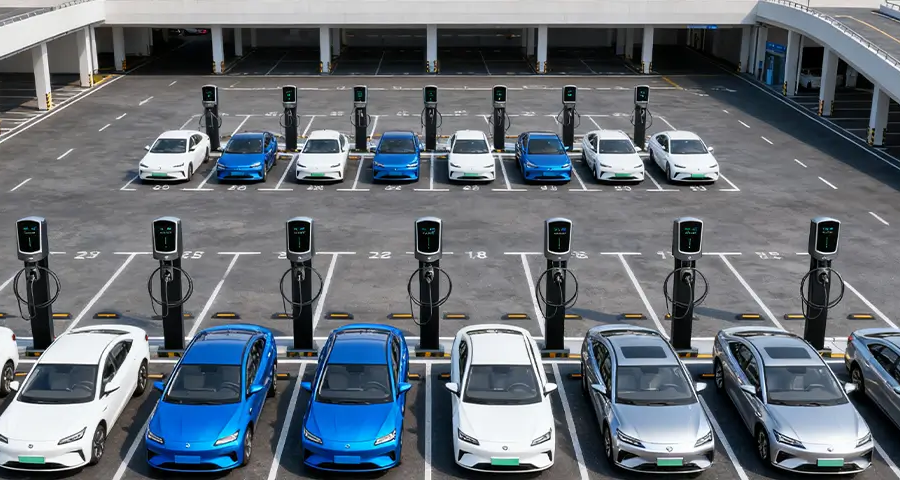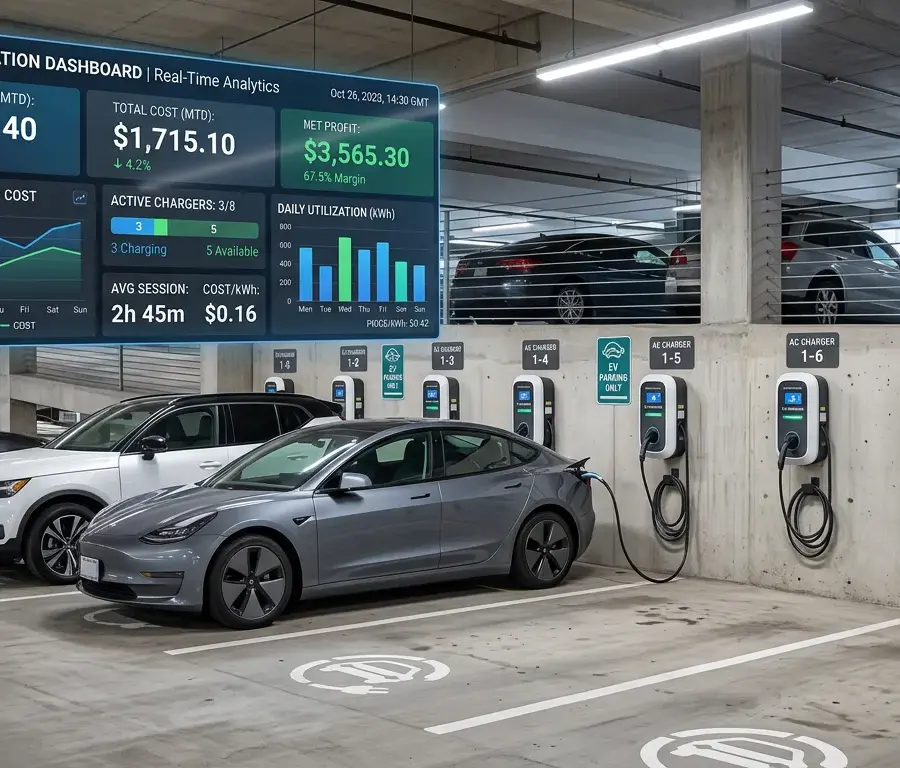

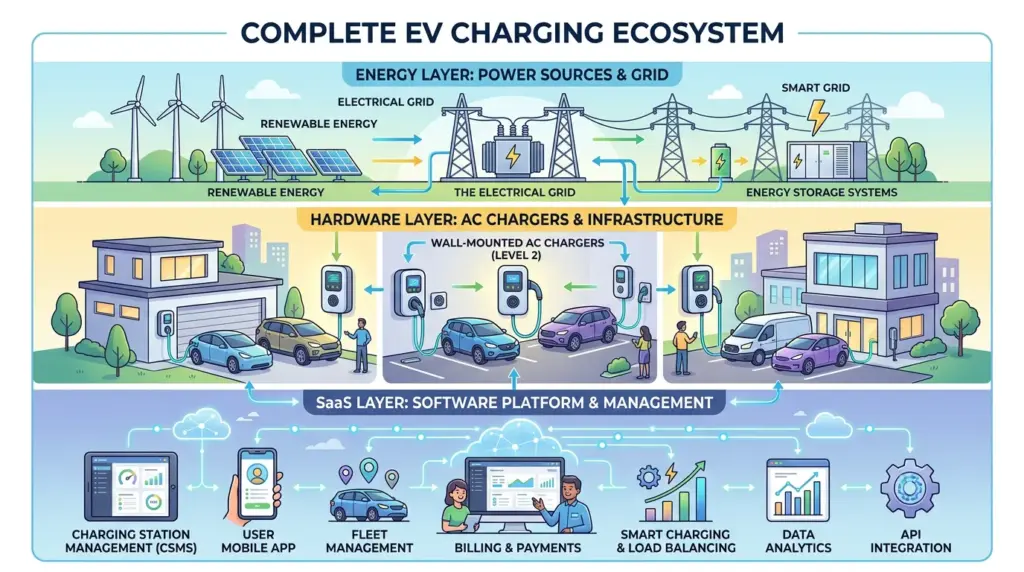
The EV charging industry is not just about hardware—it is a multi-layered business ecosystem.
As the market matures, three core business models have emerged:
Hardware, SaaS, and Energy
Understanding these models is essential for:
- Investors
- Charging operators (CPOs)
- Solution providers
Why Business Models Matter
Many companies enter the EV charging market expecting quick returns—but struggle due to:
- High capital costs
- Low utilization
- Complex revenue structures
The key to success:
Choosing the right business model—or combination
Model 1: Hardware (Equipment Sales)
Overview
The hardware model focuses on:
- Manufacturing and selling EV chargers
- One-time revenue per unit
Revenue Characteristics
| Aspect | Description |
| Revenue type | One-time |
| Margin | Medium |
| Scalability | High |
| Risk | Lower (no operations) |
Advantages
- Fast revenue generation
- Lower operational complexity
- Easy to scale globally
Challenges
- Competitive pricing pressure
- Limited recurring revenue
- Dependence on volume
Typical Players
- Charger manufacturers
- OEM suppliers
Role of AC Charging
AC chargers dominate this model because:
- Lower cost
- Higher volume demand
- Easier installation
Model 2: SaaS (Software & Platform)
Overview
The SaaS model focuses on:
- Charging management software
- Subscription-based services
Core Features
- Remote monitoring
- Load management
- Billing and payments
- Data analytics
Revenue Characteristics
| Aspect | Description |
| Revenue type | Recurring |
| Margin | High |
| Scalability | Very high |
| Risk | Medium |
Advantages
- Stable recurring revenue
- High profit margins
- Strong customer retention
Challenges
- Requires large installed base
- High development cost
Market Trend
According to the McKinsey & Company:
- Software and services will become a major profit driver in EV charging
Source:
Model 3: Energy (Charging & Electricity Sales)
Overview
This model focuses on:
- Selling electricity to EV users
- Operating charging networks
Revenue Streams
- Charging fees (per kWh or time)
- Dynamic pricing
- Energy services
Revenue Characteristics
| Aspect | Description |
| Revenue type | Usage-based |
| Margin | Low–Medium |
| Scalability | Medium |
| Risk | High |
Advantages
- Direct customer relationship
- Long-term revenue potential
Challenges
- High upfront investment
- Electricity cost volatility
- Low margins
Market Insight
According to the International Energy Agency:
- Charging infrastructure must scale rapidly to meet EV demand
Source:
Comparison of the Three Models
| Factor | Hardware | SaaS | Energy |
| Revenue type | One-time | Recurring | Usage-based |
| Margin | Medium | High | Low–Medium |
| Scalability | High | Very high | Medium |
| Risk | Low | Medium | High |
Key insight:
No single model dominates—the future lies in integration
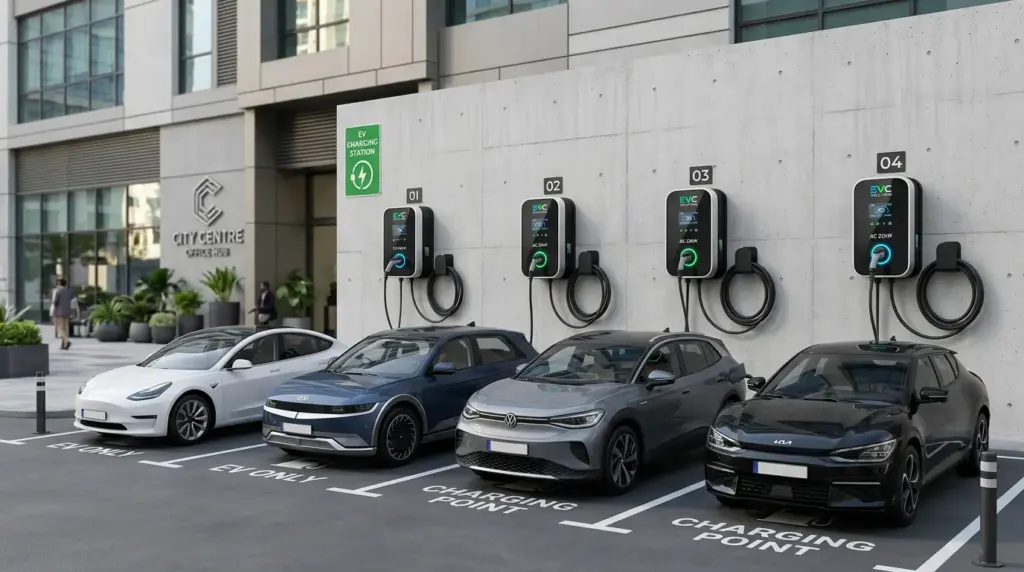
The Emerging Hybrid Model
Most successful companies combine all three:
Hardware + SaaS + Energy
Example strategy:
- Sell chargers (hardware)
- Offer platform (SaaS)
- Operate network (energy)
Benefits
- Multiple revenue streams
- Higher customer lifetime value
- Strong competitive advantage
Role of AC Charging in All Models
AC charging plays a critical role across all three:
In Hardware
- High volume sales
In SaaS
- Enables smart charging features
In Energy
- Supports cost-efficient operations
Insight:
AC charging is the foundation layer of the ecosystem
Why This Matters for B2B Buyers
1. Choosing the Right Strategy
- Hardware-only → fast entry
- SaaS → long-term growth
- Energy → operational control
2. Investment Planning
- Avoid relying on a single revenue stream
3. Market Positioning
- Define your role in the value chain
Where QIAO Fits In
At QIAO, we focus on:
- High-quality AC EV charging hardware
- Supporting:
- Scalable deployments
- SaaS integration
- Energy optimization
Our solutions help partners:
- Build strong hardware foundations
- Integrate with software platforms
- Enable profitable charging operations
Empowering businesses across all three models
Future Trends
- SaaS will drive profitability
- Energy optimization will become critical
- Hardware will remain the entry point
The future is integrated, intelligent, and multi-layered
FAQ
1. What are the main EV charging business models?
Hardware, SaaS, and energy.
2. Which model is most profitable?
SaaS often has the highest margins.
3. Is hardware still important?
Yes, it is the foundation of the industry.
4. Can companies combine models?
Yes, hybrid models are becoming standard.
5. What role does AC charging play?
It supports all three business models.