Table of Contents
Commercial EV Charger Installation: Site Surveys & Deployment
Commercial EV charger installation is a strategic project for any business that manages fleets, operates parking facilities, or supports customers and employees with on-site charging. Choosing the right site, planning electrical capacity, and following compliance steps are essential to deliver a reliable, safe, and cost-effective charging service. In this deep-dive guide we walk through the full commercial EV charger installation workflow from site survey to commissioning, and explain how integrated EV charging solutions maximize uptime and ROI.
Commercial EV Charger Installation — Step-by-Step Process
A successful commercial EV charger installation follows a clear sequence: assess, design, permit, install, commission, and maintain. Below is a structured checklist you can use to plan and manage the project.
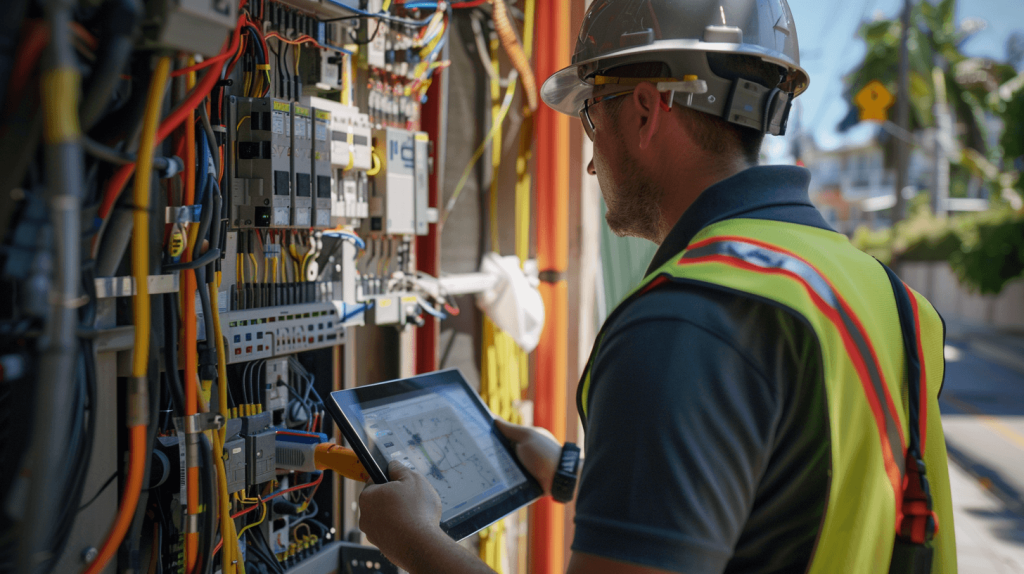
1. Pre-installation assessment (site survey)
Objectives: Define use cases (fleet charging, customer charging, employee charging), expected daily energy needs, and charging speed (AC 7–22 kW, DC fast charge 50–350 kW).
Tasks:
- Measure parking layout, cable runs, and mounting options.
- Document nearest transformer/substation, utility service point, and feeder capacity.
- Note ambient conditions (temperature, exposure, theft risk).
Deliverable: Site survey report with photos, sketches, and preliminary power feasibility.
2. Load and power planning
- Power audit:Calculate existing site load and headroom. Consider simultaneous charging scenarios and demand charges.
- Options:Simple addition (tie into existing panel), panel upgrade, or dedicated transformer/substation lateral.
- Smart design:Use load management (dynamic power allocation) to avoid costly grid upgrades when possible.
3. Permits, codes and utility coordination
- Local compliance: Identify national/regional electrical codes and fire requirements; some locations require fire department sign-off for EV sites.
- Utility process: Submit service upgrade requests and interconnection forms early. Utility timelines often drive project schedules.
- Deliverable: Approved permit set and utility acknowledgement.
4. Hardware selection & procurement
- Charger type: For most B2B AC charging, choose industrial-grade AC chargers (Type 2 / SAE J1772 or region-appropriate). For depot/fast turnaround, consider DC fast chargers.
- Vendor requirements: Certifications (CE/UL/TUV), IP rating, warranty, remote monitoring (OCPP compatible if you need network management).
- Deliverable: BOM (Bill of Materials) and procurement plan.
5. Civil works & electrical installation
- Civil: Bollards, mount pads, trenching for conduit, and ADA compliance for public sites.
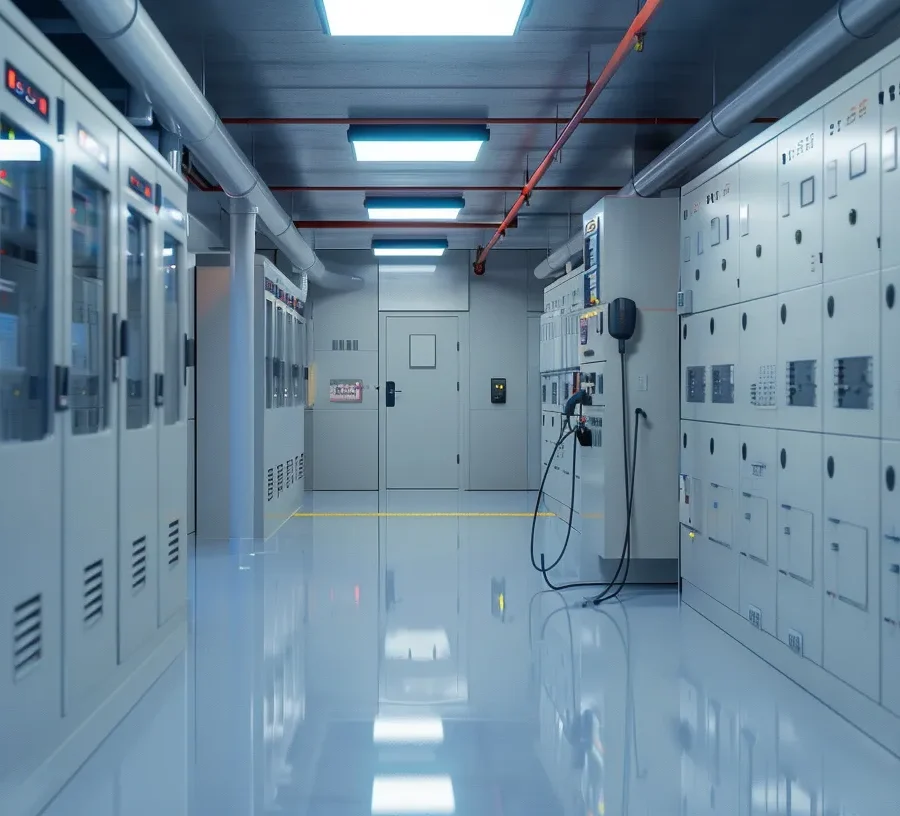
- Electrical: Run feeders, install distribution boards, apply demand management controllers and metering as required.
- Testing: Cable continuity, insulation resistance, and earth fault tests.
6. Network & software setup
- Connectivity: Cellular, Ethernet, or site Wi-Fi for telemetry and remote management.
- Platform: Charge point management (CPMS) that supports authentication, billing, load balancing, and firmware updates.
- Deliverable: CPMS configured with users, tariffs, and alert thresholds.
7. Commissioning and QA
- Tests: Session start/stop, power draw monitoring, user authentication (RFID/APP), payment or invoicing flow, and safety trip tests.
- Acceptance: Produce commissioning report, test logs, and as-built drawings.
8. Ongoing maintenance and SLA
- Service plan: Preventive maintenance schedule, spare parts list, response time SLA for repairs.
- Monitoring: Use telemetry to spot issues early (cable wear, abnormal power draw).
- Deliverable: Maintenance contract and spare parts inventory.
Technical considerations and best practices
Charger siting
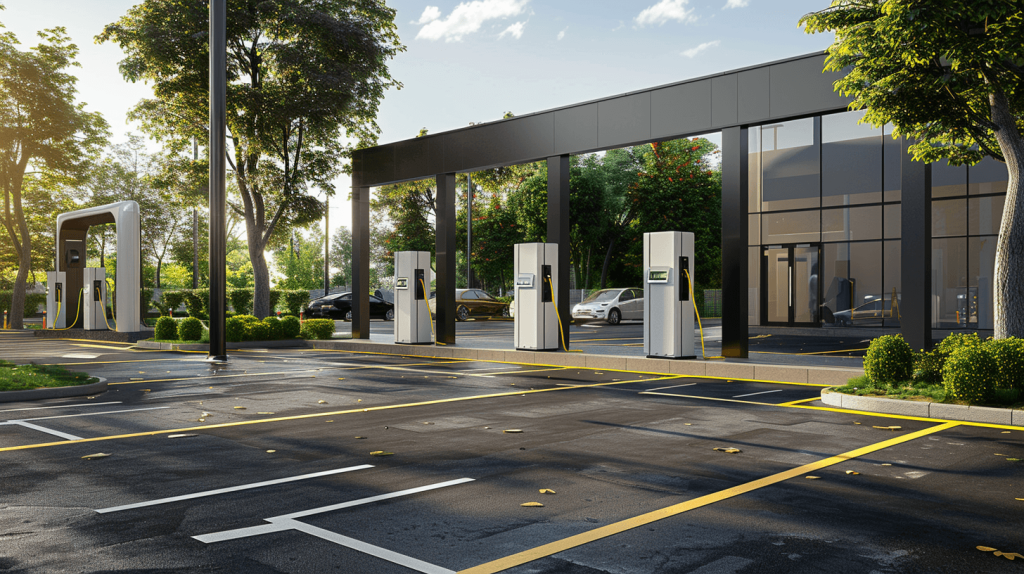
- Place chargers to minimize cable length and protect equipment from impact. Use bollards or enclosures where vehicles might strike chargers.
Power quality & demand charge management
- Model peak demand impacts. Consider energy storage (battery buffering) or on-site generation (PV) to reduce peak charges and carbon footprint.
Safety & standards
- Ensure RCD/earth leakage protection, surge protection devices, and correct cable sizing. Follow manufacturer torque, clearance and environmental specifications.
Interoperability & open standards
- Use OCPP-compatible chargers to avoid vendor lock-in and allow future integration with third-party management systems.
Cost, timeline and ROI (example calculation)
Typical cost drivers (commercial AC installation)
- Chargers (AC 7–22 kW): hardware cost per unit (varies by spec)
- Civil & electrical works: trenches, conduits, transformer upgrades
- Network & software: CPMS subscription, connectivity
- Permits & design fees
- Installation labor and testing
Example ROI model (simple)
- Assumptions: 10 x 7 kW AC chargers, hardware $2,000/unit, install $3,000/unit (avg), monthly service revenue $150 per active charger, operating cost $20/month/charger.
- Upfront cost: (2,000+3,000) * 10 = $50,000
- Monthly net per charger: $150 − $20 = $130 → Monthly net total = $1,300
- Payback: $50,000 / $1,300 ≈ 38.5 months (~3.2 years)
–Note: Replace numbers with local rates, demand charges, and utilization projections for accurate ROI.
Permitting, risk and stakeholder management
- Stakeholders: Facilities, finance, procurement, utility, fire authority, and local government.
- Common delays: Utility upgrade approvals, civil works weather delays, permit processing. Build contingency into schedule.
- Risk mitigation: Early utility engagement, modular implementation, and staged commissioning.
Project checklist (ready-to-use)
- Complete site survey and power audit.
- Confirm use case & charger count.
- Submit utility application and permit docs.
- Finalize BOM and procurement schedule.
- Complete civil groundwork and conduit runs.
- Install distribution panels and chargers.
- Configure CPMS and test payments/authentication.
- Perform commissioning tests and handover.
- Sign maintenance/SLA agreement.
Conclusion
Commercial EV charger installation is a multi-disciplinary project that requires electrical planning, regulatory compliance, quality hardware, and an operations-ready software stack. When executed correctly, a well-designed installation delivers measurable benefits in uptime, reliability, and cost control. For businesses seeking turnkey EV charging solutions, QIAO offers B2B AC charging products, installation guidance, and long-term support to help partners deploy scalable, reliable charging infrastructure for fleets, parking operators, and commercial facilities.