
As EV adoption grows, property owners face a key question:
Can EV charging actually increase occupancy rates—or is it just a “nice-to-have” feature?
The short answer:
Yes—but only when deployed strategically
EV charging is not just an amenity. It is becoming a decision factor for modern tenants, guests, and customers.
Why Occupancy Rates Are Changing
Occupancy is no longer driven only by:
- Price
- Location
- Brand
Today, infrastructure matters—especially for EV drivers.
EV Growth Is Driving New Demand
According to the International Energy Agency:
- EV adoption is accelerating globally
- Millions of new EV users need charging access
Source:
https://www.iea.org/reports/global-ev-outlook-2024
Insight:
More EV users = more demand for charging-enabled properties
How EV Charging Influences Occupancy
1. Attracting EV Drivers
EV owners prefer locations where they can charge conveniently.
Especially important for:
- Hotels
- Apartments
- Offices
2. Increasing Booking Preference
Travelers often filter for:
- “EV charging available”
This directly impacts:
- Booking visibility
- Conversion rates
Example:
- Booking.com EV filter trends
https://partner.booking.com/en-us/help
3. Extending Stay Duration
Charging takes time.
Result:
- Longer stays
- Higher spending
4. Enhancing Property Value Perception
EV charging signals:
- Modern infrastructure
- Sustainability commitment
This improves brand positioning
Data Insight: Does It Really Work?
Studies suggest:
- Properties with EV charging can see higher occupancy and tenant retention
According to the U.S. Department of Energy:
- Workplace and residential charging significantly influence EV adoption
Source:
https://afdc.energy.gov/fuels/electricity_infrastructure.html
Implication:
Charging availability directly affects user decisions
Where Charging Has the Biggest Impact
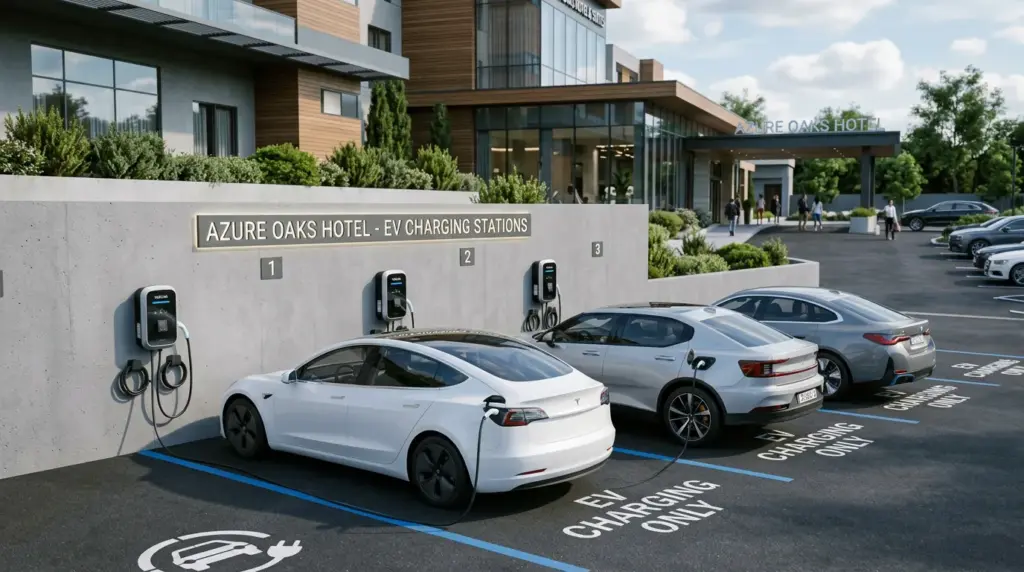
1. Hotels
- Guests prefer overnight charging
- Strong influence on booking choice
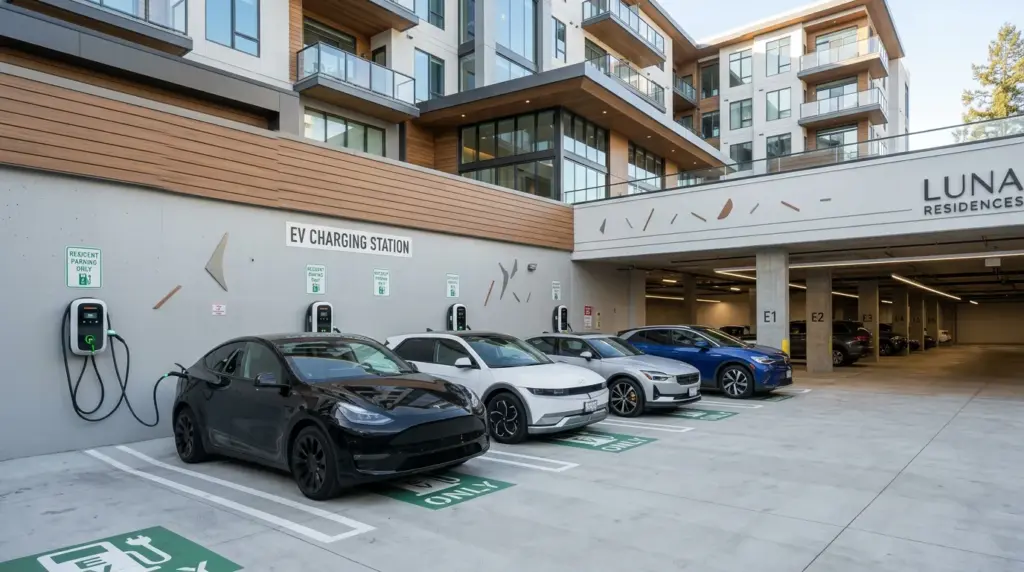
2. Residential Properties
- Tenants value long-term convenience
- Higher retention rates
3. Commercial Real Estate
- Attracts premium tenants
- Supports ESG goals
4. Retail Locations
- Increases dwell time
- Boosts in-store spending
AC Charging vs DC Charging in Property Scenarios
| Factor | AC Charging | DC Charging |
| Cost | Low | High |
| Installation | Easy | Complex |
| Use case | Long stay | Short stay |
| ROI | Higher | Lower |
Insight:
AC charging is the most suitable for occupancy-driven scenarios
ROI Perspective for Property Owners
Revenue Is Not Only from Charging
EV charging drives value through:
- Higher occupancy
- Higher retention
- Premium pricing
Example ROI Logic
| Factor | Impact |
| Occupancy rate | ↑ |
| Tenant retention | ↑ |
| Property value | ↑ |
When EV Charging Does NOT Increase Occupancy
Important reality:
Charging alone is not enough
It fails when:
- Poor location
- Low EV adoption area
- Bad user experience
How to Maximize Impact
1. Install in High-Demand Locations
- Urban areas
- High EV density regions
2. Focus on User Experience
- Reliable chargers
- Easy access
3. Use Smart Pricing
- Free or bundled charging
- Incentive strategies
4. Promote the Feature
- Highlight in listings
- Use EV-friendly branding
Real-World Scenario
Hotel Case
- Added AC chargers
- Promoted EV-friendly services
Result:
- Increased booking rate
- Higher guest satisfaction
Why This Matters for B2B Buyers
1. Competitive Differentiation
- Charging = modern infrastructure
2. Revenue Indirectly Increases
- Through occupancy and retention
3. Future-Proof Investment
- EV demand will continue growing
Where QIAO Fits In
At QIAO, we provide:
- AC EV charging solutions for commercial properties
Designed for:
- Hotels
- Apartments
- Retail locations
Our solutions help:
- Improve user experience
- Increase property attractiveness
- Support long-term ROI
Turning charging into a revenue-driving asset
Key Takeaways
- EV charging can increase occupancy
- Impact depends on execution
- AC charging is ideal for property use cases
Charging is no longer optional—it is becoming a competitive advantage
FAQ
1. Does EV charging increase hotel bookings?
Yes, especially among EV drivers.
2. Is EV charging worth the investment for apartments?
Yes, it improves tenant retention.
3. Which type of charging is best for properties?
AC charging is usually the best choice.
4. Can charging increase property value?
Yes, it enhances attractiveness and competitiveness.
5. Is EV charging a must-have feature?
Increasingly, yes.