Table of Contents
10 Best Practices for AC EV Charger Remote Diagnostics
As EV charging networks scale, remote diagnostics has become essential for maintaining uptime, reducing operational costs, and improving user experience.
For operators managing AC EV charging infrastructure, on-site maintenance is expensive and inefficient.
The solution: remote diagnostics and intelligent monitoring
This article outlines 10 practical techniques to improve remote diagnostics efficiency for AC EV chargers.
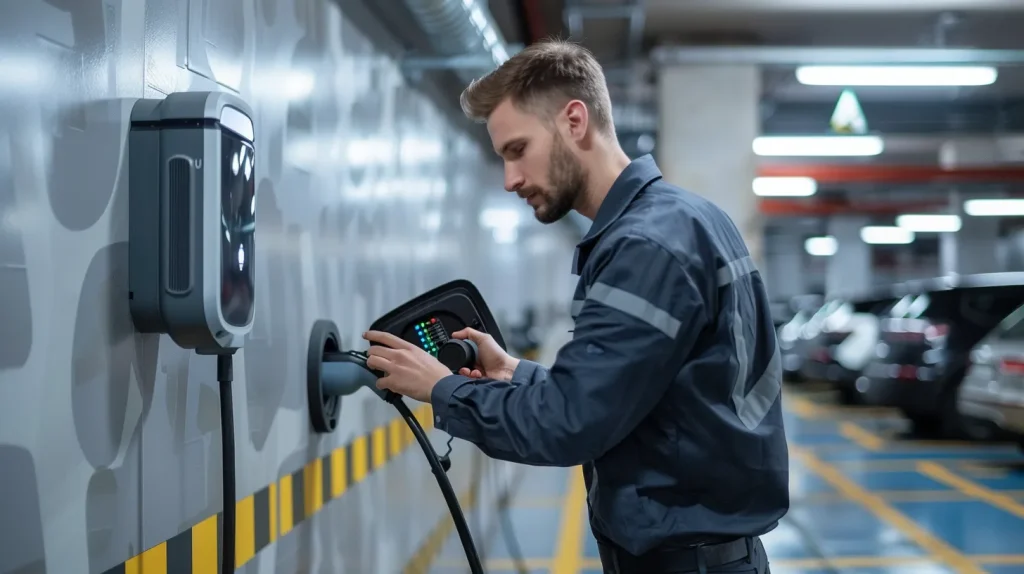
What Is Remote Diagnostics in EV Charging?
Remote diagnostics refers to the ability to:
- monitor charger status in real time
- detect faults remotely
- troubleshoot without on-site visits
EV charging overview:
https://en.wikipedia.org/wiki/Charging_station
Modern systems rely on:
- cloud platforms
- communication protocols
- smart firmware
Why Remote Diagnostics Matters
Without remote diagnostics:
| Issue | Impact |
| Manual troubleshooting | High labor cost |
| Delayed fault detection | Downtime |
| Poor user experience | Revenue loss |
With remote diagnostics:
- uptime improves
- maintenance costs decrease
- system scalability increases
10 Best Practices for Remote Diagnostics
1. Use OCPP-Based Chargers
OCPP enables real-time communication between chargers and backend systems.
OCPP overview:
https://openchargealliance.org/protocols/open-charge-point-protocol/
Essential for:
- remote status monitoring
- error reporting
- firmware updates
2. Monitor Charger Status in Real Time
Track key states:
- available
- charging
- faulted
- offline
Immediate alerts reduce downtime.
3. Implement Fault Code Analysis
Each charger generates error codes.
Build a fault library to quickly identify:
- power issues
- communication failures
- hardware faults
4. Enable Remote Firmware Updates
Firmware overview:
https://en.wikipedia.org/wiki/Firmware
Remote updates allow:
- bug fixes
- feature upgrades
- security patches
No need for on-site visits.
5. Track Energy and Power Data
Monitoring:
- voltage
- current
- power consumption
Helps detect:
- abnormal behavior
- efficiency issues
6. Use Predictive Maintenance
Predictive maintenance overview:
https://en.wikipedia.org/wiki/Predictive_maintenance
By analyzing historical data, systems can:
- predict failures
- schedule maintenance in advance
Reduces unexpected downtime.
7. Integrate Alerts and Notifications
Set up automated alerts for:
- charger offline
- abnormal power usage
- communication loss
Use email, SMS, or dashboards.
8. Monitor Network Connectivity
Many issues are not hardware-related but caused by:
- unstable internet
- SIM card failures
- backend disconnections
Connectivity monitoring is critical.
9. Use Centralized Management Platforms
A unified dashboard allows operators to:
- manage multiple sites
- analyze performance
- control chargers remotely
10. Analyze Usage Patterns
Track:
- peak usage hours
- session duration
- user behavior
Helps optimize:
- charger placement
- pricing strategy
- capacity planning
Key Metrics for Remote Diagnostics
| Metric | Purpose |
| Uptime | System reliability |
| Fault rate | Maintenance efficiency |
| Energy usage | Performance monitoring |
| Session success rate | User experience |
Common Remote Diagnostics Challenges
- inconsistent network connectivity
- lack of standardized protocols
- fragmented data systems
- delayed response to alerts
Solved by integrated smart charging platforms
Business Benefits of Remote Diagnostics
For operators and businesses:
- reduced O&M costs
- improved charger uptime
- better customer experience
- scalable infrastructure management
Remote diagnostics is essential for large-scale deployment
About QIAO
QIAO provides smart AC EV charging solutions with advanced remote diagnostics capabilities.
Our systems support:
- OCPP-based monitoring
- real-time fault detection
- remote firmware upgrades
- centralized platform management
QIAO helps operators build high-efficiency, low-maintenance charging networks.
FAQ
What is remote diagnostics in EV charging?
It allows monitoring and troubleshooting chargers without physical inspection.
Can firmware be updated remotely?
Yes, modern chargers support remote updates.
What causes most charger failures?
Common causes include connectivity issues and power fluctuations.
Is remote diagnostics necessary for small deployments?
Yes, especially for scalability and cost control.