Table of Contents
Fleet Vehicle Charging Standards for Efficient EV Operations
As fleet electrification accelerates across logistics, corporate mobility, public services, and rental operations, EV charging can no longer be treated as an informal or decentralized activity. Without clearly defined fleet vehicle charging standards, organizations risk higher energy costs, inconsistent vehicle availability, and long-term infrastructure inefficiencies.
This article presents a practical, scalable framework to help fleet operators standardize charging behavior while maintaining operational flexibility.
Why Charging Standards Are Critical for Fleets
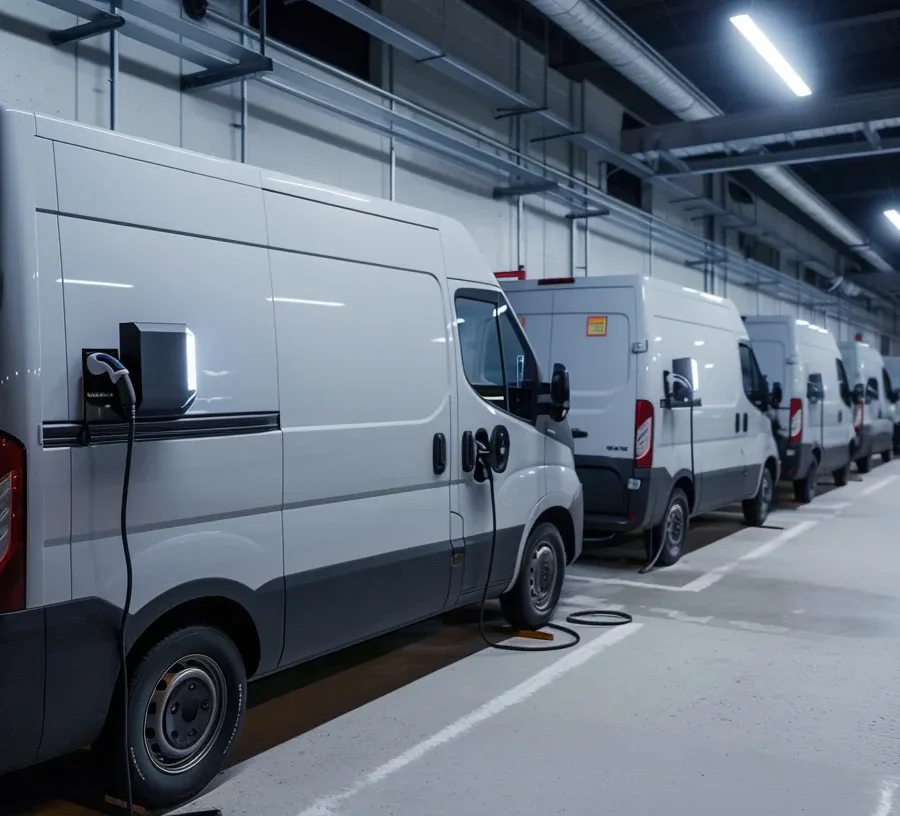
Fleet charging differs fundamentally from private or public charging. Vehicles often return on fixed schedules, charge simultaneously, and must be ready for the next duty cycle without exception.
When charging standards are not defined, fleets typically experience:
- Unpredictable peak power demand
- Charger congestion during shift changes
- Uneven battery utilization across vehicles
- Increased operational risk as the fleet scales
Standardization transforms charging from a reactive task into a managed operational process.
Core Principles of Fleet Charging Standardization
Effective fleet charging standards should be built on four foundational principles:
Predictability
Charging behavior must align with vehicle routes, shifts, and return times.
Energy Efficiency
Power usage should be optimized to reduce peak demand and electricity costs.
Operational Safety
Electrical protection, user behavior, and equipment reliability must be controlled.
Scalability
The system should support fleet growth without infrastructure redesign.
These principles apply equally to small corporate fleets and large logistics operations.
Charging Hardware Standards for Fleet Use
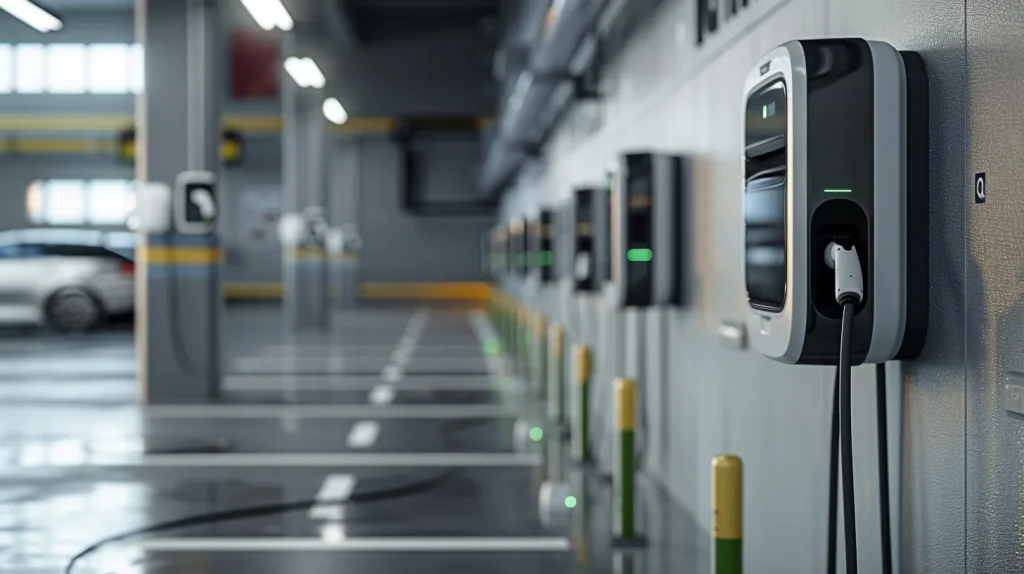
For most light- and medium-duty fleets, AC charging remains the preferred solution due to its lower installation cost and grid-friendly characteristics.
Typical AC Fleet Charger Configuration
| Application Scenario | Recommended Power Level | Deployment Type |
| Overnight depot charging | 7 kW / 11 kW | Wall-mounted |
| Mixed-duty fleets | 11 kW / 22 kW | Wall-mounted |
| Temporary or backup charging | 3.6–7 kW | Portable AC charger |
DC fast charging is generally reserved for high-utilization or heavy-duty fleets where turnaround time is critical.
Power Management and Load Control Standards
Unmanaged simultaneous charging is one of the most common causes of excessive operating costs.
Fleet charging standards should define:
- A maximum site power limit based on grid contracts
- Mandatory dynamic load balancing across all chargers
- Priority rules for mission-critical vehicles
- Automatic power adjustment during building peak loads
Dynamic load management allows fleets to deploy more chargers without upgrading grid capacity.
Charging Time and Scheduling Rules
Charging efficiency is strongly influenced by when vehicles charge, not just how fast.
Best-practice scheduling standards include:
- Default charging during off-peak tariff hours
- Scheduled start times aligned with shift completion
- Automatic charging stop at target state of charge
- Restrictions on unnecessary daytime charging
These rules reduce energy costs while ensuring vehicle readiness.
Access Control and User Authorization
Uncontrolled charger access often leads to misuse, poor data quality, and internal disputes.
Fleet charging standards should require:
- RFID or app-based authentication
- Vehicle or driver-to-charger assignment
- Automatic session logging per vehicle
- Clear access restrictions for non-fleet users
This creates accountability and supports accurate cost allocation.
Safety, Compliance, and Maintenance Requirements
Fleet charging standards must include enforceable safety and maintenance rules.
Recommended requirements:
- Chargers certified to local and international standards
- Built-in overcurrent, overtemperature, and ground fault protection
- Defined inspection intervals and cable management practices
- Remote firmware update capability to address vulnerabilities
These measures reduce downtime and operational risk.
Monitoring, Data, and Reporting Expectations
Modern fleet operations require visibility across all charging assets.
A standardized fleet charging system should provide:
- Real-time charger status monitoring
- Energy consumption data by vehicle
- Fault alerts and maintenance notifications
- Exportable reports for energy and cost analysis
Data transparency enables continuous optimization.
Planning for Fleet Growth
Charging standards must anticipate expansion from day one.
Scalable standards include:
- Modular charger deployment
- Software-based power allocation
- OCPP-compatible communication
- Remote configuration and system updates
This prevents costly redesigns as fleet size increases.
Conclusion: Standardization Enables Reliable Fleet Electrification
Fleet electrification is not limited by vehicle availability—it is limited by operational discipline. Clearly defined fleet vehicle charging standards ensure predictable operations, controlled energy costs, and long-term scalability.For fleets primarily relying on AC charging, QIAO EV chargers—designed for B2B environments with load balancing, remote management, and flexible deployment—align naturally with these standards and support sustainable fleet growth.