Table of Contents
How to Choose the Right AC EV Charger for Outdoor Use?
Installing an AC EV charger for outdoor use requires more than just picking a standard home charging device. Outdoor environments expose charging equipment to rain, sunlight, temperature changes, humidity, and physical impact. Therefore, choosing the right outdoor AC charger is essential for long-term safety, performance, and durability.
In this guide, we explain the key factors you should consider when selecting a reliable outdoor AC EV charger.
1. Check the Waterproof and Dustproof Rating (IP Level)
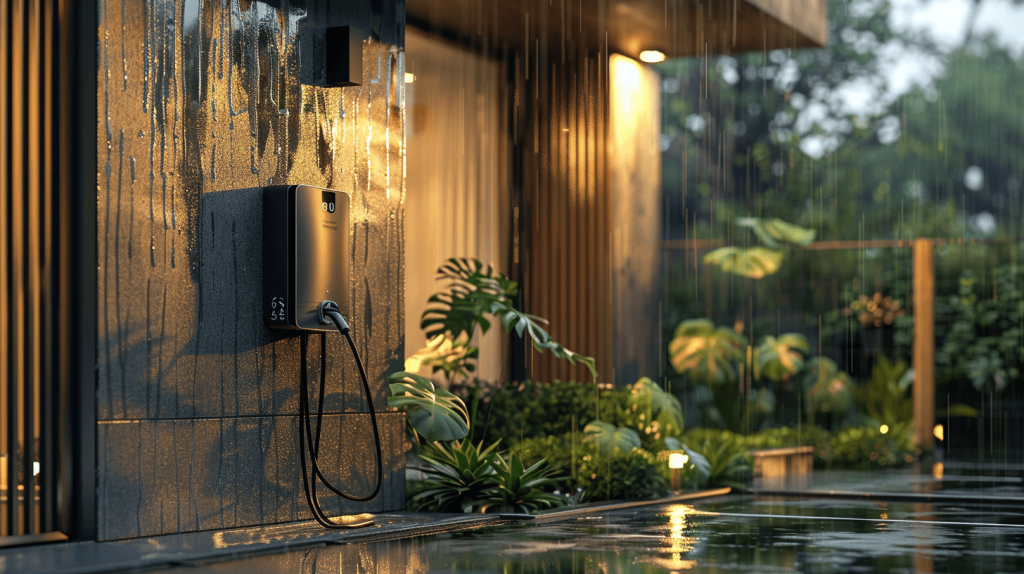
An outdoor AC charger must have a high IP rating to operate safely in different weather conditions.
Recommended IP ratings:
- IP65 → Ideal for outdoor walls, improving resistance to rain and dust
- IP54 → Basic outdoor protection, suitable for sheltered areas
- IP66 or IP67 → Best for harsh climates or heavy rainfall
A high IP rating ensures your charger continues working safely regardless of weather.
2. Choose a Charger with UV-Resistant and Heat-Resistant Housing
Outdoor sunlight can damage low-quality plastic, causing cracking, fading, or deformation.
A good outdoor AC charger should feature:
- UV-resistant materials
- Heat-resistant enclosures
- Flame-retardant components
- High-temperature stable circuits
This ensures your charger can withstand long-term sunlight exposure without performance loss.
3. Confirm the Operating Temperature Range
Outdoor temperatures vary significantly depending on climate.
Make sure your charger is designed for:
- High heat (40–55°C) in tropical regions
- Sub-zero temperatures (-20°C or lower) in winter climates
A wide operating temperature range ensures stable charging in all seasons.
4. Ensure Strong Mechanical Durability
Outdoor chargers face additional mechanical stress, including accidental bumps, debris impact, and vibration.
Look for features such as:
- Reinforced housing
- IK08–IK10 impact resistance
- Sturdy mounting bracket
- Corrosion-resistant screws and frame
Good mechanical durability reduces long-term maintenance needs.
5. Pay Attention to Cable Quality and Flexibility
Charging cables used outdoors must stay flexible and safe in different temperatures.
Key cable features:
- Thick insulation for outdoor environments
- Anti-freeze and anti-UV outer layers
- Tangle-resistant and high-strength coating
- Proper length (5m–7m recommended)
Long-lasting cables improve daily convenience and reduce replacement costs.
6. Consider Smart Features for Remote Monitoring
A reliable outdoor AC charger should support:
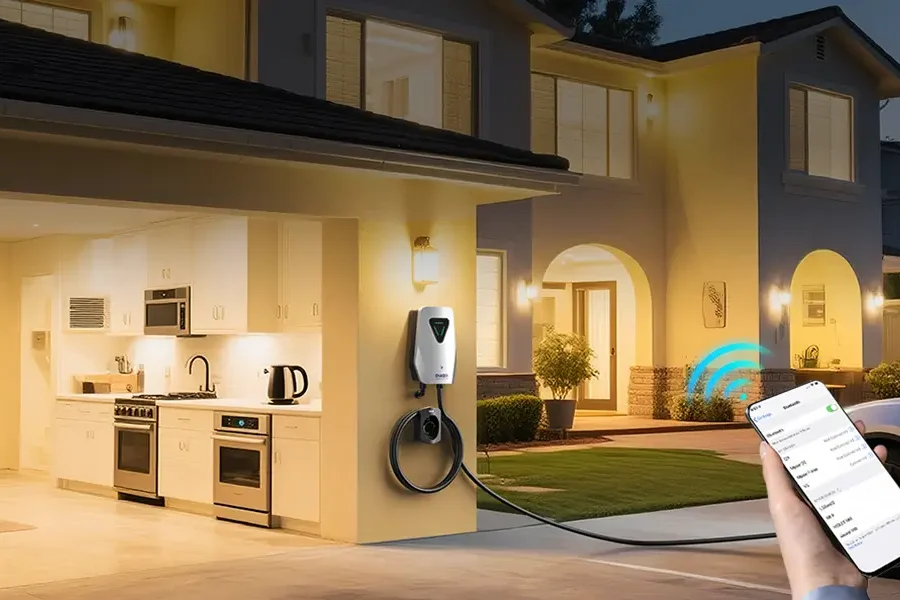
- Wi-Fi / 4G / Ethernet connectivity
- Mobile app control
- Scheduled charging
- Real-time monitoring
- Firmware updates
- RFID authentication for security
These features help both homeowners and B2B operators manage charging efficiently.
7. Installation Environment Matters
Where you install the charger greatly affects performance.
Common outdoor installation options:
- Exterior wall (most popular)
- Outdoor parking canopy
- Weatherproof charging pedestal
- Commercial outdoor parking zones
Ensure proper grounding, waterproof conduit, and surge protection, especially in areas with frequent storms.
Conclusion
Choosing the right outdoor AC EV charger requires evaluating waterproof protection, durability, temperature range, materials, cable quality, and smart connectivity. A well-designed AC charger ensures safety and reliability in all outdoor environments while reducing maintenance costs in the long run.
If you’re looking for a dependable outdoor AC EV charging solution, QIAO offers weather-resistant, high-performance chargers engineered for long-term outdoor use in both residential and commercial settings.
Choose QIAO — built for safety, durability, and real-world outdoor performance.