Table of Contents
Remote & Energy Management for B2B EV Charging
As electric vehicle adoption scales globally, remote management and energy management have rapidly become non-negotiable requirements for B2B EV charging operations. What was once considered an advanced feature is now a baseline expectation for commercial charging deployments.
For property owners, fleet operators, and charging service providers, managing EV chargers without centralized control is no longer viable. Operational complexity, energy costs, and grid constraints are pushing the industry toward smarter, software-driven solutions.
Why B2B EV Charging Demands Remote Management
Unlike residential charging, B2B EV charging environments involve multiple chargers, multiple users, and continuous operation. Without remote management capabilities, even small-scale deployments quickly become inefficient and costly to operate.
Remote EV charger management enables operators to:
- Monitor charger status across multiple locations
- Detect faults and resolve issues without on-site visits
- Control access, user permissions, and charging schedules
- Collect usage data for billing and performance analysis
In practical terms, remote management transforms EV chargers from isolated devices into a connected charging network.
Energy Management Is Now a Core Operational Requirement
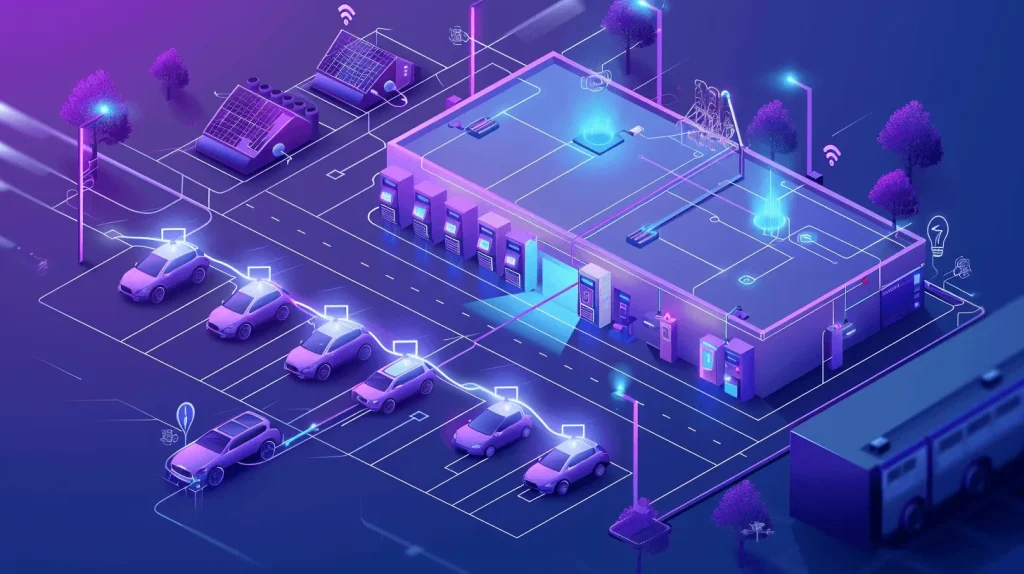
As EV charging loads increase, energy management has become just as critical as charger hardware itself. Unmanaged charging can lead to peak load spikes, higher electricity costs, and even grid instability—particularly in commercial and fleet environments.
Energy management for EV charging focuses on optimizing power usage without compromising charging availability.
Key objectives include:
- Preventing overloads on existing electrical infrastructure
- Reducing peak demand charges
- Distributing available power dynamically across chargers
- Aligning charging behavior with local grid conditions
This is where features such as dynamic load management (DLM) and smart scheduling play a central role.
Remote Management vs. Energy Management: Key Differences
Although closely related, these two capabilities address different operational challenges.
| Function | Remote Management | Energy Management |
| Primary Goal | Operational control | Power optimization |
| Focus Area | Charger status, uptime | Load balancing, peak reduction |
| Typical Features | Monitoring, alerts, access control | DLM, scheduling, power allocation |
| Business Impact | Lower maintenance costs | Lower energy costs, grid safety |
For B2B deployments, both are required to ensure scalability and long-term viability.
Typical System Architecture for Smart B2B EV Charging
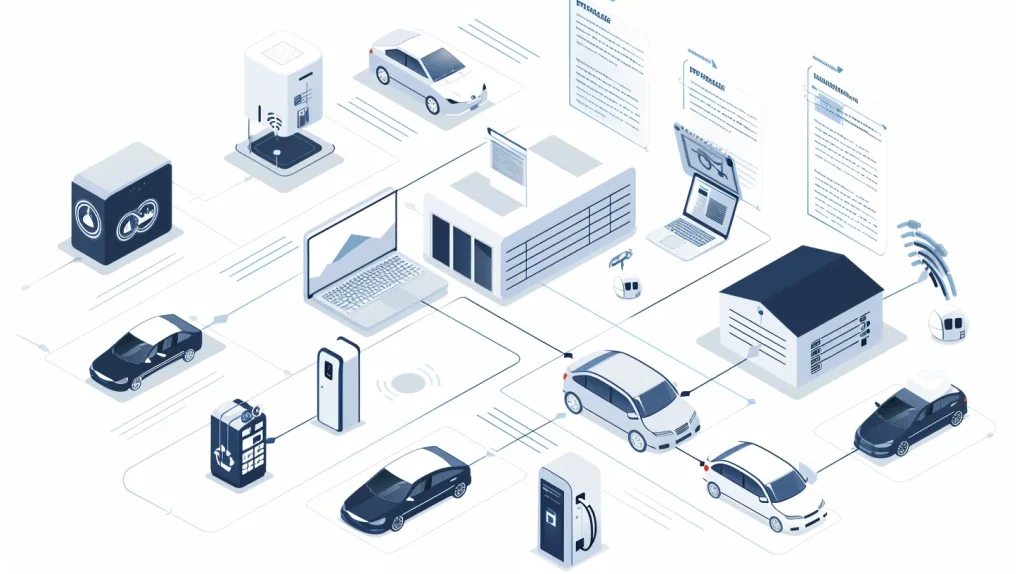
A modern B2B EV charging setup is best understood as a layered system:
- AC EV Chargers (Hardware Layer)
Network-connected chargers installed across sites. - Communication Layer
OCPP-enabled communication between chargers and backend systems. - Remote Management Platform
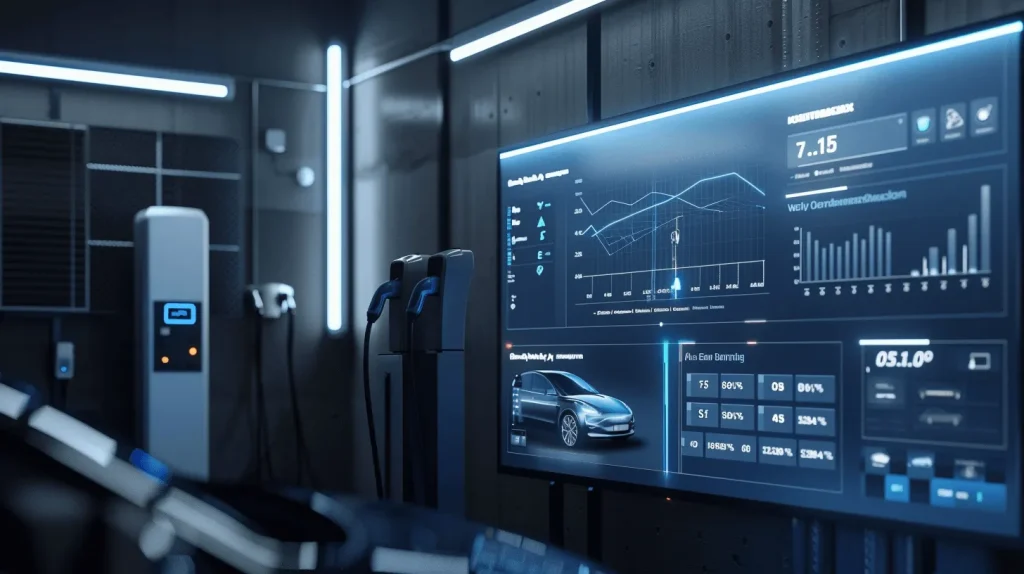
Central dashboard for monitoring, diagnostics, and control. - Energy Management System (EMS)
Dynamic load balancing, power limits, and scheduling logic. - Grid & Building Integration
Coordination with building load, transformers, or on-site energy sources.
This architecture allows operators to scale from a few chargers to hundreds without redesigning their infrastructure.
Why AC EV Chargers Benefit Most from Smart Management
AC EV chargers remain the dominant choice for most B2B use cases due to their lower installation cost and grid-friendly nature. However, their true value is unlocked only when paired with remote and energy management.
For scenarios such as:
- Apartment complexes
- Office buildings
- Fleet depots with overnight charging
- Retail and hospitality sites
Smart management ensures predictable energy use, stable charging performance, and improved return on investment.
Long-Term Benefits for B2B Operators
Organizations that adopt remote and energy management early gain clear advantages:
- Reduced operational downtime
- Lower total cost of ownership (TCO)
- Easier compliance with grid and safety regulations
- Future-ready infrastructure for expansion
As regulations tighten and electricity pricing becomes more dynamic, unmanaged charging systems will increasingly struggle to remain competitive.
How QIAO Supports Smart B2B EV Charging
At QIAO, remote management and energy optimization are integral to our AC EV charging solutions. Our systems are designed to support OCPP-based connectivity, scalable backend integration, and intelligent load management—helping partners deploy charging networks that are efficient, reliable, and ready for growth.
For businesses seeking a B2B AC EV charging solution provider that understands both hardware and system-level requirements, QIAO delivers solutions built for real-world operations.
Learn more about our commercial charging solutions and partnership opportunities through our dedicated solution pages.