Table of Contents
V2L and V2V Applications for Electric Vehicles
As electric vehicles evolve from transportation tools into mobile energy assets, new applications such as Vehicle-to-Load (V2L) and Vehicle-to-Vehicle (V2V) are gaining attention—especially in commercial and fleet environments.
This article explains what V2L and V2V are, how they work, and where they create real value in B2B EV charging and energy management scenarios.
What Is V2L (Vehicle-to-Load)?
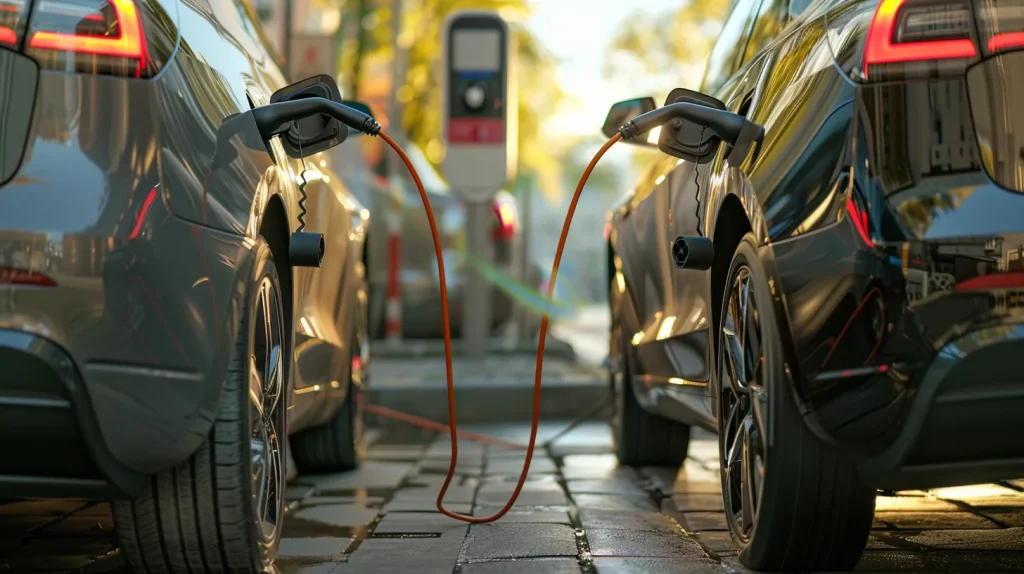
Vehicle-to-Load (V2L) allows an EV to export electrical power to external devices using its onboard battery.
In simple terms, the EV acts as a mobile power source, supplying electricity to tools, appliances, or temporary loads.
Typical V2L Power Output
- 1–3 kW for most passenger EVs
- AC output via dedicated outlet or adapter
What Is V2V (Vehicle-to-Vehicle)?
Vehicle-to-Vehicle (V2V) enables direct energy transfer between two EVs, usually to assist a vehicle with low battery.
V2V is still at an early adoption stage and often requires:
- Compatible vehicle hardware
- Manufacturer-supported protocols
- Controlled power limits for safety
Key Differences Between V2L and V2V
| Aspect | V2L | V2V |
| Energy Direction | EV → External load | EV → Another EV |
| Typical Use | Tools, equipment, backup power | Emergency charging |
| Maturity | Commercially available | Limited, emerging |
| B2B Value | High | Situational |
Practical V2L Applications in B2B Scenarios
Fleet Operations
- Power tools at remote job sites
- Mobile maintenance units
- Temporary field operations
Commercial Properties
- Emergency backup for small loads
- Event or pop-up power supply
- Energy resilience for critical devices
Hospitality & Outdoor Services
- Campsites and resorts
- Mobile catering and service vehicles
- Temporary outdoor installations
V2L reduces reliance on portable generators, lowering noise, emissions, and operating costs.
V2V: Use Cases and Current Limitations
V2V applications remain niche but relevant in specific contexts:
- Fleet vehicles supporting each other during long routes
- Emergency roadside assistance
- Remote or off-grid operations
However, limitations include:
- Lack of standardization
- Vehicle compatibility constraints
- Lower transfer efficiency compared to fixed chargers
For now, V2V should be seen as a complementary feature, not a core charging strategy.
Technical Requirements and Safety Considerations
Both V2L and V2V rely on:
- Bidirectional power electronics
- Thermal and overload protection
- Secure communication between vehicle systems
- Strict safety interlocks
From a B2B perspective, safety certification and controlled use cases are critical for deployment.
Relationship to V2G and Smart Energy Systems
While V2L and V2V focus on local energy use, they are conceptually related to:
- Vehicle-to-Grid (V2G)
- Smart charging and load management
- Distributed energy resources (DER)
For commercial environments, V2L often serves as a practical first step toward broader bidirectional energy strategies.
Role of AC Charging Infrastructure
Although V2L and V2V are vehicle-based functions, reliable AC charging infrastructure remains essential:
- Ensures vehicles are charged and ready for energy export
- Supports predictable fleet operations
- Integrates with site energy management and load balancing
In B2B deployments, AC chargers form the backbone that enables consistent use of advanced vehicle energy features.
Business Value vs. Expectations
For B2B decision-makers, it is important to separate practical value from hype:
- V2L offers immediate, deployable benefits
- V2V is promising but limited in scale
- Neither replaces structured charging infrastructure
When used correctly, these technologies enhance operational flexibility, not replace core systems.
Conclusion: V2L and V2V as Supporting Energy Tools
V2L and V2V represent an important evolution in how EV energy can be utilized beyond driving.
For businesses and fleets:
- V2L delivers immediate operational benefits
- V2V provides emergency and niche support
- AC charging infrastructure remains essential
Understanding where these applications fit ensures real ROI and safe deployment.
About QIAO: Reliable AC Charging for Energy-Ready Fleets
QIAO focuses on B2B AC EV charging solutions, offering wall-mounted and portable AC chargers for commercial properties, fleets, and professional use cases.
Our chargers are designed to:
- Support reliable daily charging for energy-intensive operations
- Integrate with smart charging and load management systems
- Provide a stable foundation for advanced EV energy applications
By delivering commercial-grade AC charging hardware, QIAO helps businesses prepare vehicles not only to drive—but also to power real-world applications.