Table of Contents
When Do You Need Load Balancing in EV Charging?
As EV adoption accelerates, many charging projects fail not because of charger quality—but because load balancing was not planned early enough. In commercial AC charging deployments, load balancing is not an optional feature; in many scenarios, it is a technical necessity.
This article explains exactly when load balancing is required, how to identify risk signals, and why it is critical for scalable, cost-effective EV charging infrastructure.
What Is Load Balancing (Quick Recap)
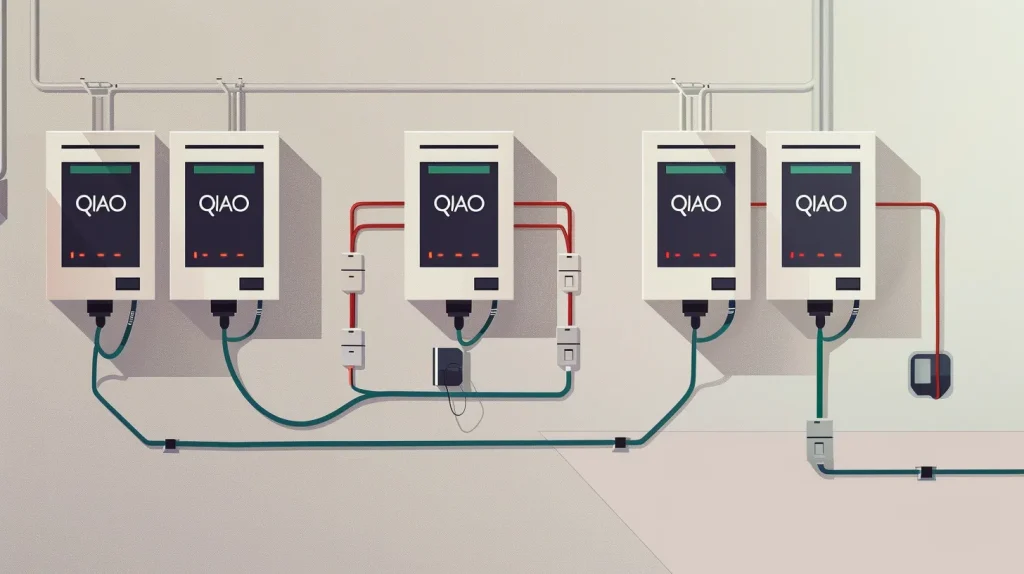
Load balancing in EV charging refers to the dynamic distribution of available electrical capacity among multiple chargers, ensuring that the total site load never exceeds grid or transformer limits.
It can be implemented as:
- Static Load Balancing (fixed limits)
- Dynamic Load Management (DLM, real-time adjustment)
When Multiple Chargers Share a Limited Power Supply
Typical scenarios:
- Office parking garages
- Residential apartments
- Retail or hotel parking areas
If several AC chargers draw power simultaneously from the same distribution board, the risk of overload increases exponentially.
Without load balancing:
- Main breakers may trip
- Charging sessions may fail
- Building operations are disrupted
Load balancing becomes mandatory once the total rated charger power exceeds the site’s available capacity.
When Grid Capacity Cannot Be Easily Upgraded
Grid upgrades are:
- Expensive
- Time-consuming
- Often restricted by local utilities
In many commercial projects, especially in existing buildings, the grid connection is fixed.
Load balancing allows operators to:
- Deploy more chargers without upgrading transformers
- Maximize utilization of existing electrical infrastructure
- Reduce upfront CAPEX
If grid expansion is not feasible, load balancing is the only practical solution.
When Chargers Are Installed in Mixed-Use Buildings
Mixed-use environments include:
- Offices + retail
- Apartments + commercial tenants
- Hotels + conference facilities
In these cases, EV chargers must compete with HVAC, lighting, elevators, and other loads.
Dynamic load management ensures that:
- EV charging adapts to real-time building consumption
- Critical systems always have priority
- Charging power is reduced automatically during peak demand
Without load balancing, EV charging becomes a system-level risk.
When Demand Is Unpredictable or Peaks at Specific Times
Fleet depots, workplaces, and public charging sites often experience:
- Morning arrival peaks
- Evening simultaneous charging
- Seasonal demand spikes
Static power allocation cannot handle these fluctuations efficiently.
Load balancing allows:
- Fair power distribution across vehicles
- Automatic adjustment based on demand
- Higher charger count without overengineering the grid
If usage patterns are not consistent, dynamic load balancing is essential.
When Billing Accuracy and Service Continuity Matter
For commercial operators, downtime equals:
- Lost revenue
- Poor user experience
- Contractual penalties
Load balancing reduces:
- Session interruptions
- Emergency shutdowns
- Hardware stress caused by overloads
It also supports predictable billing and SLA compliance, which are critical for B-end deployments.
When Future Scalability Is Planned
Many projects start small but plan to scale.
Without load balancing:
- Each expansion may require electrical redesign
- Infrastructure costs rise rapidly
- Site flexibility is lost
With load balancing:
- Chargers can be added incrementally
- Power allocation scales intelligently
- Long-term TCO is significantly reduced
If future expansion is even a possibility, load balancing should be designed from day one.
Key Indicators That Load Balancing Is Required
| Indicator | Risk Without Load Balancing |
| Multiple chargers on one feeder | Breaker trips |
| Fixed grid capacity | Costly upgrades |
| Mixed building loads | System instability |
| Peak-time charging behavior | User complaints |
| Commercial billing model | Revenue loss |
Load Balancing Is Not a Feature—It’s Infrastructure Logic
For B-end EV charging projects, load balancing is not a “nice-to-have” function. It is a foundational control layer that protects:
- The electrical system
- The charging service
- The business model
Ignoring it often leads to hidden costs and operational failures.
QIAO: Built for Load-Balanced Commercial AC Charging
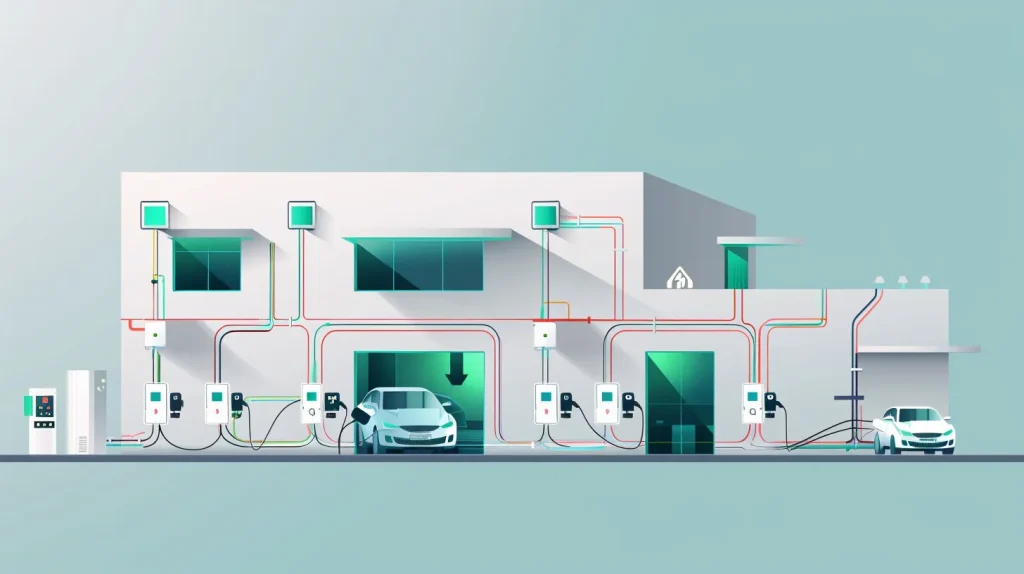
At QIAO EV Charger, we design commercial AC charging solutions with load balancing and dynamic load management in mind from the system architecture level.
Our wall-mounted and portable AC chargers support:
- Static and dynamic load balancing
- Integration with building energy systems
- OCPP-based backend coordination
- Scalable multi-charger deployments
This allows operators, property managers, and fleet owners to deploy EV charging safely, efficiently, and future-proof—without unnecessary grid upgrades.