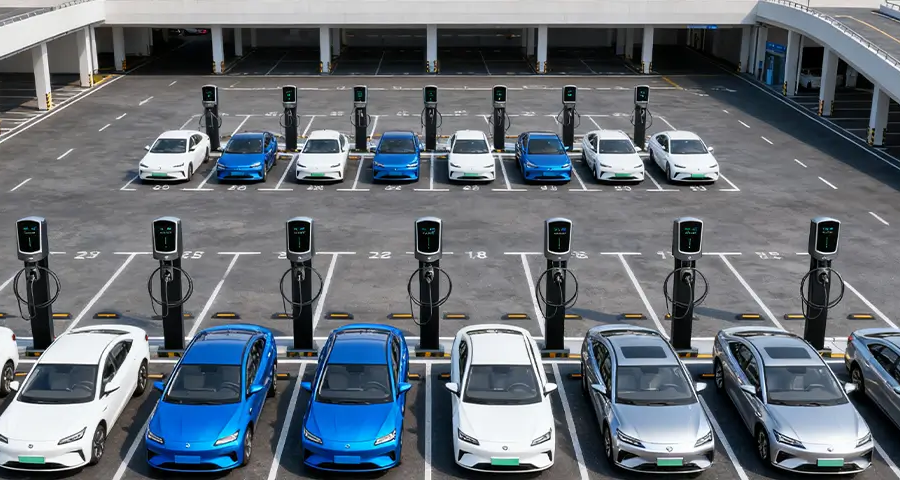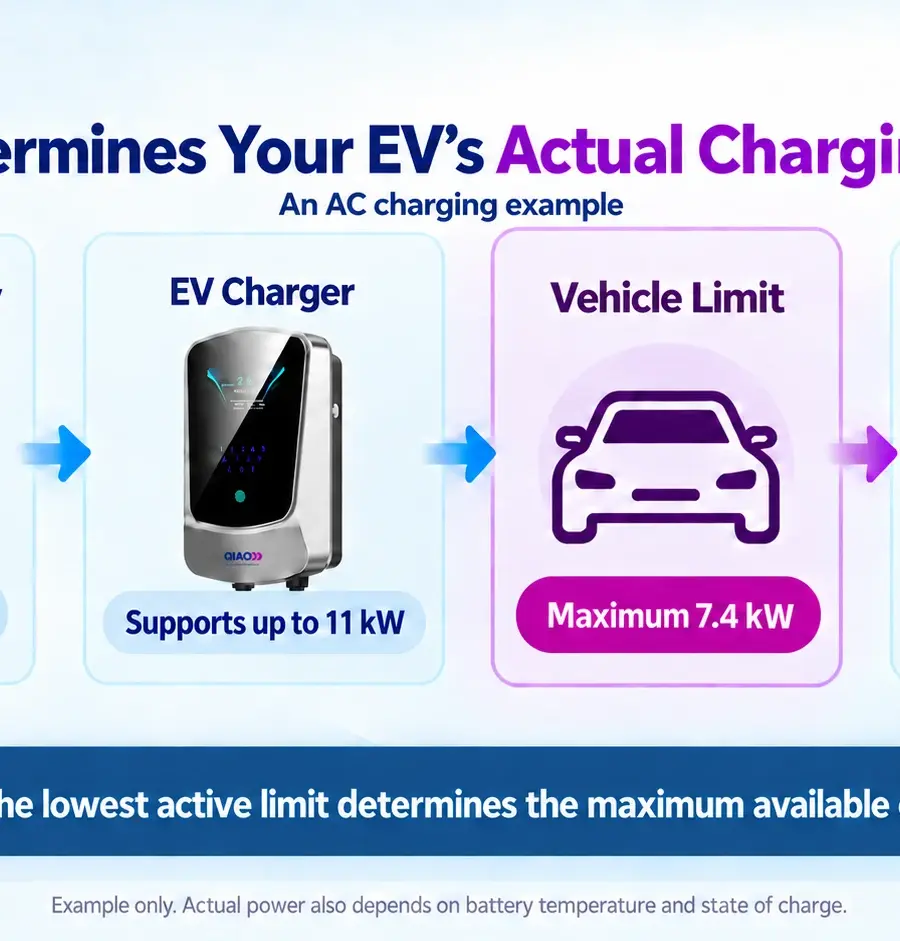

When planning a commercial EV charging project, one of the first strategic decisions is whether chargers should be deployed indoors or outdoors. While both serve the same core function—charging electric vehicles—their technical requirements, installation complexity, and long-term operational considerations differ significantly.
This article provides a clear, side-by-side comparison of indoor and outdoor EV charging deployment, helping commercial property owners, fleet operators, and solution integrators make informed decisions.
Installation Environment: Controlled vs Exposed
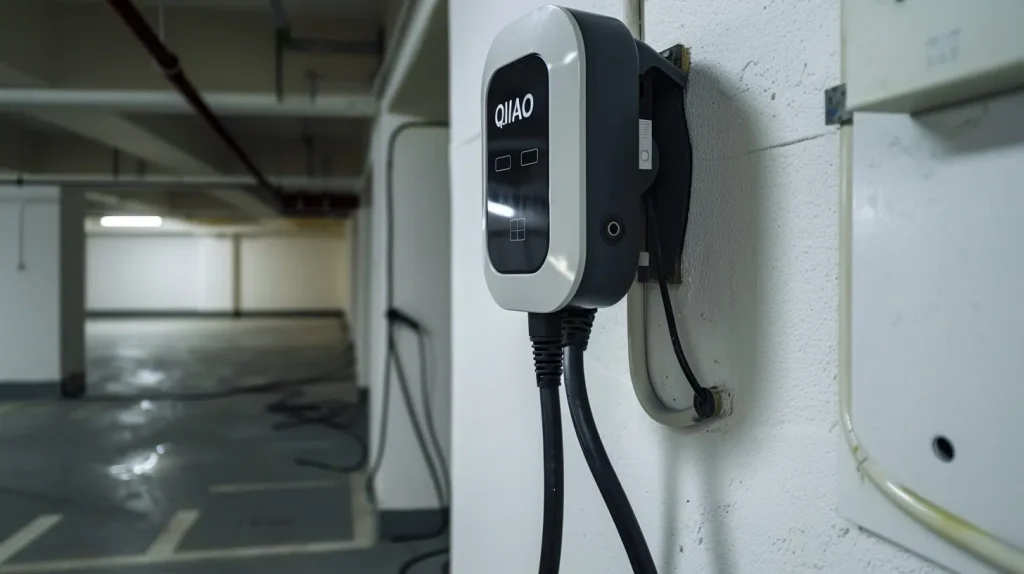
Indoor EV Charging Deployment
Indoor charging is typically installed in:
- Underground parking garages
- Enclosed commercial parking areas
- Residential or office buildings
These environments offer:
- Stable temperature
- Protection from rain, dust, and UV exposure
- Lower risk of corrosion and enclosure aging
As a result, indoor chargers generally experience less environmental stress.
Outdoor EV Charging Deployment
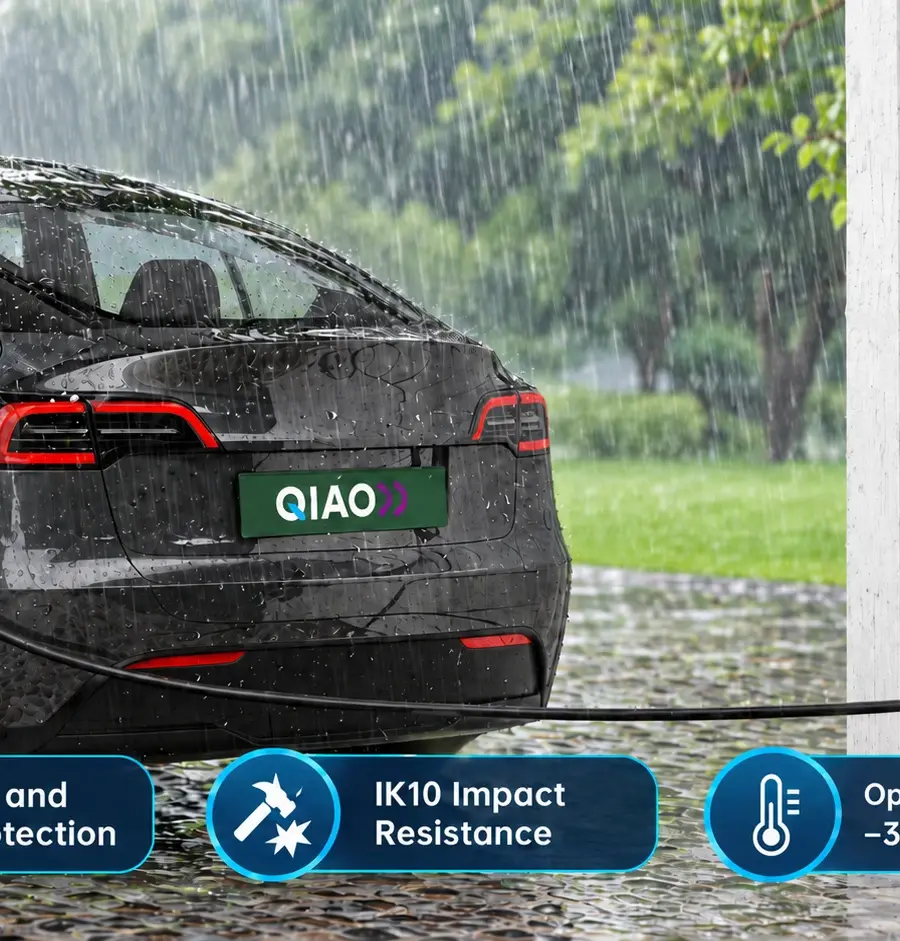
Outdoor chargers are exposed to:
- Rain, snow, humidity, and dust
- Direct sunlight and temperature extremes
- Higher risk of physical impact and vandalism
Outdoor deployment requires weather-resistant design and stricter installation standards.
Hardware Requirements and Enclosure Design
| Factor | Indoor Charging | Outdoor Charging |
| IP Rating | IP20–IP44 | IP54–IP65 |
| UV Resistance | Not critical | Essential |
| Corrosion Protection | Low | Medium to High |
| Physical Protection | Basic | Reinforced mounting |
Outdoor chargers must be designed with sealed enclosures, robust materials, and long-term durability in mind, while indoor chargers can prioritize compactness and cost efficiency.
Electrical Infrastructure and Load Management
Indoor Scenarios
Indoor charging installations often share electrical infrastructure with:
- Lighting systems
- Elevators
- HVAC equipment
This makes load balancing and dynamic load management (DLM) especially important to avoid overloading the building’s power supply.
Outdoor Scenarios
Outdoor chargers may be:
- Located far from main distribution boards
- Spread across large parking areas
- Installed in phases as demand grows
In these cases, scalable power planning and centralized load control are critical for future expansion.
Connectivity and System Management
Both indoor and outdoor deployments rely heavily on network connectivity, but the challenges differ.
- Indoor chargers usually benefit from more stable Ethernet or Wi-Fi connections.
- Outdoor chargers often depend on 4G/LTE or long-range networking, requiring higher communication reliability.
For both scenarios, OCPP-based remote monitoring enables:
- Real-time status tracking
- Fault diagnostics
- Firmware updates (OTA)
- Usage and billing data synchronization
Safety and Compliance Considerations
Safety requirements apply to both environments, but outdoor deployment introduces additional risk factors.
Common safety requirements:
- Residual current protection (AC + DC leakage)
- Ground fault detection
- Overcurrent and overtemperature protection
Outdoor-specific requirements:
- Surge protection (lightning-prone areas)
- Enhanced grounding
- Increased mechanical protection
Safety design should always meet local electrical codes and commercial-use standards, regardless of deployment location.
Cost and Maintenance Comparison
| Aspect | Indoor | Outdoor |
| Installation Cost | Lower | Higher |
| Maintenance Frequency | Lower | Moderate |
| Hardware Cost | Lower | Higher |
| Environmental Risk | Low | Higher |
While outdoor deployment typically involves higher upfront cost, it often provides greater accessibility and visibility, which can be valuable for public or customer-facing locations.
Choosing the Right Deployment Strategy
There is no universal “better” option. The right choice depends on:
- Parking layout
- Grid capacity
- User behavior (short stay vs long stay)
- Expansion plans
- Budget and ROI expectations
In many commercial projects, a hybrid approach—indoor charging for long-stay users and outdoor charging for visitors—offers the best balance.
Indoor vs Outdoor: Key Takeaways
- Indoor charging prioritizes cost efficiency and controlled environments
- Outdoor charging prioritizes accessibility and durability
- Load balancing and remote management are critical in both cases
- Hardware selection should match the deployment environment, not just power rating
QIAO: Flexible AC Charging for Indoor and Outdoor Deployment
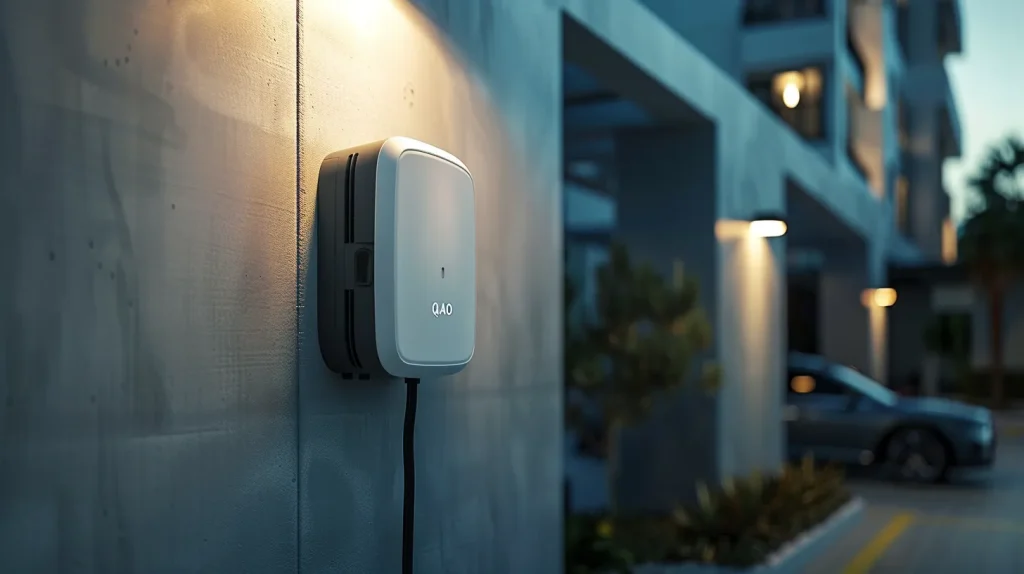
At QIAO EV Charger, we design commercial-grade AC EV charging solutions suitable for both indoor and outdoor environments.
Our wall-mounted and portable AC chargers are engineered with:
- Compact form factors for indoor installations
- Weather-resistant designs for outdoor deployment
- Load balancing and OCPP readiness
- Multi-layer safety protection for commercial use
This flexibility allows QIAO chargers to support workplaces, fleets, retail locations, hospitality venues, and public parking areas with a single, scalable AC charging platform.