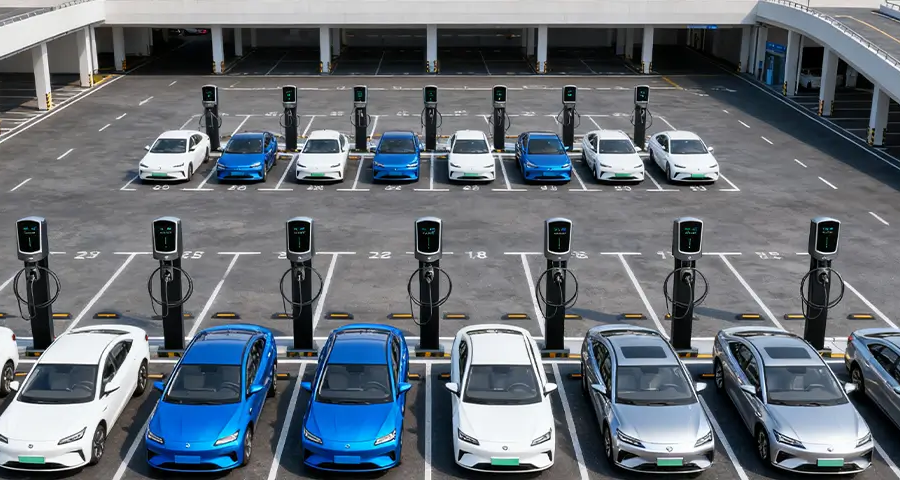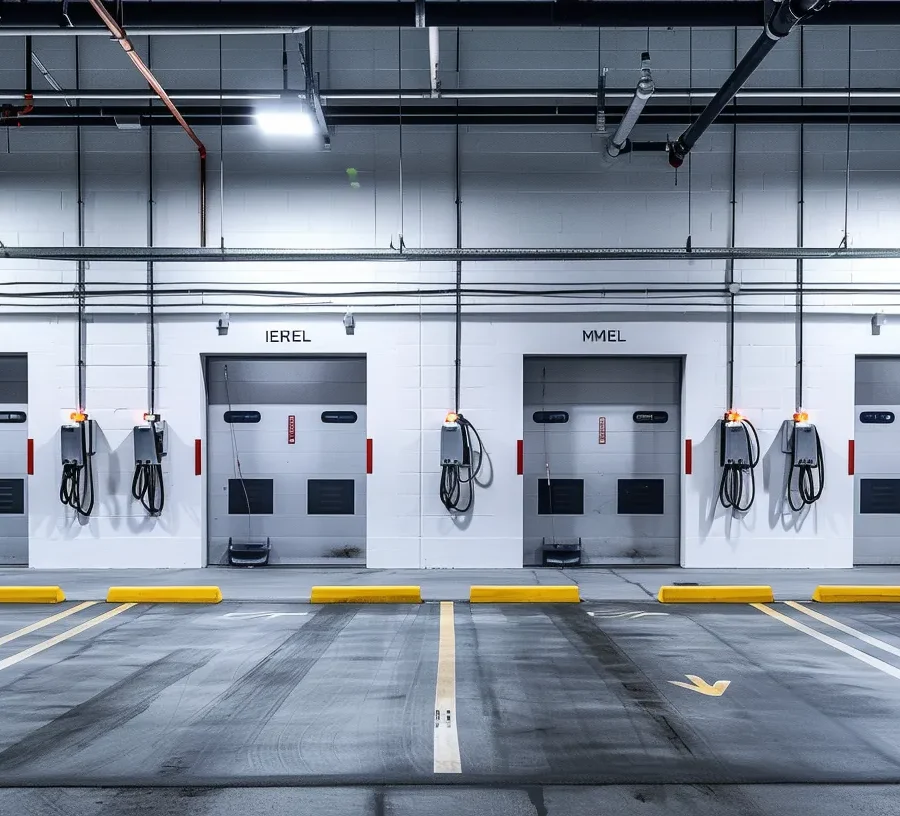

As EV infrastructure expands across office buildings, hotels, malls, and parking facilities, one critical step determines project feasibility and cost: grid capacity assessment.
Without a structured evaluation of available electrical capacity, EV charger deployment can lead to overload risks, costly infrastructure upgrades, and operational instability.
This guide explains how commercial property owners and facility managers should approach grid capacity assessment before installing EV chargers.

1. What Is Grid Capacity?
Grid capacity refers to the maximum electrical load a building or facility can safely draw from the utility supply without exceeding its service limit.
Electric power capacity is typically measured in:
- Kilowatts (kW)
- Kilovolt-amperes (kVA)
Electric power – Wikipedia
https://en.wikipedia.org/wiki/Electric_power
Commercial buildings usually receive electricity through three-phase power systems, which enable higher and more stable load distribution.
Understanding this foundation is essential before adding EV charging loads.
2. Why Grid Capacity Assessment Matters for EV Charging
EV chargers represent a continuous and sometimes high-power load. Unlike lighting or elevators, charging demand can remain constant for hours.
Without assessment, risks include:
- Main breaker trips
- Transformer overload
- Voltage drop issues
- Increased demand charges
- Costly grid upgrades
Proper capacity planning ensures EV charging integrates safely into the building’s electrical ecosystem.
3. Step-by-Step Grid Capacity Assessment
Step 1 – Review Utility Service Contract
Identify:
- Maximum contracted demand (kW or kVA)
- Transformer rating
- Service panel limits
Utility service agreements define the upper boundary for expansion.
Step 2 – Analyze Existing Load Profile
Measure or retrieve:
- Historical peak demand
- Average daily load
- Seasonal variation
- HVAC peak consumption
Demand profiling may require a load study or temporary metering.
Step 3 – Calculate Available Spare Capacity
Available capacity =
Maximum service capacity – Peak historical load
If the margin is small, uncontrolled EV charging may exceed limits.
Step 4 – Simulate EV Charging Load
Example:
- 10 chargers × 11kW = 110kW potential load
However, not all chargers operate at maximum simultaneously. This is where diversity factor and smart control become critical.
4. Using Load Management Instead of Infrastructure Upgrades
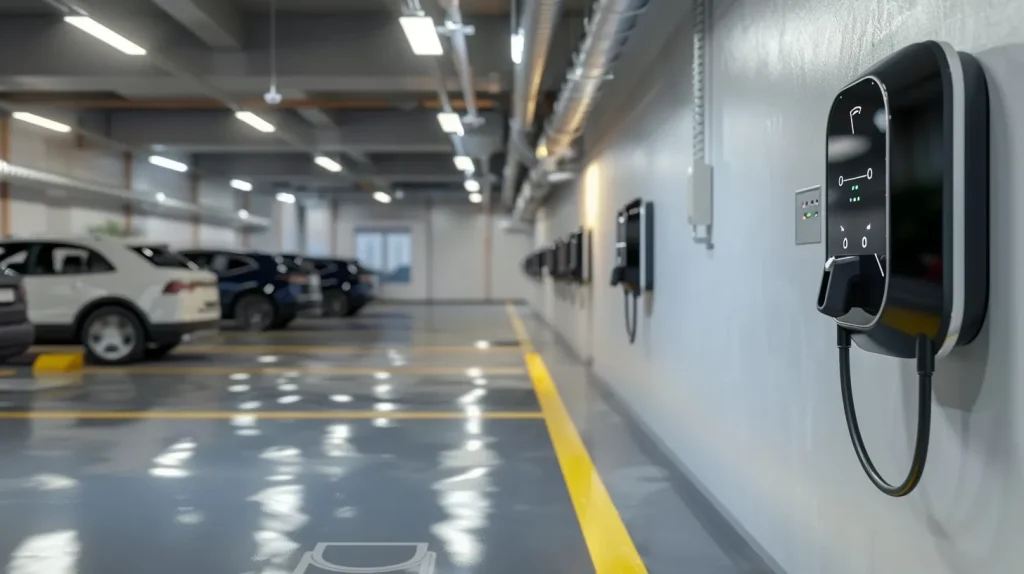
Rather than upgrading transformers or service panels, many commercial sites implement Dynamic Load Management (DLM).
DLM monitors real-time building load and adjusts EV charging output accordingly.
This aligns with smart grid principles:
Smart grid – Wikipedia
https://en.wikipedia.org/wiki/Smart_grid
Benefits:
- Avoids exceeding service limits
- Reduces peak demand penalties
- Minimizes capital expenditure
- Enables scalable expansion
For most office buildings and hotels, DLM makes grid upgrades unnecessary in early deployment stages.
5. Understanding Demand Charges
In many regions, utilities impose demand charges based on the highest 15-minute or 30-minute peak usage during a billing cycle.
Demand (electricity) – Wikipedia
https://en.wikipedia.org/wiki/Demand_(electricity)
Uncontrolled EV charging can unintentionally increase peak demand, significantly raising operational costs.
Capacity assessment combined with smart charging prevents this issue.
6. When Is a Grid Upgrade Necessary?
A grid upgrade may be required if:
- Existing service is near full utilization
- Transformer rating is insufficient
- Long-term EV adoption is expected to scale rapidly
- DC fast charging is planned
However, for AC commercial charging, smart load control often delays or eliminates the need for immediate upgrades.
Conclusion
Grid capacity assessment is the foundation of successful commercial EV charger deployment.
It ensures:
- Electrical safety
- Financial predictability
- Infrastructure longevity
- Scalable expansion
Before installing EV chargers in office buildings, hotels, or parking facilities, a structured electrical evaluation must precede procurement decisions.
About QIAO
QIAO provides commercial-grade AC EV charging solutions designed for real-world grid constraints.
Our systems support:
- Integrated dynamic load management
- OCPP backend compatibility
- Scalable multi-unit deployment
- Enterprise-level electrical integration
For commercial properties seeking to deploy EV charging without unnecessary infrastructure upgrades, QIAO offers technically optimized solutions aligned with grid capacity realities.
FAQ
Review your maximum contracted demand and compare it with historical peak load. The difference represents available spare capacity.
Not necessarily. Many commercial buildings can deploy AC chargers using dynamic load management without upgrading transformers.
Overloading the electrical system, triggering demand charge spikes, or requiring emergency infrastructure upgrades.
In many AC commercial scenarios, yes. Smart load control allows safe scaling within existing service limits.