
As EV charging infrastructure scales globally, interoperability and energy integration are becoming critical.
In 2026, the combination of OCPP 2.0.1 and emerging Energy APIs is reshaping how charging stations interact with:
- power grids
- energy management systems (EMS)
- renewable energy sources
- electricity markets
This shift marks the transition from “charging hardware” to “energy network nodes.”

What Is OCPP 2.0.1 and Why It Matters
OCPP (Open Charge Point Protocol) is the global standard for communication between EV chargers and backend systems.
Official overview:
https://openchargealliance.org/protocols/open-charge-point-protocol/
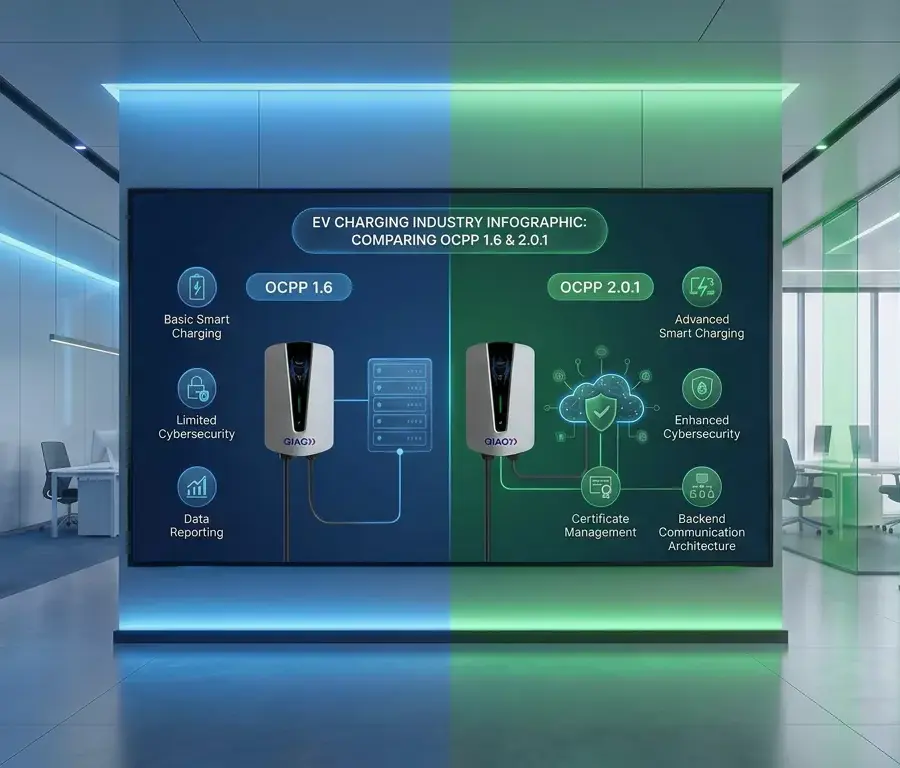
OCPP 2.0.1 represents a major upgrade over earlier versions, introducing:
- advanced smart charging
- enhanced security
- device management
- ISO 15118 integration
- real-time communication capabilities
It was officially approved as an IEC standard in 2024
Key Capabilities of OCPP 2.0.1
1. Native Smart Charging Integration
OCPP 2.0.1 enables chargers to dynamically adjust power based on:
- grid load
- energy prices
- EV battery demand
It also allows EVs to communicate their required energy (kWh), enabling more precise charging optimization
2. ISO 15118 and Plug & Charge
ISO 15118 overview:
https://en.wikipedia.org/wiki/ISO_15118
With native support for ISO 15118, OCPP 2.0.1 enables:
- Plug & Charge authentication
- secure communication
- bidirectional data exchange
This lays the foundation for fully automated charging experiences.
3. Enhanced Security Architecture
OCPP 2.0.1 introduces:
- certificate-based authentication
- secure firmware updates
- encrypted communication
These features significantly improve cybersecurity resilience in charging networks
4. Advanced Device and Transaction Management
Operators can now:
- monitor charger components in detail
- configure tariffs dynamically
- display real-time pricing to users
This improves both operational efficiency and user experience.
The Rise of Energy APIs in EV Charging
While OCPP handles charger-to-platform communication, Energy APIs connect charging infrastructure with energy systems.
Typical Energy API integrations include:
- utility grid data (load, tariffs)
- renewable generation (solar, wind)
- battery storage systems
- demand response platforms
Why OCPP + Energy API Is a Game Changer
From Charging to Energy Orchestration
Traditional EV charging:
- static power delivery
- isolated systems
Next-generation systems:
- dynamic load balancing
- real-time energy optimization
- integration with distributed energy resources (DER)
OCPP evolution already points in this direction, enabling chargers to act as grid-aware assets
Supporting Distributed Energy Resources (DER)
DER overview:
https://en.wikipedia.org/wiki/Distributed_generation
Modern EV chargers can:
- respond to grid signals
- integrate with solar systems
- participate in energy balancing
Future OCPP versions (e.g., 2.1) further expand this with DER control and bidirectional energy flows
2026 Key Trends: OCPP 2.0.1 + Energy API
Trend 1: Smart Charging Becomes Standard
Charging systems will automatically:
- avoid peak electricity pricing
- optimize load distribution
- balance multi-site charging
This reduces operational costs for businesses.
Trend 2: Integration With Renewable Energy
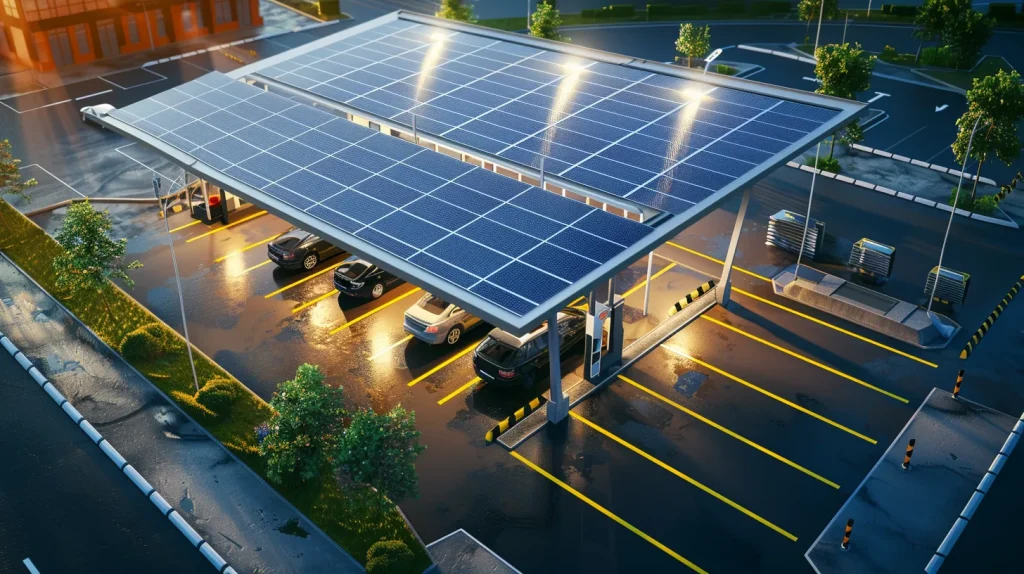
EV charging is increasingly powered by:
- solar PV systems
- on-site battery storage
- microgrids
Energy APIs enable real-time coordination between generation and charging.
Trend 3: EVs as Energy Assets (V2G)
Vehicle-to-Grid (V2G) overview:
https://en.wikipedia.org/wiki/Vehicle-to-grid
With bidirectional capabilities:
- EVs can store energy
- feed electricity back to the grid
- participate in energy markets
This transforms EV fleets into mobile energy storage systems.
Trend 4: Fleet and Depot Optimization
Fleet operators benefit from:
- centralized energy control
- dynamic charging scheduling
- reduced peak demand costs
This is especially important for:
- logistics fleets
- public transport
- corporate EV fleets
Trend 5: API-Driven Ecosystem
Charging platforms are evolving into open ecosystems, where:
- third-party apps integrate via APIs
- energy providers interact directly with chargers
- software-defined charging becomes mainstream
OCPP 2.0.1 vs Traditional Charging Systems
| Feature | Traditional Charging | OCPP 2.0.1 + Energy API |
| Power control | Fixed | Dynamic |
| Grid interaction | None | Real-time |
| Renewable integration | Limited | Native |
| User experience | Basic | Smart & automated |
| Scalability | Low | High |
Why This Matters for Businesses
For companies deploying EV charging infrastructure, this shift enables:
- lower electricity costs
- better asset utilization
- future-proof infrastructure
- compliance with grid regulations
Businesses that adopt OCPP + Energy integration early gain a competitive advantage in:
- cost efficiency
- scalability
- sustainability
About QIAO
QIAO delivers OCPP-ready AC EV charging solutions designed for the next generation of energy systems.
Our solutions support:
- OCPP 1.6 / 2.0.1 compatibility
- smart charging and load balancing
- integration with EMS and energy APIs
- scalable deployment for commercial and fleet use
QIAO helps businesses transition from charging infrastructure to intelligent energy networks.
FAQ
What is the difference between OCPP and Energy APIs?
OCPP connects chargers to management platforms, while Energy APIs connect them to energy systems like utilities and solar.
Is OCPP 2.0.1 widely adopted?
Yes, it is becoming the global standard for advanced EV charging systems.
Can OCPP support renewable energy integration?
Yes, especially when combined with energy management systems and APIs.
Will older OCPP 1.6 chargers become obsolete?
Not immediately, but future systems are moving toward OCPP 2.0.1 and beyond.