
As the EV charging industry continues to evolve, charging network operators, system integrators, and charger manufacturers are increasingly evaluating a migration from OCPP 1.6 to OCPP 2.0.1.
Although OCPP 2.0.1 introduces major improvements in security, smart charging, device management, and interoperability, the transition is rarely straightforward.
Real-world deployments often reveal unexpected compatibility issues, backend limitations, and additional implementation complexity.
This article explores the practical differences between OCPP 1.6 and OCPP 2.0.1, along with the most common deployment challenges encountered in commercial EV charging projects.
What Are OCPP 1.6 and OCPP 2.0.1?
The Open Charge Point Protocol (OCPP) is the industry-standard communication protocol that enables EV charging stations and charging management systems (CSMS) to communicate with each other.
- OCPP 1.6 was released in 2015 and remains the most widely deployed version globally.
- OCPP 2.0.1 was officially approved in 2020 and introduces major enhancements for security, smart charging, diagnostics, and future grid integration.
For many operators, OCPP 1.6 remains sufficient for basic charging operations, while OCPP 2.0.1 is increasingly being adopted in large-scale, future-oriented deployments.
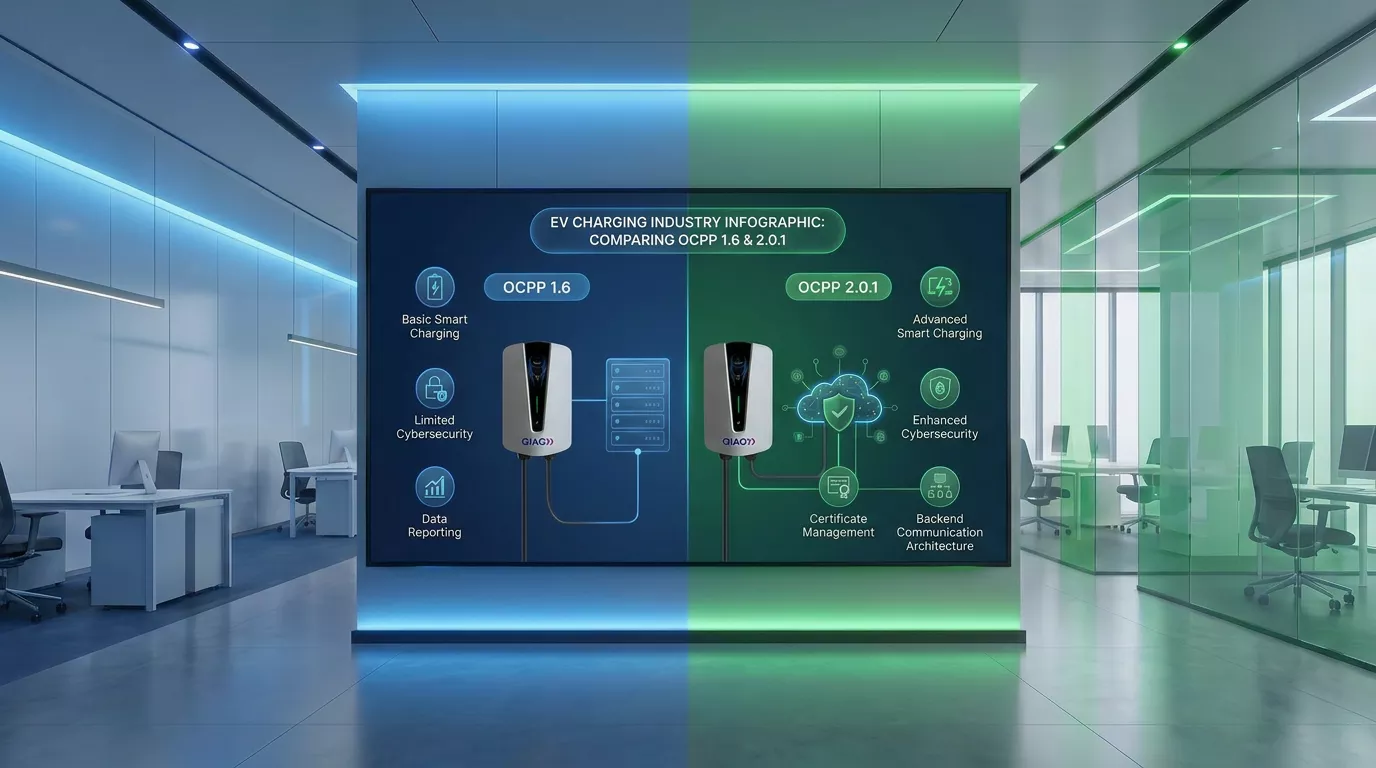
Quick Comparison: OCPP 2.0.1 vs OCPP 1.6
| Feature | OCPP 1.6 | OCPP 2.0.1 |
|---|---|---|
| Core Charging Operations | ✔ | ✔ |
| Smart Charging | Basic | Advanced |
| Device Management | Limited | Comprehensive |
| Security Framework | Basic TLS Support | Enhanced Security Profiles |
| Certificate Management | No | Yes |
| ISO 15118 Support | Limited | Native Support |
| Transaction Handling | Simpler | More Detailed |
| Event Monitoring | Basic Logs | Advanced Event System |
| Firmware Management | Basic | Enhanced |
| Grid Integration | Limited | Improved |
| Future Scalability | Moderate | High |
Major Deployment Differences
1. Communication Architecture Is More Complex
One of the biggest surprises for teams upgrading to OCPP 2.0.1 is the increase in message complexity.
OCPP 1.6 focuses primarily on:
- StartTransaction
- StopTransaction
- Authorize
- MeterValues
- StatusNotification
OCPP 2.0.1 introduces:
- TransactionEvent
- NotifyEvent
- NotifyMonitoringReport
- NotifyReport
- SecurityEventNotification
- Certificate-related messages
As a result:
- Backend systems require additional processing logic.
- Database structures often need redesign.
- More testing scenarios become necessary.
For organizations with legacy CSMS platforms, integration work can be significantly larger than expected.
2. Security Requirements Increase Substantially
Security is one of the strongest reasons companies migrate to OCPP 2.0.1.
Compared with OCPP 1.6, OCPP 2.0.1 adds:
- Security profiles
- Certificate-based authentication
- Secure firmware updates
- Secure logging
- Improved access control
However, deployment teams often underestimate:
| Common Issue | Impact |
| Certificate lifecycle management | Increased operational workload |
| Expired certificates | Charger communication failures |
| Backend certificate configuration errors | Large-scale connection problems |
| Vendor-specific implementations | Interoperability issues |
Organizations moving to OCPP 2.0.1 should prepare a certificate management strategy before deployment.
3. Smart Charging Becomes Much More Powerful
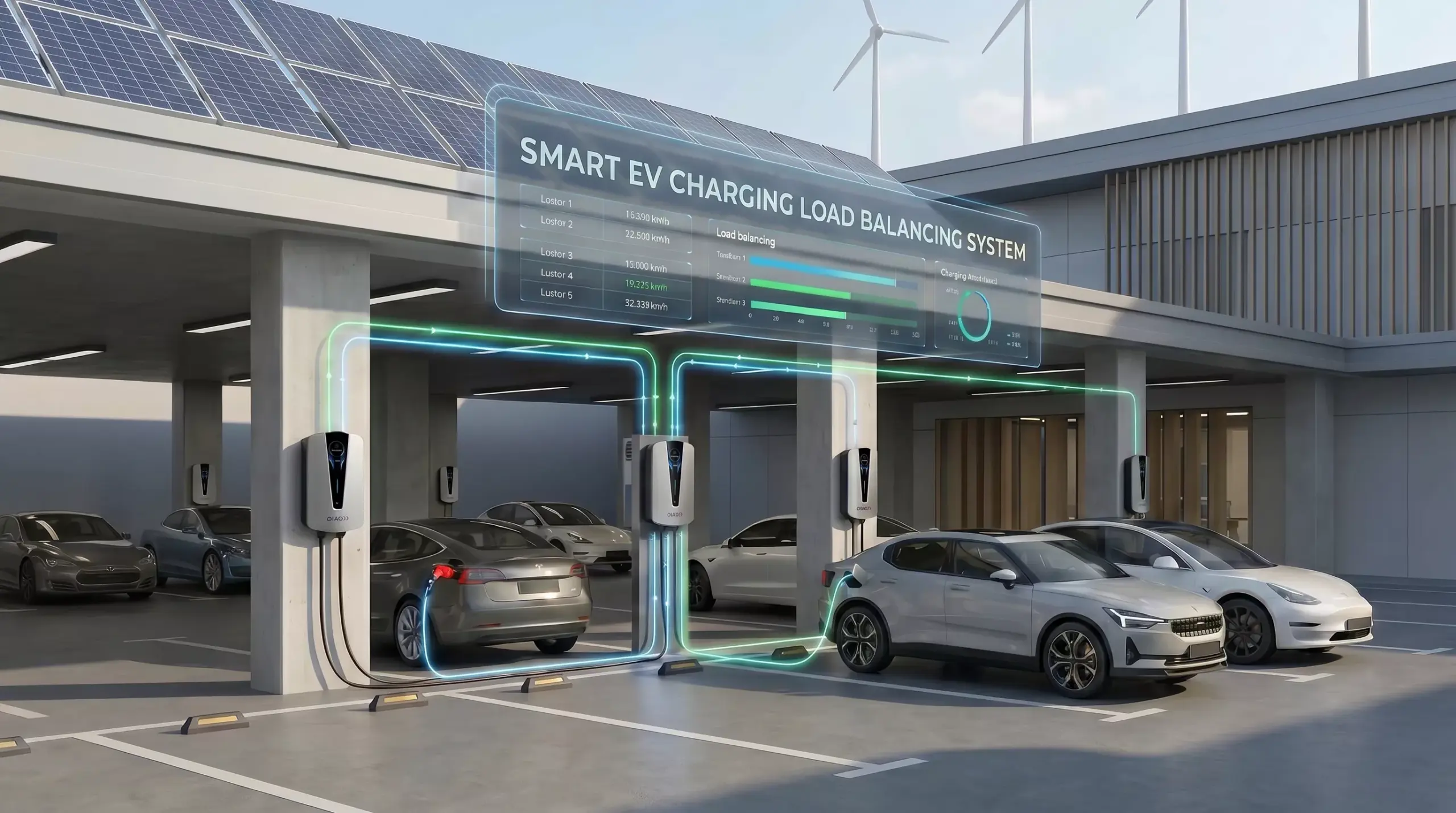
Smart charging capabilities are significantly enhanced in OCPP 2.0.1.
Benefits include:
- Dynamic load balancing
- Demand response participation
- Energy optimization
- Integration with renewable energy systems
- Vehicle-to-grid readiness
The challenge is that:
- The charging management platform must fully support advanced charging profiles.
- In addition, utility integrations become more complex.
- Finally, charger firmware must correctly interpret charging schedules.
In practice, many deployments activate only a portion of the available smart charging functionality.
4. Interoperability Is Not Yet Perfect
A common misconception is that OCPP compliance guarantees full interoperability.
In reality:
- Different vendors may interpret optional features differently.
- Some manufacturers implement only selected portions of OCPP 2.0.1.
- Backend platforms may support different feature subsets.
Typical problems include:
✓ Charging starts successfully
✗ Smart charging commands fail
✗ Certificate management does not work properly
✗ Event reporting behaves inconsistently
For this reason, interoperability testing remains critical even when both sides claim OCPP 2.0.1 compliance.
Common Pitfalls During Migration
Pitfall #1: Assuming OCPP 2.0.1 Is a Drop-In Upgrade
Many operators expect a simple firmware update.
In reality, migration may require:
- Backend software upgrades
- Database modifications
- New security infrastructure
- Additional testing procedures
Pitfall #2: Ignoring Backend Readiness
Some charging operators purchase OCPP 2.0.1-compatible chargers but continue using management systems designed for OCPP 1.6.
The result:
- Features remain unused.
- Smart charging functions fail.
- Monitoring data becomes incomplete.
Always verify backend compatibility before purchasing hardware.
Pitfall #3: Underestimating Testing Requirements
OCPP 2.0.1 introduces many additional workflows.
Testing should include:
- Transaction scenarios
- Offline recovery
- Firmware updates
- Certificate renewal
- Load management
- Error recovery
Skipping these tests often leads to costly field issues.
Pitfall #4: Focusing Only on Protocol Version
Protocol version alone does not determine project success.
Key considerations include:
- Charger quality
- Firmware maturity
- Backend stability
- Network reliability
- Integration expertise
A stable OCPP 1.6 deployment can outperform a poorly implemented OCPP 2.0.1 system.
Which Industries Are Moving to OCPP 2.0.1?
As EV charging infrastructure becomes more sophisticated, several industries are accelerating the adoption of OCPP 2.0.1. The protocol’s enhanced security, advanced smart charging capabilities, and improved device management make it particularly attractive for large-scale and future-ready charging projects.
Public Charging Networks
Public charging operators are among the earliest adopters of OCPP 2.0.1. Large charging networks require advanced monitoring, remote diagnostics, and stronger cybersecurity measures to manage thousands of charging stations efficiently.
Key benefits include:
- Improved charger monitoring
- Better fault management
- Enhanced cybersecurity
- Easier firmware management
- Future support for Plug & Charge services
Fleet Charging Depots
Commercial fleet operators increasingly rely on smart charging to reduce electricity costs and optimize vehicle availability.
OCPP 2.0.1 enables:
- Dynamic load balancing
- Scheduled charging
- Energy management integration
- Better charging data reporting
- Scalability for expanding fleets
Fleet charging is expected to become one of the biggest growth areas for OCPP 2.0.1 deployments.
Commercial Buildings and Workplaces
Office buildings, industrial parks, and business campuses are adopting EV charging to support employees and visitors.
These installations often require:
- Multiple user groups
- Access control
- Billing integration
- Energy management systems
- Future expansion capabilities
The advanced device management features in OCPP 2.0.1 make these requirements easier to implement.
Hotels, Shopping Centers, and Destination Charging
Destination charging locations are increasingly seeking smart charging solutions that improve customer experience and reduce operational complexity.
OCPP 2.0.1 supports:
- Better charger diagnostics
- Improved uptime monitoring
- Remote maintenance capabilities
- Integration with third-party management systems
Renewable Energy and Smart Grid Projects
Projects combining EV charging with solar energy storage and demand response programs are among the strongest drivers of OCPP 2.0.1 adoption.
The protocol’s enhanced smart charging functionality provides better support for:
- Solar energy integration
- Load optimization
- Grid services
- Vehicle-to-grid (V2G) readiness
- Future energy management applications
As energy systems become increasingly interconnected, OCPP 2.0.1 is likely to become the preferred protocol for advanced charging infrastructure.
Should You Upgrade to OCPP 2.0.1?
OCPP 1.6 May Be Sufficient If:
- You operate a small charging network.
- Basic charging functionality is enough.
- Existing infrastructure is stable.
- Advanced smart charging is not required.
OCPP 2.0.1 Is Recommended If:
- You are deploying a large-scale charging network.
- Advanced smart charging capabilities are a strategic priority.
- Security compliance requirements are becoming increasingly important.
- ISO 15118 integration is part of your roadmap.
- Long-term scalability is essential for future growth.
For most new commercial charging projects, OCPP 2.0.1 is becoming the preferred choice, provided that both the charger and backend platform fully support its capabilities.
Frequently Asked Questions About OCPP 2.0.1 and OCPP 1.6
Is OCPP 2.0.1 backward compatible with OCPP 1.6?
No. OCPP 2.0.1 is not fully backward compatible with OCPP 1.6. Because the message structure and feature set have changed significantly, both the charger and the charging management system must support the same protocol version for full functionality.
Do all EV chargers support OCPP 2.0.1?
No. Although many new chargers advertise OCPP 2.0.1 compatibility, some manufacturers only implement selected features. It is important to verify the actual feature support and interoperability before deployment.
Is OCPP 2.0.1 necessary for ISO 15118 and Plug & Charge?
Yes. While limited implementations may exist, OCPP 2.0.1 provides the most complete support for ISO 15118 features, including certificate management and Plug & Charge functionality.
Should existing OCPP 1.6 charging networks upgrade immediately?
Not necessarily. Many existing OCPP 1.6 networks continue to operate successfully. An upgrade should be based on business requirements, security needs, and future smart charging plans rather than protocol version alone.
Which OCPP version is better for commercial AC EV chargers?
For small and medium-sized deployments, OCPP 1.6 may still be sufficient. However, new commercial projects that require advanced energy management, future scalability, or Plug & Charge capabilities should consider OCPP 2.0.1.
What should operators verify before purchasing OCPP 2.0.1 chargers?
Before deployment, operators should confirm:
- Backend compatibility
- Certificate management support
- Smart charging functionality
- Interoperability testing results
- Firmware update mechanisms
- Long-term technical support
Proper verification can significantly reduce deployment risks and avoid costly integration issues later.
Final Thoughts
The transition from OCPP 1.6 to OCPP 2.0.1 is more than a protocol upgrade—it is an infrastructure upgrade. While OCPP 2.0.1 delivers stronger security, enhanced smart charging, and better future readiness, it also introduces greater deployment complexity.
Therefore, organizations planning new EV charging deployments should carefully evaluate charger compatibility, backend readiness, security requirements, and interoperability testing before committing to a migration strategy.
About QIAO
QIAO specializes in providing reliable AC EV charging solutions for global businesses, distributors, charging network operators, and OEM/ODM partners. Our portfolio includes commercial EV chargers, OCPP-enabled charging stations, wall-mounted EV chargers, and customized charging solutions designed for international B2B projects.
For companies seeking scalable and future-ready charging infrastructure, QIAO supports integration requirements ranging from OCPP 1.6 deployments to advanced OCPP 2.0.1-ready solutions.