
Home EV charging now does more than deliver power. Scheduling and some load management features are already common. Solar charging needs equipment that can work with a home energy system. Vehicle-to-home (V2H), vehicle-to-grid (V2G), and wireless charging are still limited. Their use depends on the vehicle, hardware, region, and utility.
Future home charging will give people more control over charging times, power use, and energy produced at home. However, you do not need every new feature. This guide explains six technologies, what each one needs, and which ones are useful today.
How Is Home EV Charging Changing?
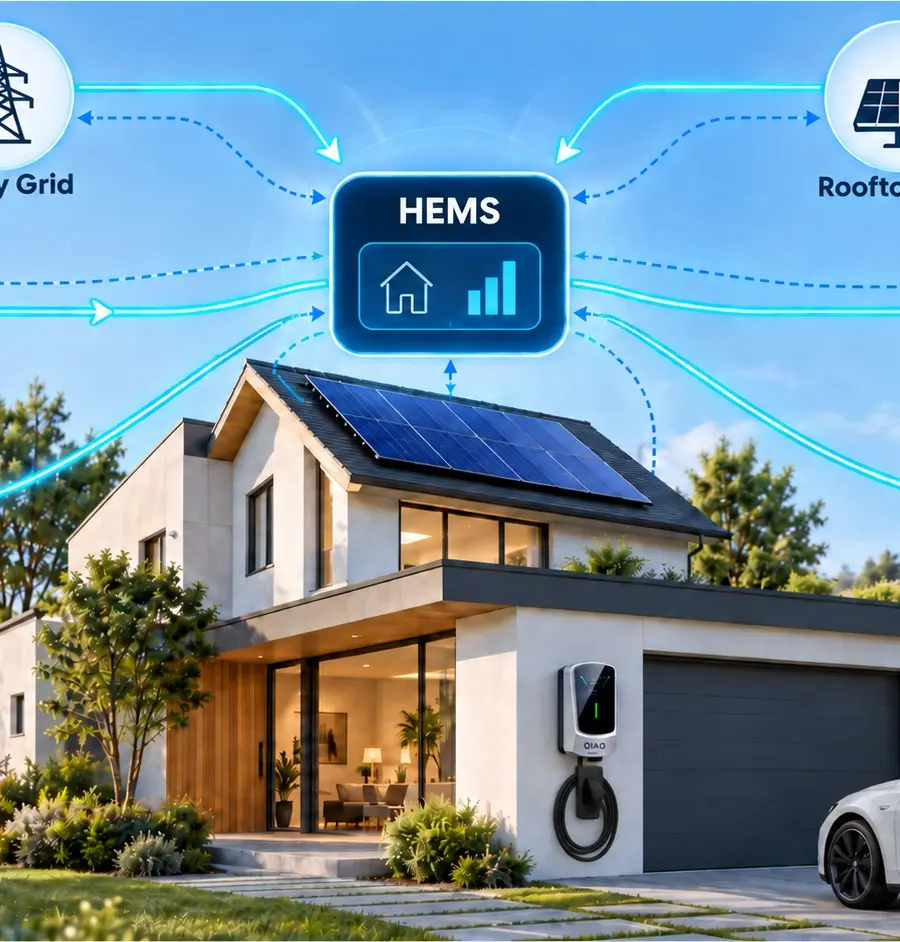
The biggest change is better coordination between the EV, charger, and home energy system. A basic home charger supplies power when the vehicle is connected. Newer systems can adjust charging based on energy rates, household power use, or rooftop solar output. Some can also connect to a home battery storage system, smart meter, or energy controller. The table below shows which technologies are widely available and which still have limited use.
| Technology | Main Homeowner Benefit | Current Status |
| Smart Charging | Schedules charging around rates or demand | Widely available |
| Dynamic Load Balancing | Adjusts charging to available home capacity | Available with compatible equipment |
| Solar and Home Energy Integration | Uses more electricity generated at home | Available with compatible systems |
| V2H and V2G | Sends energy from a compatible EV to a home or grid | Limited by vehicle, equipment, and region |
| Higher-Power AC Charging | Reduces charging time where the home and EV support it | Available, but installation-dependent |
| Wireless EV Charging | Transfers energy without a charging cable | Emerging for residential use |
1. Smart Charging Will Move Charging to Lower-Cost Hours
Smart charging can run when electricity rates are lower or the home is using less power. A charger may use an app, a local control unit, or a cloud service to start and stop. Some systems can also react to time-of-use rates or signals from a utility. The U.S. Department of Energy separates this type of control from a basic timer. Managed charging can use live data from the rate plan, vehicle, charger, building, and grid.
How Smart Charging Works
Most systems let you set a charging time, check its status, and review energy use. More advanced programs may lower charging power when demand is high. Check the settings in both the electric vehicle and charger because two schedules can conflict. Without Wi-Fi, remote controls or cloud-based schedules may not work. Basic charging depends on the product design.
How It Can Affect Homeowners
Homes on time-of-use rates may pay less by charging off-peak. This timing can also keep charging away from heavy use by an oven, water heater, or heat pump. Savings depend on your rate plan, mileage, energy use, and schedule. AI-based prediction is not a standard feature on home chargers.
2. Dynamic Load Balancing Will Protect Home Electrical Capacity
Dynamic load balancing changes EV charging power as other appliances turn on and off. It helps the home stay within its available power. The charger does not need to draw its full setting at all times.
How Dynamic Load Balancing Works
The system measures total home demand or the power left for charging. It may use current transformer (CT) sensors, a matching meter, an energy controller, or linked devices. CT sensors measure the current flowing through a cable. The system can track loads such as an air conditioner, oven, water heater, heat pump, home battery, and EV charger.
When demand gets close to a set limit, the controller lowers the EV charging current. It raises the current again after other loads fall. Scheduling changes when charging takes place. Load balancing changes the power while the EV is charging.
Why It Affects Home Installation
Load balancing can reduce conflicts between high-power appliances. It can be especially useful for homes adding a heat pump, a second EV, or another charger. Homeowners looking for this feature can explore selected QIAO Q6 Home EV Charger configurations, which combine dynamic load balancing with 7 kW, 11 kW, or 22 kW AC charging.
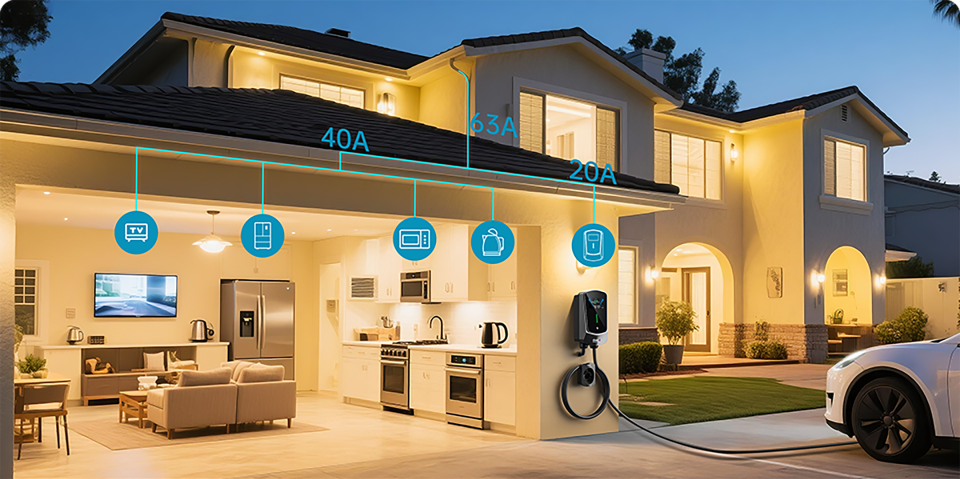
DLB cannot fix wiring that is too small. It also does not guarantee that a panel upgrade will not be needed. An electrician must still check the electrical service, safety devices, circuit, cable, and local rules.
3. Solar and Home Energy Systems Will Coordinate Charging
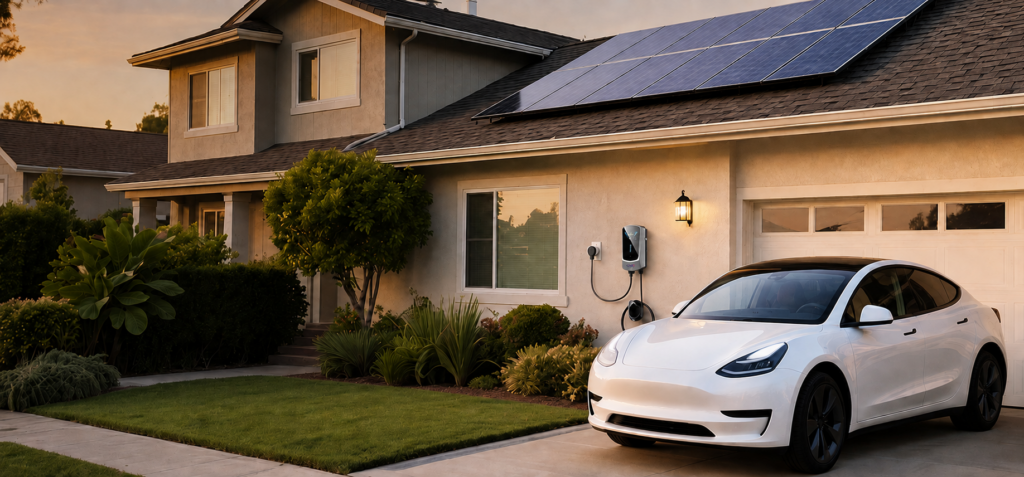
Solar charging can send more rooftop solar power to an electric vehicle. To do this, the charger and home energy system must work together. The goal is to use more solar power at home, not to make charging free.
Solar-Priority Charging
A solar-priority mode can raise charging power when rooftop output goes up. It may lower charging power or add grid power when solar output falls. It may do the same when the home uses more energy. The available modes depend on the charger and controller. An EV also has a minimum charging current. This limit can make it hard to use a small amount of extra solar power.
The cost benefit depends on electricity prices, payment for exported power, setup costs, and how often the car is home in daylight.
Home Energy Management Systems
A home energy management system can coordinate rooftop solar, home battery storage, household appliances, EV charging, and grid power. It may need CT sensors, an energy meter, a link to the inverter, or a separate controller. Each manufacturer may use a different setup.
Check which inverter or meter the system supports. Also check its solar-only and mixed modes, minimum charging level, and needed parts. Wi-Fi alone does not mean that a charger can work with solar power.
4. Bidirectional Charging Could Let EVs Power Homes and Support the Grid
Bidirectional charging allows power to flow out of a compatible EV battery. The vehicle, charger, home electrical system, and local energy provider must all support this use. A matching connector alone does not mean that the vehicle or charger supports V2H or V2G.
What Is Vehicle-to-Home
V2H sends energy from an EV battery to home circuits. It can provide backup power or help during high-price hours. Vehicle-to-load (V2L) is different. It powers single appliances or tools through outlets on the vehicle or an adapter.
What Is Vehicle-to-Grid
V2G sends energy from an EV to the public grid. A utility or energy market controls when this happens. Programs may use EVs to cut peak demand or provide other grid services. Payment rules differ by program. The Department of Energy says that incentive programs for vehicle grid services are not yet common.
What Does Bidirectional Charging Require
A working system may need a capable EV and a matching charger. It may also need power conversion, transfer or isolation equipment, expert installation, software, and utility approval. ISO 15118-20 sets rules for two-way charging communication. However, use of the standard does not ensure that all products will work together.
Bidirectional charging is not available for most homes. It is still limited to certain vehicles, systems, utilities, and regions. QIAO’s current range of home EV chargers consists of AC products, not V2H or V2G equipment.
5. Can Higher-Power AC Charging Reduce Charging Time?
Higher-power AC chargers can cut charging time only when the home and vehicle support the same power level. The EV charger supplies AC power. The onboard charger (OBC) inside the vehicle changes it to DC power for the battery.
What Determines Home Charging Speed
Home voltage and phase can limit charging power. So can circuit size, charger output, the vehicle’s OBC, and vehicle controls. Battery temperature may also affect the rate.
A car with a 7 kW AC limit will take no more than about 7 kW from a 22 kW unit. In many European and other markets, 11 kW and 22 kW charging requires suitable three-phase power and vehicle support. North American homes often use 120/240 V single-phase power and the Level 1 and Level 2 labels.
Understanding AC EV charging power levels means looking at the electrical supply, EVSE output, and OBC limit together. A charger’s rating shows only its maximum output, not the power every EV can accept.
Will DC Fast Charging Become Common at Home
DC fast charging is unlikely to replace AC in most homes soon. It needs more power and costs more to install. The equipment is also more complex. Most cars stay parked long enough for AC charging to replace the energy used each day. Home DC systems may serve special needs, but most drivers do not need one.
6. Wireless Charging Could Remove the Charging Cable
Wireless EV charging uses a pad to send energy to a receiver on the vehicle. The ground pad creates a magnetic field. A matching unit on the vehicle changes that energy into power for the battery.
How Residential Wireless Charging Works
The ground pad sits on or near the parking surface. The driver parks the vehicle over it. Before charging starts, the system checks alignment, communication, and safety. The EV must have a matching receiver.
This setup could reduce cable handling and make charging easier for drivers who find it difficult to lift or connect a charging cable. It could also allow charging to start automatically after parking.
Current Limitations
The vehicle and ground equipment must match. The vehicle must also line up with the pad. Setup takes more work than mounting a standard AC charger, and few vehicles and products support it. Wireless charging is a new home option, not a common cable replacement.
SAE J2954, revised in August 2024, covers fixed wireless charging for light-duty vehicles at up to 11 kVA. This includes home use. The current version covers one-way charging with ground units mounted on the surface.
How Can You Prepare Your Home for Future Charging Technology?
Prepare for future charging by choosing equipment that works together. Check the home’s electrical capacity and leave room for later upgrades.
Choose Compatibility Before Maximum Power
Check the connector, OBC rating, home voltage and phase, charger current, and local rules. A higher charger rating adds no speed if the car or power supply has a lower limit.
Consider Load Management
Consider load management if your home has limited power or several high-power appliances. It may also help if you have a heat pump, home battery storage, or plans for a second EV. If you need two chargers, ask how they share power. Home DLB and power sharing between chargers are different functions.
Plan for Solar and Energy Monitoring
Ask about spare conduit, control wiring, meter or CT space, and room in the panel. Check whether the charger can later work with a supported energy controller. Good planning can make upgrades easier, but it cannot promise future support.
Look for Software and Firmware Support
Firmware updates can fix problems and improve current features. Reliable controls, a well-supported app, and support from the manufacturer may offer more value than a promised feature. Wi-Fi does not ensure future upgrades.
Use Modular Installation Where Available
Parts that can be replaced may make later work easier. Enough cable capacity, spare conduit, and separate mounting plates can also help. However, modular design is not an industry-wide standard. Parts from different manufacturers may not work together.
Ask a Qualified Electrician to Assess the Installation
Have an electrician check the panel, dedicated circuit, grounding, safety devices, cable size, outdoor conditions, permits, and local rules.
Should You Wait for New Technology Before Installing a Home EV Charger?
Most people do not need to wait. Safe AC charging, scheduling, load management, and solar support are available now. Choose features that fit your car, home power supply, rate plan, and parking routine.
Worth Considering Now
Scheduled charging, adjustable current, monitoring, DLB, supported solar charging, and firmware support can help today. A driver on a flat rate may not need the same features as a solar owner on time-of-use rates.
Consider If Your Vehicle and Home Support It
Some compatible homes may benefit from higher-power three-phase charging, multi-EV power sharing, home energy management, or solar-battery coordination. Do not buy a 22 kW unit if your vehicle takes only 7 kW AC or your home has no three-phase power.
Continue Watching
V2H, V2G, home wireless charging, predictive charging, and fully automatic systems are not widely available. Buy only after you confirm support from the vehicle, equipment, installer, utility, and region.
Conclusion
Energy control will play a central role in the future of home EV charging. Scheduling and load balancing control when an EV charges and how much power it uses. Solar systems can help a home use more of the power made on its roof. Two-way and wireless charging still need matching hardware and support in the local area.
Start with your vehicle’s connector and OBC. Then check the home’s power supply and how long the car stays parked. Add load management or solar support only when it meets a clear need. Compare QIAO home EV chargers by AC power level, connectivity, and available load-management features.
FAQs
No. Solar-priority charging can work without a home battery when a compatible charger or energy controller can measure solar output and household demand. It then adjusts charging to use the available solar surplus. A home battery can store extra solar energy for later, but it is optional in many systems. Check the charger, meter, inverter, and the EV’s minimum charging current before installation.
Yes, if the system supports load management for multiple chargers. It must measure total household demand and share the remaining power between both chargers. Household dynamic load balancing and charger-to-charger power sharing are related but separate functions. DLB on one charger will not automatically manage a second charger. Confirm charger compatibility, sensor or meter requirements, communication between units, and installer settings.
Often, yes. The charger may work with a newer EV if the vehicle connector, voltage, phase, current, and AC charging standard are compatible. The vehicle’s onboard charger will still limit charging speed. Some app or cloud functions on an older charger may no longer be available. If an adapter is needed, use only a combination approved by the vehicle and charger manufacturers.
It can be, but the system must be rated for outdoor installation. Check its weather rating, operating temperature, drainage needs, and foreign-object detection. The ground pad must also match the receiver on the vehicle. Other systems may have different limits, so follow the manufacturer’s instructions and local electrical rules.
It can, but the effect varies. Bidirectional charging adds battery throughput and cycling. Battery aging depends on temperature, depth of discharge, frequency, charging rate, average state of charge, and battery controls. Follow the vehicle maker’s limits and warranty terms. A system may keep some energy in reserve or limit the usable charge range.