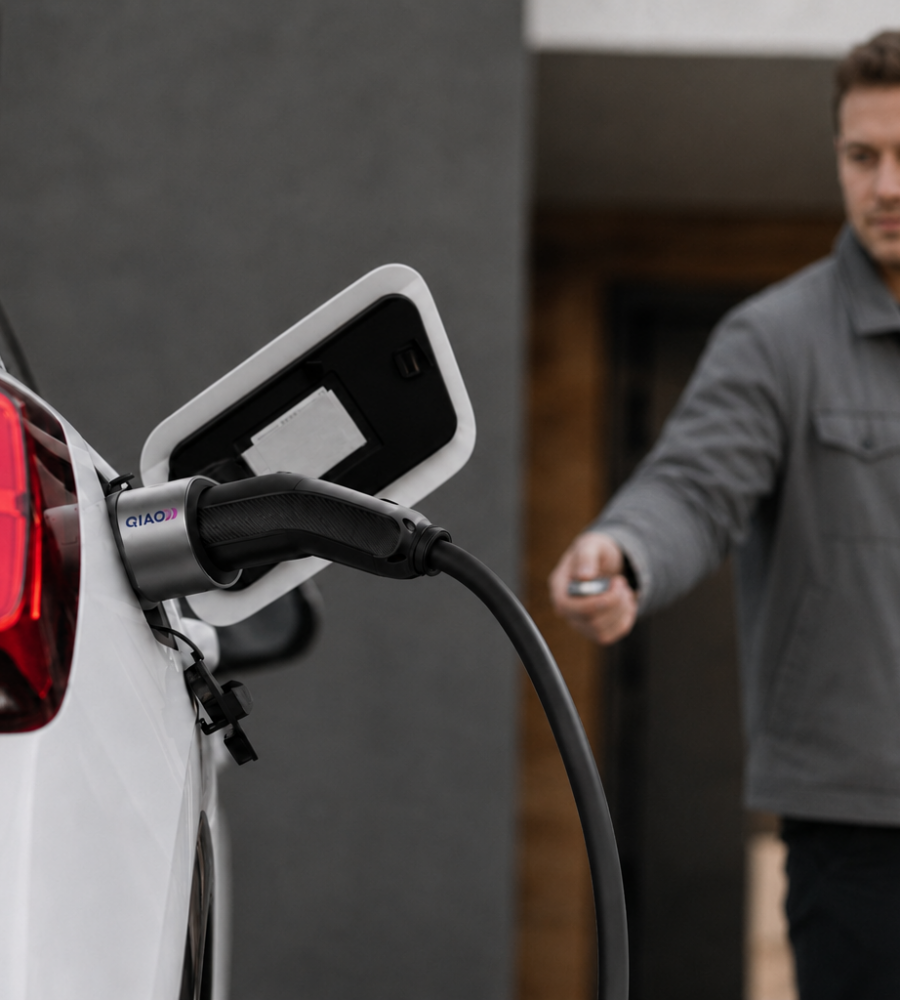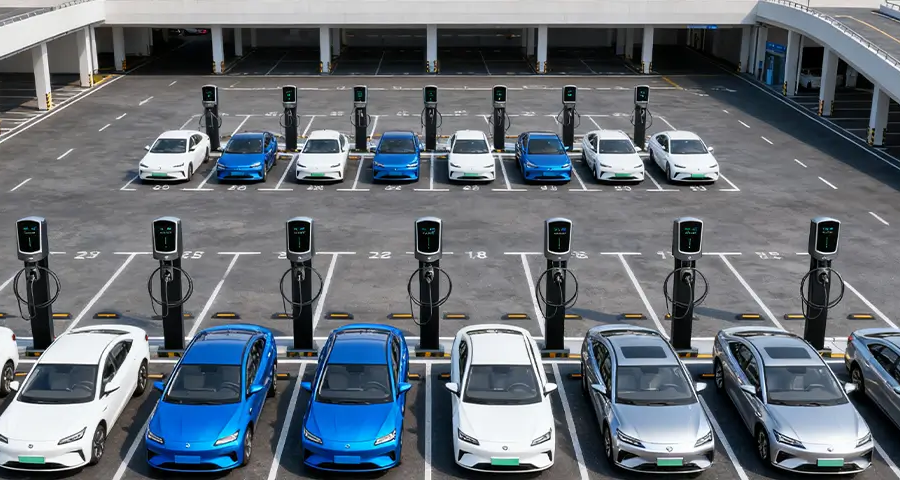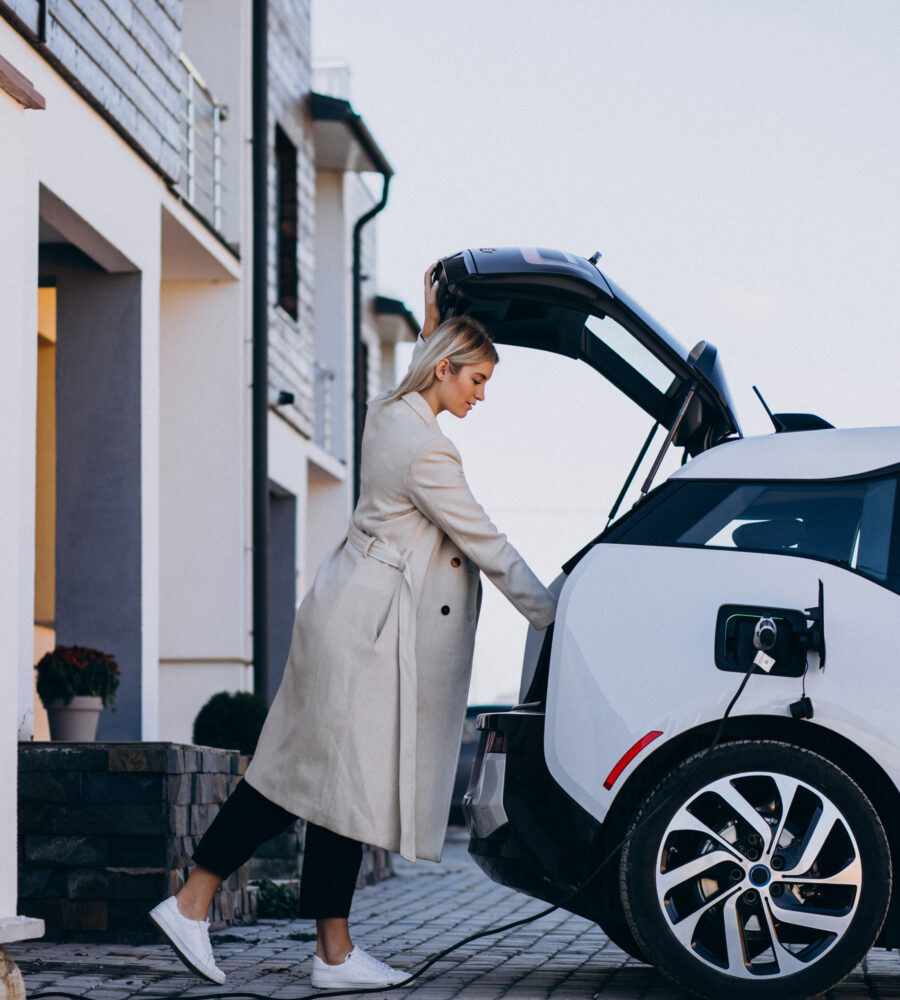

Smart home energy management uses connected meters, sensors, controllers, and software to track and manage household electricity. A home energy management system can also coordinate an EV charger with household demand, electricity rates, solar production, and battery storage.
The exact functions depend on the equipment you install. Some systems only show energy data. Others can adjust connected devices automatically. A Wi-Fi connection or mobile app alone does not mean that a device can join a complete home energy management system.
This guide explains how these systems work, what equipment they may include, and how they can support home EV charging.
What Is Smart Home Energy Management?
Smart home energy management is the process of monitoring, controlling, and optimizing how electricity moves through a home.
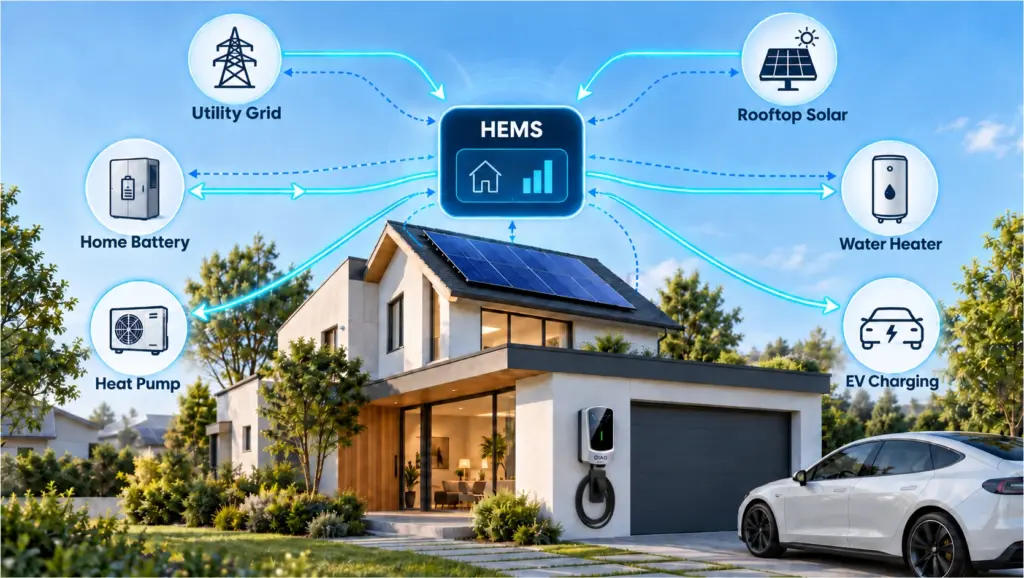
A Home Energy Management System, usually called a HEMS, brings household energy data and device controls into one platform. Depending on the setup, it may monitor or coordinate:
- Electricity supplied by the utility grid
- Rooftop solar production
- Home battery storage
- EV charging
- Heat pumps and water heaters
- Other compatible household devices
A basic system may show where electricity comes from and where it goes. A more advanced system can respond to changing conditions. For example, it may delay EV charging until electricity prices fall or reduce charging power when other appliances are running.
HEMS is a broad term rather than a single global product standard. The equipment, control methods, and services included in a system can vary by manufacturer, platform, and market.
How Does a Home Energy Management System Work?
A home energy management system works by collecting energy data, applying user settings or automated rules, and sending instructions to compatible devices.
Most systems follow three main steps: monitor, control, and optimize.
1. Monitor Household Energy Use
The system first needs to measure electricity use.
A smart meter may provide whole-home information from the utility connection. CT sensors can measure current at the electrical panel, solar inverter, EV charger circuit, or other selected locations. Some systems can also receive data directly from connected devices.
The platform may then show:
- Current Household Demand
- Electricity Imported From the Grid
- Solar Power Production
- Battery Charge and Discharge
- EV Charging Power
- Daily or Monthly Energy Use
- Estimated Electricity Costs
Energy monitoring helps homeowners identify when demand rises and which loads use the most electricity. Monitoring alone does not control those loads. The system needs compatible equipment and permission to make changes.
2. Control Connected Devices
The system can control devices that support its commands.
Basic controls may include starting, stopping, or scheduling a device. An EV charger may also allow the system to change its charging current. Other devices may only provide energy data and cannot be controlled.
Users normally set priorities through an app or online dashboard. For example, a homeowner may ask the system to charge an EV after 11 p.m. while keeping the vehicle ready by 7 a.m.
Some controls operate through a local connection inside the home. Others rely on a manufacturer’s cloud service. This difference affects how the system works during an internet or service outage.
3. Optimize When Energy Is Used
The system uses collected data and household rules to decide when connected devices should operate.
It may move a flexible load to a lower-cost period, reduce demand during a peak, or send available solar power to an EV. More advanced systems may also consider battery charge, weather forecasts, grid signals, and planned departure times.
Optimization does not always mean fully automatic control. Some systems recommend an action and wait for the user to approve it. Others can act automatically within limits chosen by the homeowner.
What Equipment Can a HEMS Include?
A HEMS combines measurement, software, communication, and controllable devices. A home does not need every component in the following table.
| Component | Main Role |
| Smart Meter | Records electricity exchanged with the utility grid |
| Energy Monitor | Measures total household use or individual circuits |
| CT Sensors | Measure current at selected circuits or power sources |
| Controller or Platform | Processes data and applies household rules |
| App or Dashboard | Displays energy use, costs, and device status |
| Smart EV Charger | Provides charging data and may accept control commands |
| Solar Inverter | Reports solar production and system status |
| Home Battery | Stores electricity for later use |
| Controllable Loads | Adjust their operation in response to system commands |
| Utility Rate Data | Helps schedule devices around time-of-use prices |
These parts must communicate correctly. A solar inverter, battery, and charger from different brands may not work together without a supported controller or interface.
How Does a HEMS Work With an EV Charger?
A HEMS can treat an EV charger as a flexible household load. It may adjust when the vehicle charges and how much power the charger draws.
EV charging is well-suited to energy management because a vehicle often remains parked for several hours. The system may have time to move or adjust charging while still meeting the driver’s needs.
Schedule Charging During Lower-Cost Hours
A HEMS may schedule EV charging around a time-of-use electricity rate.
For example, the driver may plug in at 6 p.m., when household demand and electricity prices are high. The system can wait until the off-peak period begins, then start charging. It must leave enough time to reach the required charge level before departure.
Savings depend on the local rate plan, the price difference between periods, and how much energy the vehicle needs. Homes with a flat electricity rate may gain less from scheduling alone.
The U.S. Department of Energy describes managed EV charging as controlling when and how vehicles charge based on factors such as electricity prices, equipment capacity, and building loads. Although its guidance focuses on fleets, the same basic control principles can be used in home installations.
Use Dynamic Load Balancing Around Household Demand
Dynamic load balancing adjusts EV charging power around the electricity being used elsewhere in the home. An EV charger may run at the same time as an air conditioner, oven, water heater, or heat pump. Together, these loads can place high demand on the household electrical supply.
A compatible HEMS or dedicated load-management controller can use data from an energy meter or CT sensors to track available capacity. It may reduce the EV charging current when household demand rises, then increase it again after other loads fall.
For example, the system may lower charging power while an electric oven is heating. It can restore the previous charging level when the oven cycles off.
Selected QIAO Q6 home EV charger configurations support dynamic load balancing. Wired setups use a CT clamp with a wired connection, while wireless setups combine a CT clamp with LoRa, a long-range wireless communication method. Both adjust charging current as household demand changes. Included components and functions vary by model, so confirm the configuration before purchase.
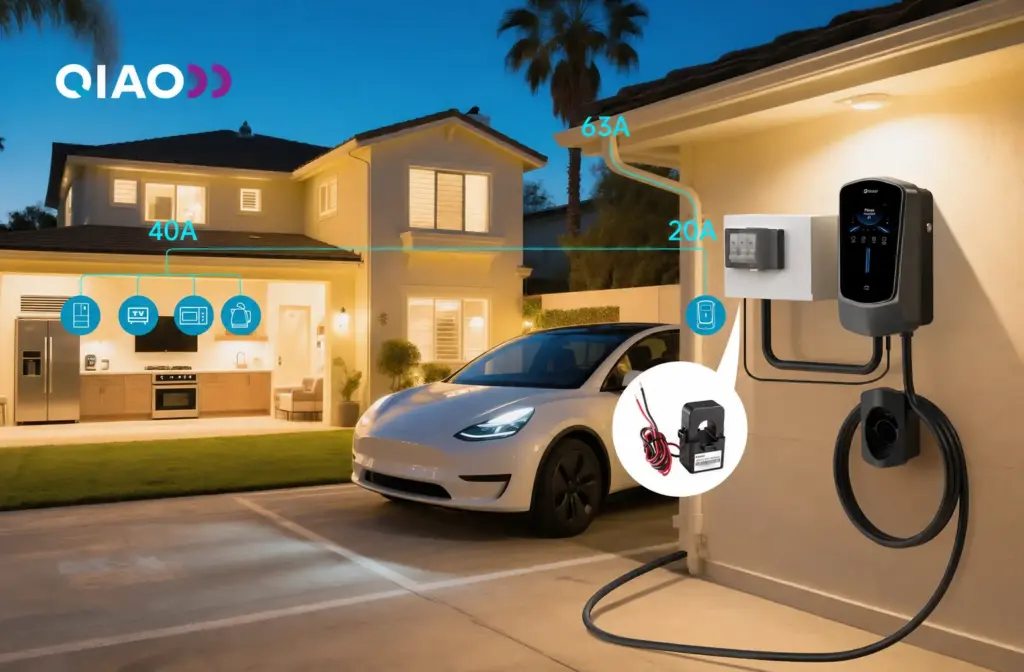
Dynamic load balancing can keep household demand within a set limit and may reduce the need to increase the home’s electrical capacity. It does not replace an electrician’s assessment of the panel, circuit, wiring, charger output, and local requirements.
Use More Rooftop Solar for EV Charging
A HEMS can coordinate charging with rooftop solar when the required equipment is compatible.
The system first measures solar production and household use. If the panels produce more power than the home needs, it may send part of that surplus to the EV. Charging power may fall when clouds reduce solar output or another household load starts.
Some systems offer a solar-only mode. Others combine solar and grid power to maintain a more stable charging rate. The available modes depend on the charger, meter, inverter, and controller.
The vehicle also needs a minimum charging current before AC charging can continue. A small amount of surplus solar may not be enough to keep the session active. This is one reason to check the complete setup instead of choosing a charger based only on the words “solar charging.”
Coordinate Charging With a Home Battery
A HEMS can help decide how solar energy should be divided between an EV and a home battery.
There is no single priority that works for every household. One homeowner may keep the home battery above a set level for outage support. Another may charge the EV first because the car must leave soon.
The system may consider:
- The EV’s Planned Departure Time
- The Required Driving Range
- Current Solar Production
- The Home Battery’s Charge Level
- Expected Evening Demand
- Peak and Off-Peak Electricity Prices
- The Homeowner’s Backup Reserve
A home battery is not required for smart home energy management. It simply gives the system another place to store and release energy.
What About Bidirectional EV Charging?
Bidirectional charging allows a compatible vehicle to supply electricity to a home or the grid. It is one of several future home EV charging technologies, and a compatible HEMS may help manage this power flow.
However, ordinary AC chargers cannot send energy from the vehicle back into the home. Vehicle-to-home and vehicle-to-grid operation require a compatible EV, bidirectional charging equipment, suitable electrical hardware, and local utility approval where required.
A matching vehicle connector does not confirm bidirectional support.
HEMS vs. Smart Meters, Energy Monitors, and Load Balancing
A HEMS coordinates decisions across several parts of the home. A smart meter, energy monitor, smart EV charger, or load-balancing controller performs a narrower task.
| Technology | Main Function | Can It Control EV Charging? | Is It a Complete HEMS? |
| Smart Meter | Records electricity exchanged with the grid | Usually not directly | No |
| Home Energy Monitor | Shows total or circuit-level electricity use | Usually not | No |
| Smart EV Charger | Schedules and monitors its own charging sessions | Yes, within its supported functions | No |
| Dynamic Load Balancing | Adjusts EV charging around available capacity | Yes | No |
| HEMS | Coordinates multiple energy sources and household loads | Yes, when the charger is compatible | Yes |
Dynamic load balancing is not a complete HEMS. It adjusts charging around available capacity, while a HEMS may also coordinate solar production, battery storage, electricity rates, and other connected devices. An app-controlled charger only joins a HEMS if it supports the required data exchange and control method.
Benefits and Limitations of Smart Home Energy Management
Smart home energy management can lower some electricity costs, improve load control, and increase the use of energy produced at home.
The main benefits include:
- Lower Energy Costs: The system can move EV charging and other flexible loads to lower-price periods.
- Better Peak Control: It can reduce charging power when household demand reaches a set limit.
- Higher Solar Use: It can match EV charging or battery storage with available solar production.
- Clearer Energy Data: Homeowners can see how much electricity the EV and other major loads use.
- Less Manual Control: Automated rules can respond to changing demand, prices, or solar output.
The results vary by home. A household with an EV, solar panels, battery storage, and time-of-use pricing may gain more than a home with low electricity use and a flat rate.
HEMS also has several limitations:
- Equipment Compatibility: Products from different brands may not exchange the data or commands the system needs.
- Installation Cost: Sensors, controllers, electrical work, and software services add to the total cost.
- Setup Complexity: More devices create more settings, connections, and possible points of failure.
- Cloud Dependence: Some controls may stop working if the internet or manufacturer’s service is unavailable.
- Privacy and Security: Energy data can reveal household routines, so account protection and software support deserve attention.
- Variable Savings: A system cannot guarantee lower bills without suitable rates, controllable loads, and effective settings.
A HEMS also does not provide backup electricity by itself. Outage support requires an energy source, like a home battery, plus a compatible inverter, isolation or transfer equipment, and a correctly configured electrical system.
Does Your Home Need a Complete HEMS?
A complete HEMS is most useful when several high-power devices or energy sources need to work together.
It may be a good fit if your home has:
- An EV and Rooftop Solar
- A Home Battery
- Time-of-Use or Dynamic Electricity Rates
- A Heat Pump or Electric Water Heater
- Two EVs or Several Large Electrical Loads
- Limited Available Electrical Capacity
- A Need for Automated Energy Priorities
You may not need a complete HEMS if your goal is limited to off-peak charging, household capacity, or energy monitoring. A scheduled charger, DLB controller, or energy monitor may solve one of these needs with less equipment.
Start with the problem you need to solve, then choose the smallest system that provides the required measurement and control.
What Should You Check Before Connecting an EV Charger?
Check the charger’s control functions, supported equipment, connection method, and safety behavior before adding it to a home energy management system.
Use the following checklist:
- Control Functions: Confirm whether the system can start, stop, schedule, or adjust the charger’s current.
- Supported Equipment: Check compatibility with the energy meter, CT sensors, solar inverter, battery, and HEMS controller.
- Charging Data: Confirm which information the charger can share, including power, current, energy use, and charging status.
- Solar Modes: Check whether the setup supports solar-only charging, mixed solar and grid charging, or both.
- Local and Cloud Control: Find out which functions remain available during an internet outage.
- Fail-Safe Behavior: Confirm what the charger does if communication with the controller is lost.
- Vehicle Requirements: Match the connector, voltage, phase, power, and current to the vehicle and local electrical supply. In markets where these ratings are common, choosing between 7kW, 11kW, and 22kW home chargers depends on the vehicle’s AC charging limit and the home’s available single- or three-phase supply.
- Professional Installation: Ask a qualified electrician to assess the circuit, panel capacity, wiring, and local code requirements.
When comparing QIAO home EV chargers, match the configuration to your energy-management needs. Q6 options may include PV charging, dynamic load balancing, or app control, depending on the model and supporting equipment.
Final Thoughts
Smart home energy management connects household energy data with device controls. For an EV owner, it can schedule charging, respond to available electrical capacity, and use more rooftop solar when the equipment supports it.
A complete HEMS is most useful when an EV, solar panels, battery storage, and other large loads need to work together. Simpler homes may only need scheduling, monitoring, or dynamic load balancing. Before installation, confirm that the charger, vehicle, electrical supply, meter, and control platform are compatible.
FAQs
Yes. A HEMS can monitor household use, schedule connected devices, and manage EV charging without solar panels. Solar adds another energy source for the system to measure and manage.
No. A home battery is optional. It adds energy storage and may support backup power, but monitoring, time-of-use scheduling, and EV load management can work without one.
It depends on the appliances and the system. A HEMS may monitor an appliance through its circuit even when it cannot control it. Direct control requires a compatible connection, controller, or smart plug.
Not by itself. The home needs a compatible battery or other power source, an inverter, isolation or transfer equipment, and a suitable electrical setup. A HEMS may coordinate these parts, but it does not produce or store electricity.