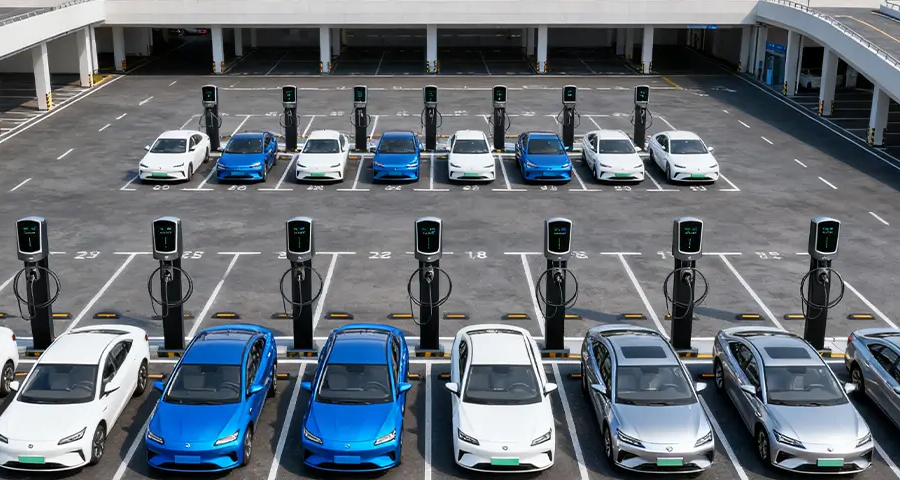

Airport EV charging solutions need to match parking duration, drivers’ charging needs and the site’s available power. For airport and off-site parking operators, the choice also depends on how vehicles are parked and managed.
A traveler may leave a car for several days, even if charging takes only a few hours. Once charging ends, that vehicle can still occupy the charging bay and prevent another driver from using it.
This guide explains how to plan port numbers and charging power, compare self-park and valet charging, and define booking, pricing and support arrangements. Use these steps to assess your parking operation before selecting equipment or requesting proposals.

What Type of Charging Does Each Airport Parking Area Need?
Group vehicles by how long they park and when they need to leave. Passenger cars, employee vehicles and working fleets can use the same airport site while needing different charging arrangements.
| Parking Area | Typical Need | Charging Approach |
| Long-Term Passenger Parking | Replace the energy needed for the return journey while the driver is away | AC charging suited to the available parking time, with enough ports for vehicles that remain connected |
| Short-Stay Passenger Parking | Add useful range during a visit lasting minutes or hours | Compare AC and DC against the energy required and time available |
| Employee Parking | Charge during a work shift | AC charging with access and power allocation suited to staff schedules |
| Taxi, Rental and Shuttle Areas | Keep vehicles ready for their next trip or assignment | Assess separately using vehicle requirements, turnaround times and operating schedules |
The U.S. Department of Energy’s Alternative Fuels Data Center identifies airports as suitable locations for Level 1 and Level 2 charging where vehicles park for long periods. In North America, suitable 120 V Level 1 installations can also serve some long-term parking needs. Evaluate this option against local installation requirements and the energy each vehicle needs before departure.
For EV charging in public parking facilities, parking duration helps guide equipment selection. At airports, also confirm who can access each charging area and whether vehicles can be moved. The following sections focus on passenger parking, including airport-operated and off-site facilities.
Should You Offer Self-Park or Valet Charging?
Choose your parking service model before deciding how many vehicles each charger can serve. The main difference is who connects the car and whether staff can move it.
Self-Park Charging
Drivers park, connect their vehicles and keep their keys. Plan around the full parking stay when drivers cannot return to move their cars.
State clearly whether customers may remain in a charging bay until they return. Signs and booking information should reflect the same policy. A rule requiring drivers to move immediately after charging would be difficult to follow while they are away.
Also confirm how drivers will connect, start charging and check that the session has begun before leaving for the terminal.
Valet or Managed Charging
Staff connect vehicles and may move them after charging, allowing a port to serve several cars during their parking stays. This requires enough staff, suitable parking space and access to the vehicles.
Obtain each customer’s permission to move their car. Keep keys secure and record the charging request and expected collection time. Staff also need instructions for vehicles with different charging-port locations and connector-release controls.
Assign staff to connect vehicles, check charging progress and move cars after charging. Record each car’s location after moving it. Include these tasks in staffing plans, especially during busy arrival and collection periods.
How Should You Plan Charging Ports and Power?
Plan port numbers around how many vehicles need to stay connected. Choose charging power based on their energy needs and available charging time.
Estimate Demand for Charging Bays
Use parking records, customer requests and any existing charging data to estimate demand. Review typical stay lengths, busy arrival periods and the number of customers who need charging at the same time. Daily arrival totals alone will miss vehicles still parked from earlier days.
Illustrative Example: A car stays for five days but finishes charging during the first day. In a self-park bay, it may occupy the port for the remaining four days. Increasing that charger’s power would not free the space sooner.
For managed charging, estimate how many vehicles staff can connect and move during each shift.
Match Power to Energy Needs and Available Time
Estimate the energy customers need before departure, rather than assuming every vehicle needs a full battery. Include charging losses when calculating energy drawn from the supply.
For example, a vehicle needing 20 kWh from the supply over ten hours requires an average of 2 kW during that window. This is an energy-planning example, not a recommended charger setting. Check shorter stays and overlapping arrivals before selecting equipment.
Also distinguish each port’s rated power from the power available when several vehicles charge together. The system must deliver the planned energy within each vehicle’s charging window.
Account for Vehicle Charging Limits
A vehicle’s onboard charger limits its AC charging rate. A car limited to 11 kW AC cannot receive 22 kW simply because the charging station offers it.
When choosing between 7 kW, 11 kW and 22 kW chargers, check vehicle compatibility, local supply and expected parking times. Confirm connector and phase requirements for the intended market.
How Should You Assess Electrical Capacity and Site Layout?
Have a qualified electrical designer check both the site supply and the circuits serving the proposed charging areas. Review the parking layout alongside the power assessment.
Assess the Supply and Installation Routes
Gather electrical drawings, recent load records and details of planned site upgrades. The assessment should establish how much additional demand the supply can support during busy operating periods.
Check each local distribution board as well as the overall supply. Spare capacity elsewhere on airport grounds may not be available at the chosen parking area. Contact the utility early when the project may need additional supply capacity.
Compare charger locations against cable routes, trenching needs and installation access. Work may need to be phased to keep parking spaces and traffic routes available.
The layout should also provide accessible charging spaces, protect equipment from vehicle impacts and keep charging cables clear of walking routes. Check weather exposure, drainage and network coverage at the proposed locations.

Share Available Power Across Charging Ports
Load management controls how much power a group of chargers can draw. A fixed group limit caps their combined demand. Dynamic control can adjust charging demand as other measured site loads change.
Specify which electrical limits the system must respect and where loads will be measured. Confirm how the chargers, controller and meters work together, including their behavior if communication or measurements are lost.
Use the planned arrival patterns and charging windows to check whether vehicles can receive the required energy under those limits. Load management can reduce upgrade needs, but some sites will still require electrical work.
Include these checks in your EV charging power demand planning before finalizing equipment quantities and installation costs.
Which Charging and Parking Management Features Do You Need?
Define the tasks your team needs to perform before choosing a charging platform. Match its functions to your parking service and customer journey.
Access and Session Management
Decide how customers will gain access and start charging. Options may include RFID cards, an app, or a web payment page, depending on the equipment and platform you select.
Staff should be able to identify the correct charger, check session status and assist with failed starts. Confirm which functions drivers and staff can use, including remote start and stop.
Reservations and Parking-System Integration
Define exactly what customers are booking and what the service includes.
| Booking Type | What Operators Need to Define |
| Standard Parking | Whether charging is included or available separately |
| A Bay With a Charging Port | Whether a working port is guaranteed and how faults or unavailable bays are handled |
| A Managed Charging Service | The agreed charging request, completion time and response if the service cannot be completed |
Identify what information must pass between the booking, parking and charging systems. This may include a booking reference, assigned charger, session record and payment status.
OCPP communication between chargers and management systems supports charging operations. Parking reservations and payment integration require separate software functions and connections, which the proposed setup should demonstrate.
Monitoring and Operational Records
Choose reports that help staff manage the service: energy delivered, session times, equipment faults and periods when chargers are offline.
Track parking-bay occupancy separately where needed. A charger reporting “available” does not necessarily mean the space is empty. Set staff access permissions and confirm who can export records for customer support and operating reviews.
Compare Ownership, Costs and Pricing
Compare who funds and runs the charging service, what it costs over time, and how customers will pay.
Choose an Ownership and Operating Model
Owning the equipment can give your business control over pricing and service decisions. You will also need to arrange software, maintenance and customer support.
A third-party operator may take on some of these tasks under a service or revenue-sharing agreement. A subscription may spread costs over the contract term and include equipment or support.
For each proposal, confirm equipment ownership, pricing rights, maintenance duties and ongoing fees. Check what happens to the equipment and operating records when the agreement ends.
Compare Total Project Costs
Include equipment, installation, electrical upgrades and parking-space changes in the initial budget. Ongoing costs may include electricity, software, communications, payment processing, repairs and staff time.
Review the electricity tariff for any demand charges linked to peak power use. For valet charging, include the labor needed to connect and move vehicles.
Compare proposals over the same period and with the same assumptions about demand. Separate confirmed costs from estimates and items excluded from the quote.
Define Parking and Charging Fees
Decide whether charging is included in parking, billed separately or offered as a managed service. Check local billing and metering requirements before choosing a pricing method.
Align your charging access and pricing rules with the service offered. Show parking charges, charging fees and any fees that continue after charging ends before customers book.
For example, LAX’s official parking guidance allows vehicles to remain connected during a trip without idle fees, while parking and charging are billed separately.
Choose an idle-fee policy that customers can follow under your parking arrangements. Explain how staff will handle failed sessions, billing disputes and any refunds due.
Start With a Pilot and Define Service Responsibilities
Use a limited first phase to check that the equipment, software and parking procedures work together before expanding the service.
Test the Complete Parking and Charging Journey
Test the process from booking or arrival through authorization, connection, charging, payment and vehicle collection. Include both driver-operated sessions and staff-managed charging where offered.
Have the project team verify power sharing and the agreed behavior during communication loss and recovery. Check that session records and charges remain accurate.
Include these checks in your commercial EV charger installation and handover plan. Record results, unresolved issues and who will address them before launch.
Give parking staff clear contacts for on-site assistance, electrical repairs and platform support. Test how staff will respond when a driver cannot start charging shortly before a flight.
Use Operating Data to Plan Expansion
Review port occupancy, energy delivered, failed starts and charging requests you could not accommodate. Include busy travel periods and different parking lengths in the review.
Use the findings to identify what needs to change:
| Observed Pattern | What to Review |
| Ports remain occupied long after charging ends | The number of charging bays and whether vehicle rotation is practical |
| Vehicles receive less energy than planned before departure | Power allocation, charging windows and vehicle limits |
| Failed starts or offline chargers occur repeatedly | Access methods, connectivity and equipment faults |
Confirm the cause before adding equipment. More ports, higher power and changes to parking procedures address different constraints.
Plan the Service Before Expanding the Hardware
Start your airport EV charging project with a clear service brief. Set out who will use the chargers, how long vehicles will stay and whether staff can move them. Add your expected charging demand and the site’s electrical records.
Use this brief to compare equipment and operating proposals on the same basis. Confirm what each provider will deliver, who will support the service and which assumptions still need checking. Resolve these questions before committing to a larger rollout.
About QIAO Charger
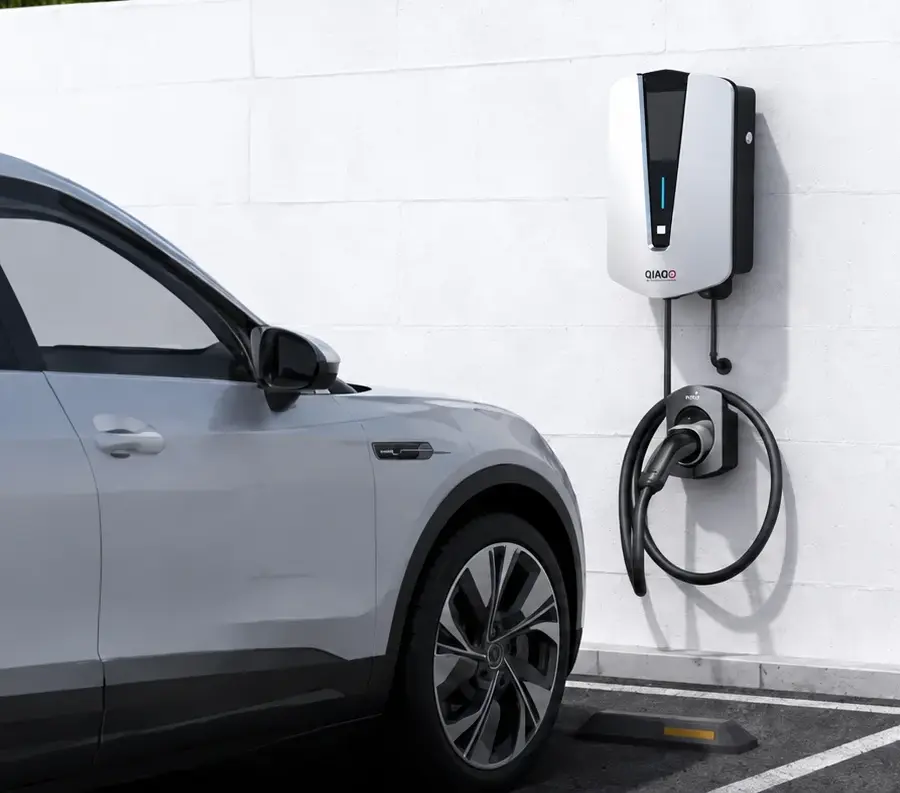
QIAO Charger offers commercial AC EV chargers for managed parking sites. All our EV chargers support OCPP 1.6J for communication with compatible charging management systems.
For airport and off-site parking projects, share your market, planned port count, parking durations and electrical supply details. We can discuss available configurations and provide model-specific specifications for your procurement review. Coordinate load management, payment and reservation requirements with your installer and platform provider.
We also work with distributors, installers and other channel partners sourcing AC charging products. Explore our partnership opportunities to discuss product requirements and cooperation in your market.