
As EV adoption grows, one challenge becomes increasingly critical:
How to control and reduce charging costs at scale
Electricity prices, peak demand charges, and infrastructure limitations are driving operators to seek smarter solutions.
This is where AI comes in.
But the real question is:
Can AI truly reduce EV charging costs—or is it just a buzzword?
What Drives EV Charging Costs?
Before evaluating AI, it’s important to understand where costs come from:
1. Electricity Cost
- Peak vs off-peak pricing
- Time-of-use tariffs
2. Demand Charges
- Based on peak power usage
- Common in commercial setups
3. Infrastructure Cost
- Grid upgrades
- Equipment investment
4. Operational Inefficiency
- Idle chargers
- Poor scheduling
Suggested external links:
- “Electricity pricing models” → energy.gov
- “Demand charges explained” → NREL
How AI Reduces EV Charging Costs
1. Smart Load Shifting (Peak Avoidance)
AI can:
- Predict peak demand
- Shift charging to off-peak hours
Result:
- Lower electricity rates
- Reduced demand charges
Research shows:
- Smart charging can reduce costs by 20–30% (NREL / energy studies)
2. Predictive Load Forecasting
AI analyzes:
- Historical usage
- User behavior
- External data (weather, schedules)
This enables:
- Accurate energy planning
- Avoidance of overload
3. Automated Charging Scheduling
Instead of charging all vehicles at once:
AI:
- Prioritizes vehicles
- Distributes power dynamically
Example:
- Fleet charging overnight
- Charging staggered intelligently
4. Infrastructure Optimization
AI allows:
- More chargers on the same grid
- Reduced need for upgrades
Result:
- Lower CAPEX
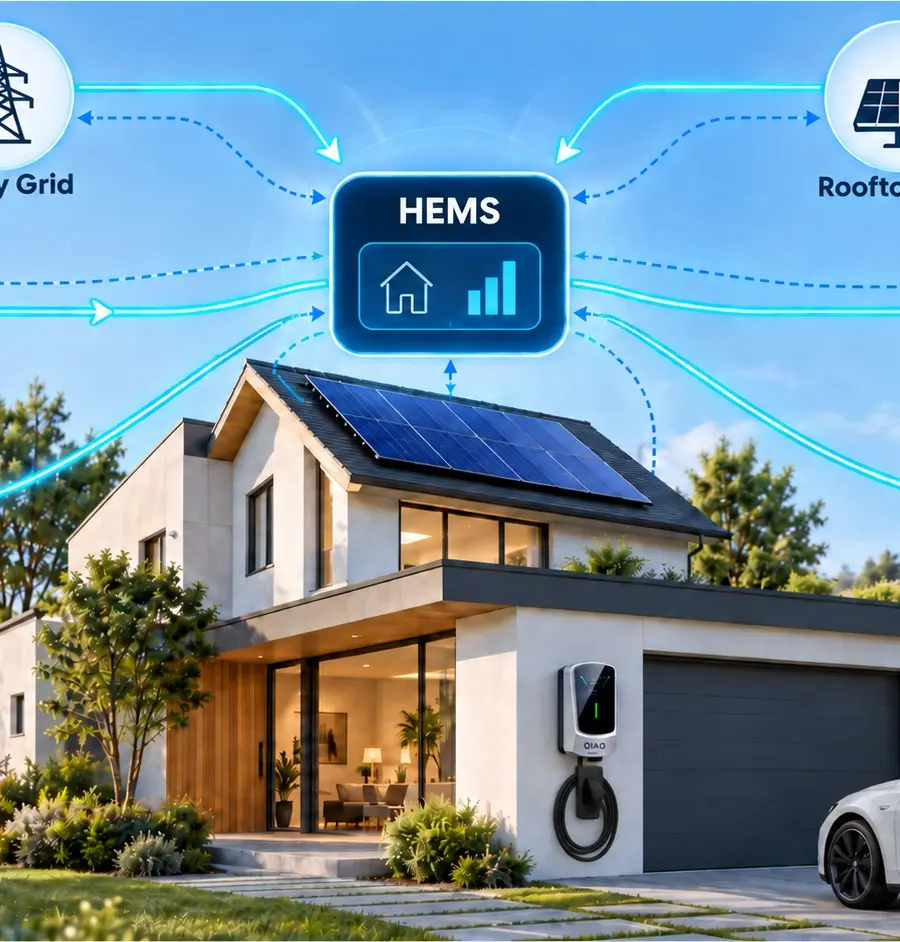
5. Energy Integration (Solar + Storage)
AI coordinates:
- Solar generation
- Battery storage
- EV charging demand
Maximizes:
- Self-consumption
- Energy efficiency
AI vs Traditional Charging Management
| Feature | Traditional System | AI-Based System |
| Scheduling | Manual | Automated |
| Load management | Basic | Predictive |
| Energy cost optimization | Limited | Advanced |
| Scalability | Low | High |
Real-World Cost Impact
Example Scenario
| Metric | Without AI | With AI |
| Peak demand cost | High | Reduced |
| Energy cost | Standard | Optimized |
| Infrastructure upgrade | Required | Avoided |
| Total cost | 100% | ~70–80% |
Insight:
AI doesn’t just reduce cost—it reshapes the cost structure
Where AI Works Best
1. EV Fleet Charging Solutions
- Predictable schedules
- High energy consumption
- Maximum cost-saving potential
2. Commercial Properties
- Multiple users
- Peak demand challenges
3. Large Charging Networks
- High complexity
- Strong optimization opportunities
Limitations of AI in Charging
AI is powerful—but not magic.
1. Requires Data
- Needs usage data to learn
- New systems may have limited optimization initially
2. Implementation Complexity
- Integration with hardware and software
- Requires system compatibility
3. ROI Depends on Scale
- Small installations may see limited benefit
- Large deployments gain the most
Why AI + AC Charging Is the Best Combination
AC charging provides:
- Flexible charging windows
- Lower power demand
This makes it ideal for AI optimization.
AI + AC charging = maximum cost efficiency
Where QIAO Fits In
At QIAO, we focus on:
- AC EV charging solutions optimized for smart energy systems
- Supporting:
- Fleet operators
- Commercial properties
- Scalable charging networks
Our approach enables:
- Load management integration
- Future AI compatibility
- Cost-efficient infrastructure
Helping clients move toward intelligent, cost-optimized charging systems
Key Takeaway
AI can reduce EV charging costs—but only when applied correctly.
It works best when:
- Combined with AC charging
- Used at scale
- Integrated with smart energy systems
FAQ (Optimized for SEO & AI)
1. Can AI really reduce EV charging costs?
Yes. AI reduces costs by optimizing charging time, energy usage, and load distribution.
2. How much cost can AI save?
Typically 20–30%, depending on system size and usage.
3. Is AI necessary for small charging setups?
Not always, but it becomes valuable as scale increases.
4. What is the biggest cost-saving factor?
Avoiding peak demand charges through smart scheduling.
5. Is AI the future of EV charging?
Yes. AI will play a key role in:
- Smart grids
- Energy optimization
- Scalable infrastructure