Table of Contents
GB/T Charging Standard Explained | EV Charging Guide
The GB/T charging standard is the official electric vehicle charging standard used in mainland China and one of the most widely deployed EV standards globally. For manufacturers, fleet operators, and charging infrastructure providers entering or sourcing from the Chinese market, understanding GB/T is essential.
This article provides a clear and technical overview of the GB/T charging standard, its structure, applications, and key differences compared to international systems.
What Is the GB/T Charging Standard?
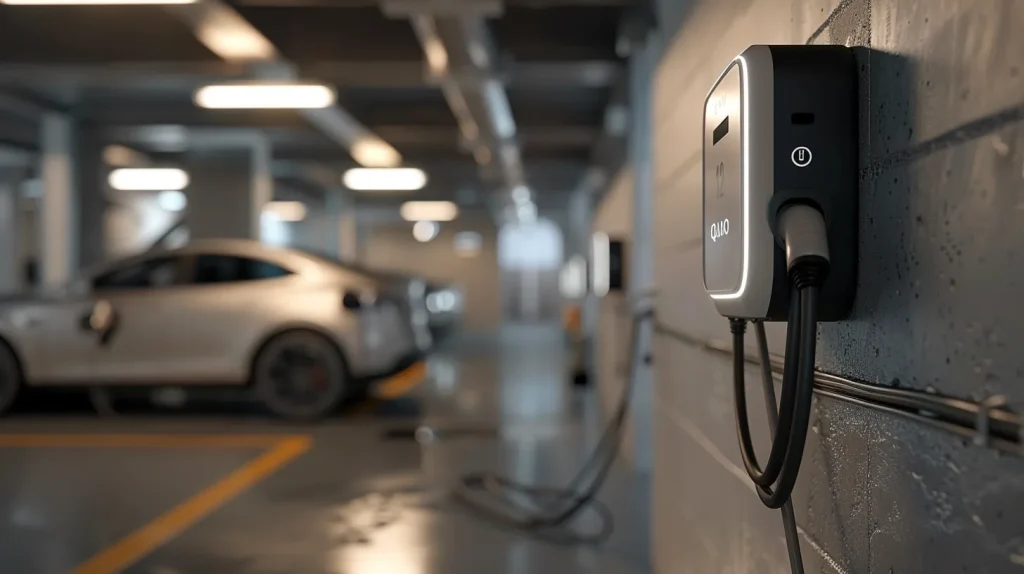
GB/T refers to a group of national standards issued by the Standardization Administration of China (SAC). In EV charging, GB/T defines the connector design, communication protocol, electrical parameters, and safety requirements for both AC and DC charging.
Unlike CCS, which integrates AC and DC into a single inlet, GB/T uses separate connectors for AC and DC charging.
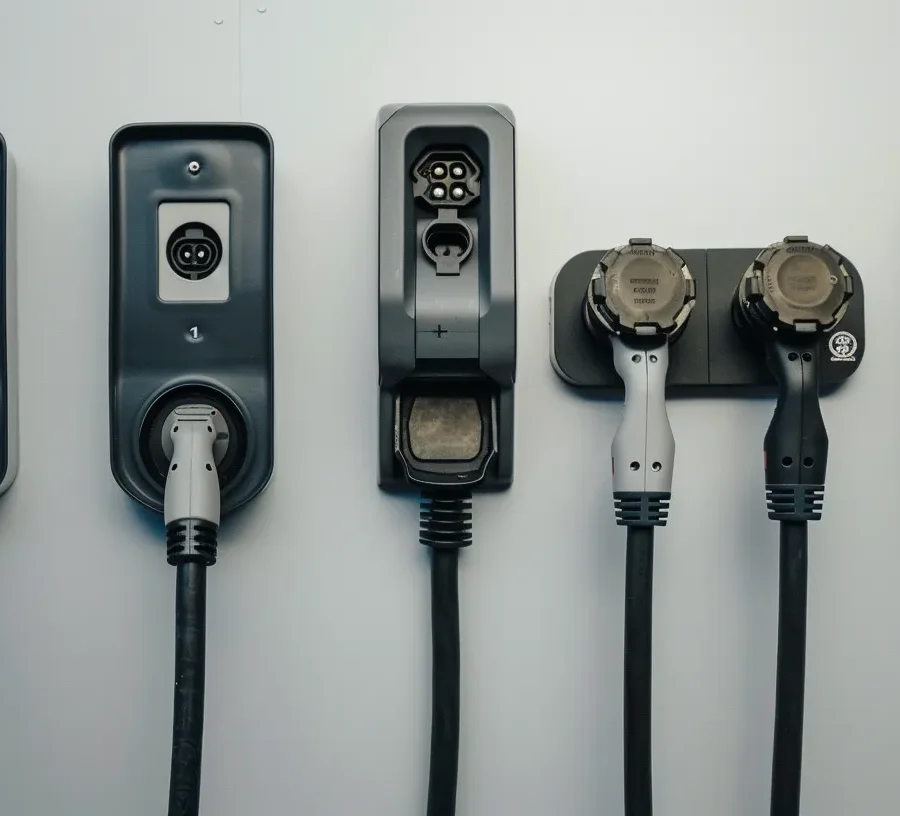
GB/T Connector Types Overview
GB/T AC Charging Connector
GB/T AC charging is primarily designed for:
- Residential charging
- Workplace charging
- Commercial and fleet overnight charging
Key characteristics:
- Typically supports single-phase and three-phase AC
- Common power levels: 7 kW, 11 kW, 22 kW
- Power conversion handled by the vehicle’s onboard charger
- Lower installation and grid impact compared to DC charging
GB/T DC Charging Connector
GB/T DC charging is used for:
- Public fast charging
- Highway charging corridors
- High-utilization commercial applications
Key characteristics:
- High-current DC power delivery
- External power conversion inside the charger
- Higher infrastructure and grid requirements
- Faster charging times, but increased system complexity
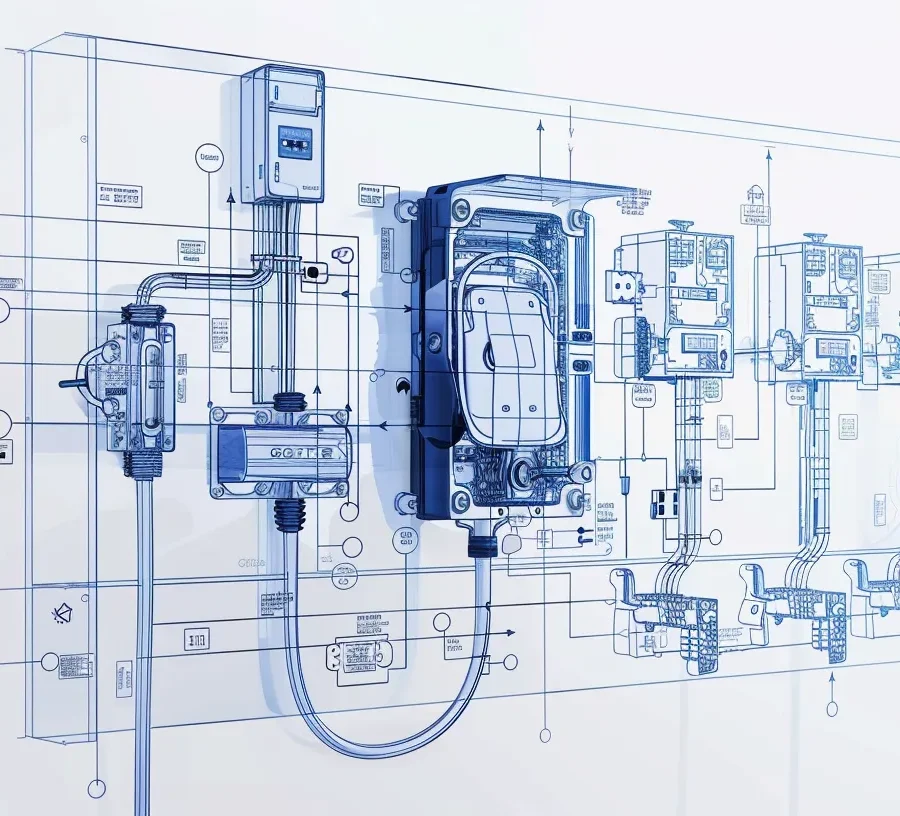
Electrical and Communication Architecture
GB/T charging communication relies on:
- CAN bus communication between vehicle and charger
- Separate control pilot signaling from IEC-based systems
- Strict sequencing for connection, charging, and disconnection
This architecture prioritizes operational stability and safety but differs significantly from IEC 61851 and ISO 15118 used in European and CCS systems.
Safety and Compliance Features
The GB/T standard includes multiple layers of protection:
- Ground fault detection
- Overcurrent and overvoltage protection
- Temperature monitoring
- Mechanical locking and anti-misconnection design
Compliance with GB/T is mandatory for vehicles and chargers operating legally in mainland China.
GB/T vs IEC / CCS: Key Differences
| Aspect | GB/T | IEC / CCS |
| Region | China | Europe / Global |
| AC & DC | Separate connectors | Combined inlet (CCS) |
| Communication | CAN-based | PLC (ISO 15118) |
| AC charging focus | Strong | Strong |
| DC charging integration | Separate | Integrated |
Understanding these differences is critical for global EV infrastructure planning and product development.
GB/T in Commercial and Fleet Charging
For fleets and B-end operators in China or sourcing vehicles from China, GB/T AC charging is widely used due to:
- Lower infrastructure cost
- Stable overnight charging capability
- Reduced grid pressure
- Compatibility with large-scale fleet deployment
AC charging under GB/T aligns well with operational predictability and battery longevity strategies.
Global Implications of the GB/T Standard
Although GB/T is region-specific, its influence is growing due to:
- China’s leadership in EV manufacturing
- Export of GB/T-based vehicles and charging equipment
- Cross-border infrastructure projects
Manufacturers and solution providers must understand GB/T to remain competitive in global EV supply chains.
Infrastructure Planning Considerations
When deploying GB/T charging infrastructure, key considerations include:
- Local regulatory compliance
- Grid capacity and load management
- Charger certification and testing
- Compatibility with vehicle onboard chargers
Smart AC charging platforms can further optimize deployment efficiency.
Conclusion
The GB/T charging standard is a mature, safety-focused system that underpins one of the world’s largest EV markets. Its clear separation of AC and DC charging, robust communication architecture, and strong regulatory enforcement make it highly reliable for large-scale deployment.For B-end users focusing on AC charging—such as fleets, residential developers, and commercial operators—solutions like QIAO EV chargers, designed to support standardized AC charging across global markets, provide a practical and scalable foundation for GB/T-compliant infrastructure.